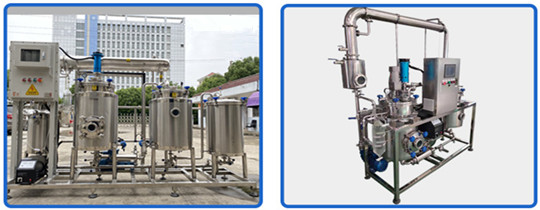

industrialist chemical reactor
2025-12-24
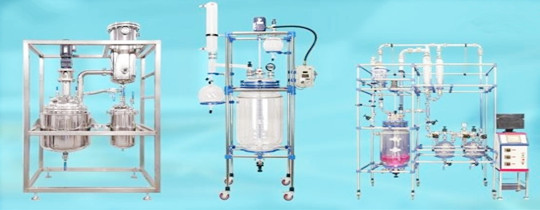
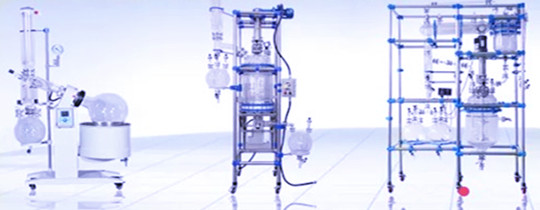
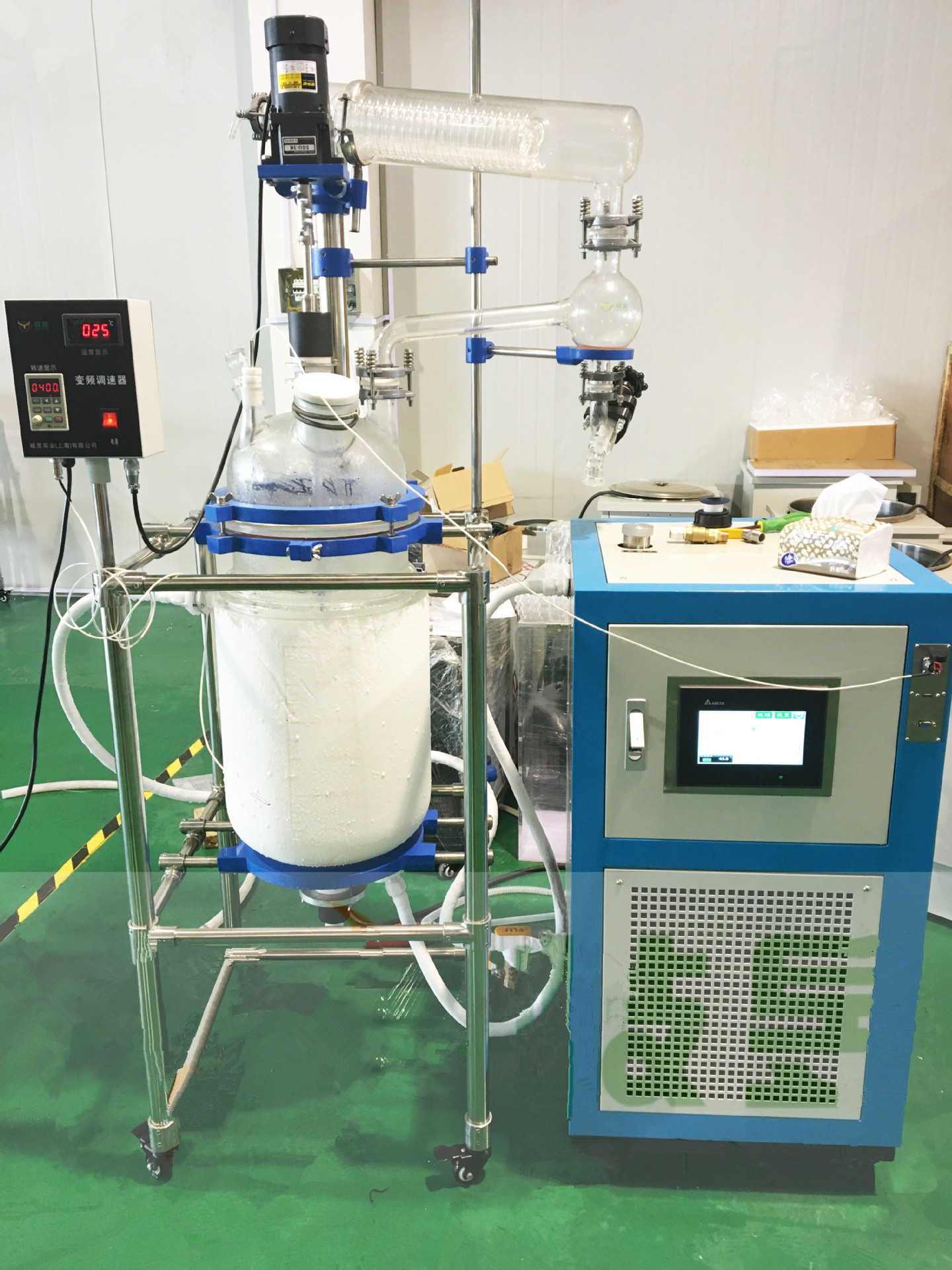
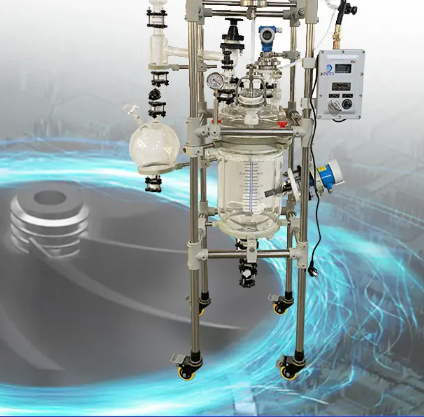
Industrial chemical glass reactors 、industrialist chemical reactor usually refer to double-layer jacketed glass reactors with a volume of 10L-100 or more, widely used in laboratory trials and small-scale production. They have functions such as heating/cooling, stirring, and vacuum reflux, and are suitable for fields such as chemical synthesis, pharmaceuticals, and new materials.
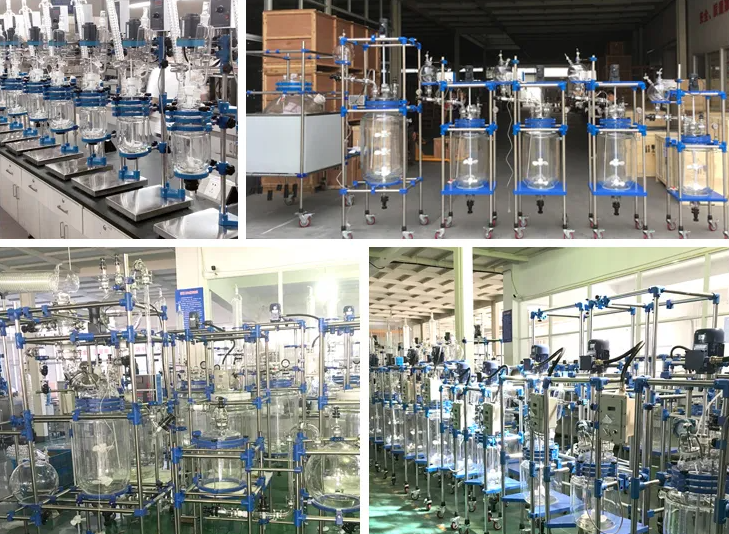
Industrial Chemical Glass Reactor is a reaction equipment commonly used in fine chemicals, biomedicine, and scientific research pilot projects. Its core structure is a double-layer high borosilicate glass (such as GG-3.3), with the inner layer undergoing reaction and the outer layer passing through a thermal conductive medium to achieve temperature control. Combined with a mechanical stirring system, it can operate continuously under high temperature, low temperature, or vacuum conditions. This type of equipment is also known as a "jacketed glass reactor" or a "double-layer glass reactor".
The industrialist chemical reactor device has the following functions:
Temperature control: Temperature control is achieved within the range of -20 ° C to 200 ° C through jacket circulation of thermal oil or water bath;
Mixing system: equipped with brushless motor, adjustable speed (usually 0-600 rpm);
Sealing performance: using mechanical seal or PTFE composite seal, supporting vacuum operation;
Expansion interface: can be connected to condensers, feed ports, thermometers, vacuum pumps, etc;
Safety compliance: Most of them have passed CE and ISO9001 certification.
Application scenarios and selection suggestions
Chemical synthesis and catalytic reactions
Solvent Distillation and Recovery
Crystallization and Recrystallization Experiment
Extraction and concentration of traditional Chinese medicine
New material research and development (such as nanoparticles, polymers)
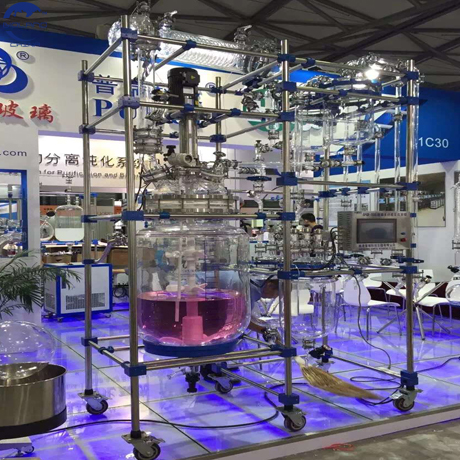
50L 100L Chemical Bioreactor Glass jacketed Crystallization Reactor
Do you need to know or demand corrosion-resistant glass reactors for the chemical industry? Please feel free to contact us via email at any time info@bioland-china.com
Related News
MORE >-
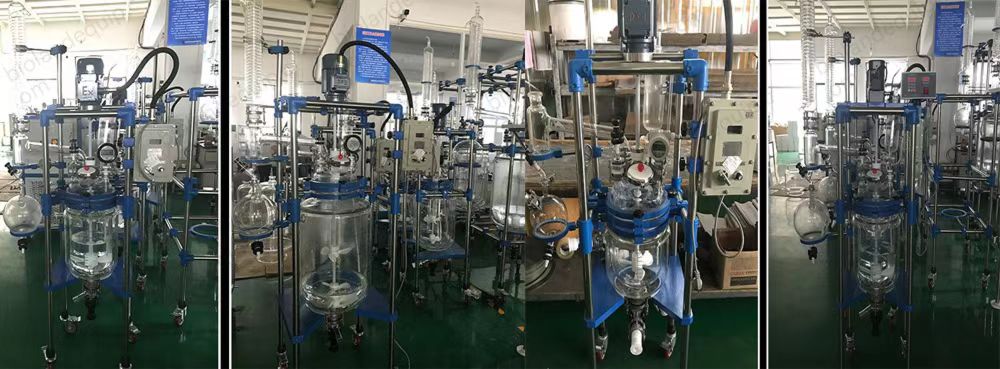
chemical glass reactor is a key experimental equipment that Across multiple industries ?
chemical glass reactor,laboratory chemical glass reactor,100L glass reactor ,jacketed batch reactor,jacketed glass reactor,100 liter glass reactor,double-layer glass reactor, vacuum jacketed reactor, glass-lined reactor
-
Selection tips for temperature control system - chemical glass reactor
temperature control system,high low temeperature control system,temperature control system , low tempeature cooler
-
What is solid phase chemical synthesis reactor ?
solid phase reactor, chemical synthesis reactor , glass filter reactor ,100L glass reactor
Consultation