- Home
- >
- Products
- >
- Extraction
- Ultrasonic assisted Extraction Equipment
Product Detail
Introduction
The mainstream solvent extraction concentration plant in the current market, represented by hot reflux extraction and concentration units, automated accelerated solvent extraction and concentration integrated machines, and low-temperature evaporation and concentration systems, are widely used in the fields of traditional Chinese medicine, food, chemical industry, and environmental protection;
Solvent extraction concentration plant are key pretreatment steps for separating and purifying effective ingredients, and their technical routes are mainly divided into three categories:
Extraction method (liquid-solid extraction): such as hot reflux, percolation, Soxhlet extraction, suitable for Chinese herbal medicine and plant raw materials;
Extraction method (liquid-liquid extraction): such as centrifugal extraction, ultrasound assisted extraction, often used in laboratories or for high-value component enrichment;
Low temperature evaporation concentration: For high-risk/heat sensitive materials such as electroplating wastewater and pharmaceutical mother liquor, emphasis is placed on material corrosion resistance and COP energy efficiency ratio.
All paths need to take into account solvent recovery rate, thermal sensitive component retention rate, and GMP compliance. Equipment selection has shifted from a single function to an integrated intelligent production line of "extraction concentration recovery purification"
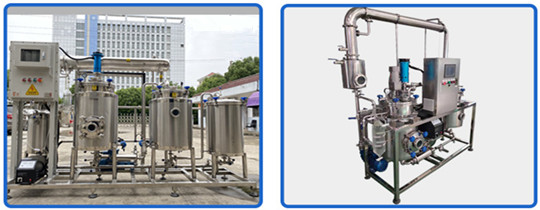
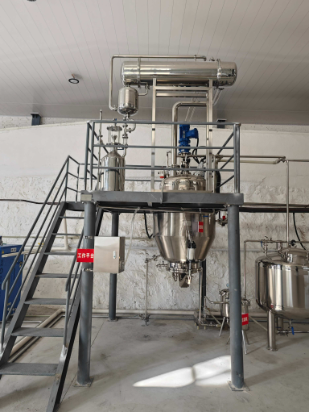
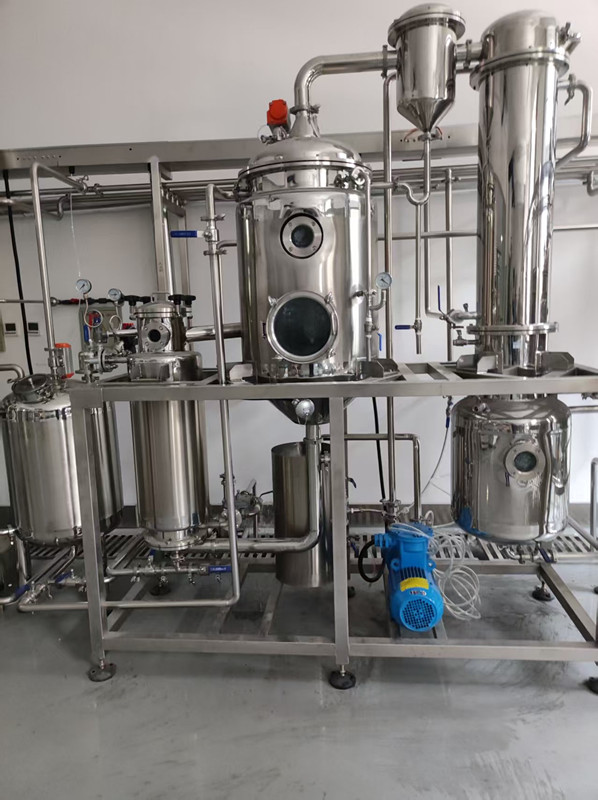
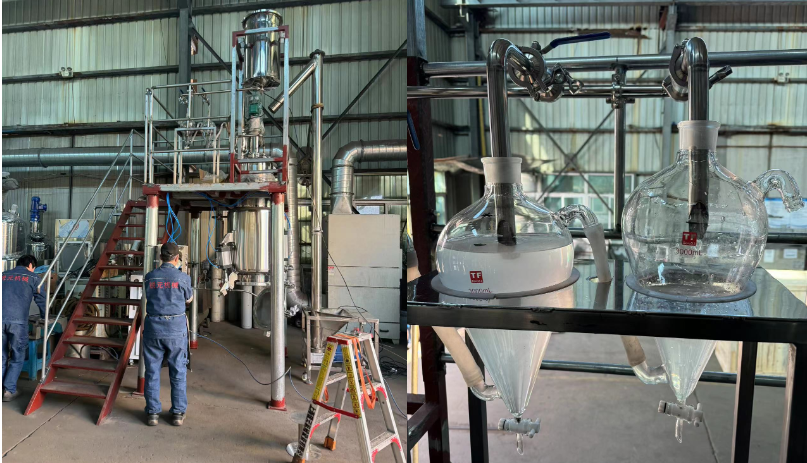
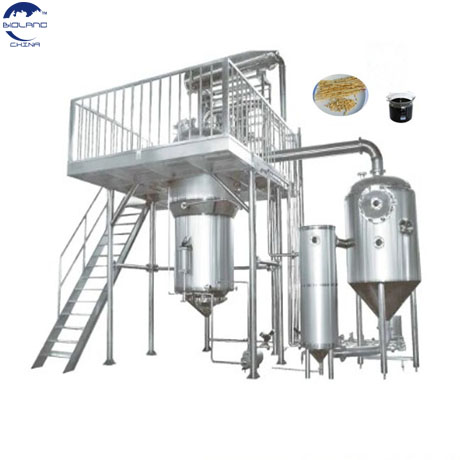
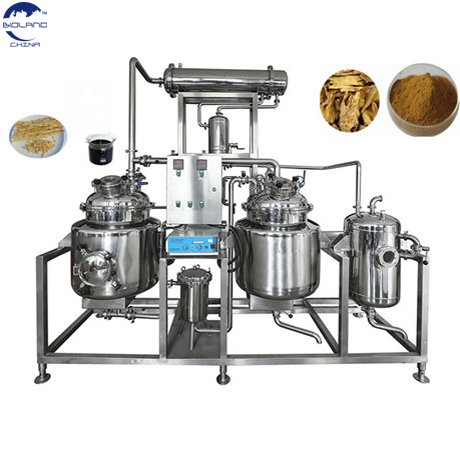
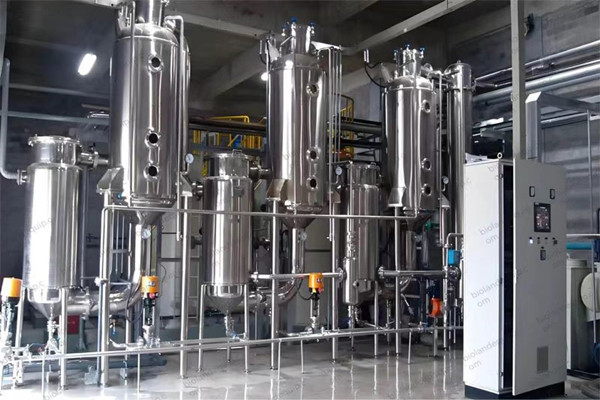
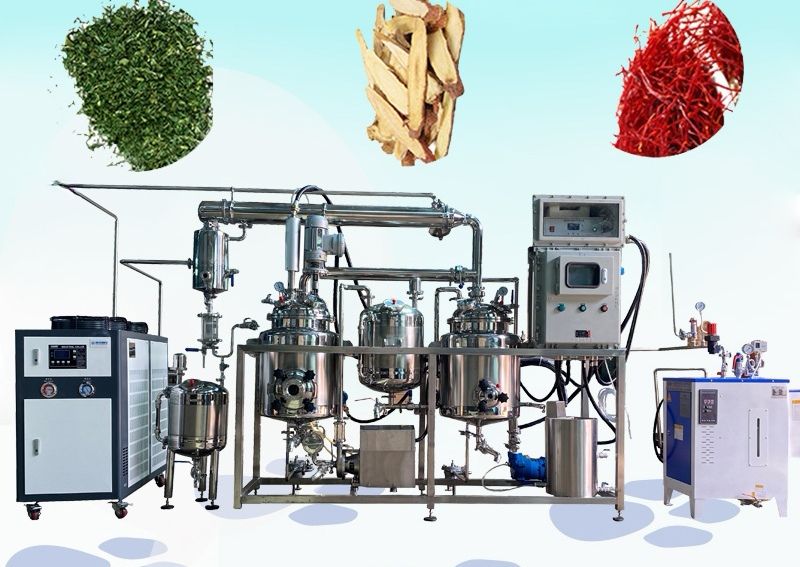
Solvent extraction and concentration equipment plant is an industrial production equipment used to extract effective ingredients from medicinal materials, animals and plants, and concentrate them. The working principle and process flow vary depending on the type of equipment and specific application requirements.
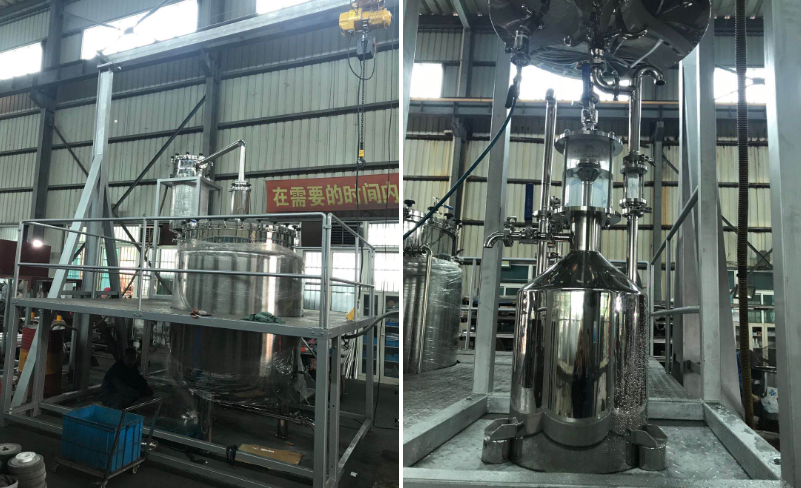
Working principle of solvent extraction concentration plant
The working principle of solvent extraction and concentration equipment is mainly based on the dissolution of effective components in the material by the solvent and the vaporization of the solvent through heating and other methods to achieve concentration. Different types of equipment may use different technologies, such as hot reflux, MVR (mechanical vapor recompression), external circulation evaporation, etc.
1. Principle of hot reflux extraction and concentration
The hot reflux extraction and concentration equipment performs both extraction and concentration processes simultaneously. The core principle is to use the secondary steam generated during the concentration process as a new heat source and solvent for extraction. Specifically:
Extraction stage: Place the medicinal herbs into the extraction tank and add an appropriate amount of solvent (such as water, ethanol, etc.). Boil the extraction solution by heating, and dissolve the active ingredients in the solvent. Part of the extracted liquid is drawn into the concentrator.
Concentration and reflux stage: The secondary steam generated during the concentration process is condensed and recovered, and added to the extraction tank as a new solvent. The new solvent passes through the medicinal layer from top to bottom, further dissolving the active ingredients. Meanwhile, the secondary steam also provides a heat source for the extraction tank, maintaining the extraction temperature. This "new solvent reflux" extraction method can maintain a high concentration gradient and improve the extraction rate of active ingredients.
Principle of MVR (mechanical vapor recompression) technology
Some traditional Chinese medicine extraction and concentration equipment adopts MVR technology, and its working principle is as follows:
After entering the heating chamber, the medicinal material undergoes evaporation treatment, and the generated secondary steam is compressed by a compressor to increase the pressure and saturation temperature of the steam and increase its enthalpy.
The heated secondary steam enters the heating chamber to provide a heat source for material evaporation, thereby achieving energy-saving goals. This technology does not require steam heating, and the thermal energy used during equipment operation is converted from electrical energy to thermal energy, resulting in significant energy-saving effects.
3.Principle of external circulation evaporation
The external circulation evaporator works by combining external heating natural circulation with vacuum negative pressure evaporation:
The heating medium (such as boiler steam) enters the shell side of the heater, and the liquid enters the tube side of the heater. The material liquid boils when heated, and the liquid level rises and is sprayed into the separator through the spray pipe for gas-liquid separation.
The separated liquid material returns to the lower part of the heater through the circulation pipe and is heated again, forming a circulation. The secondary steam passes through the demister to eliminate foam and then enters the condenser to be condensed into liquid. The device has a fast evaporation rate, a concentration ratio of about 1.3, and can be used for the recovery of solvents such as alcohol
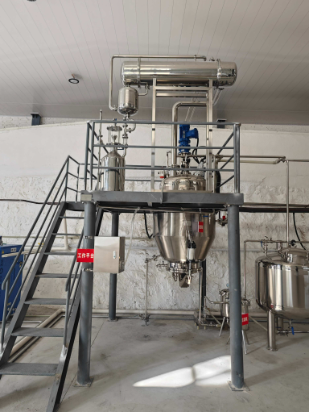
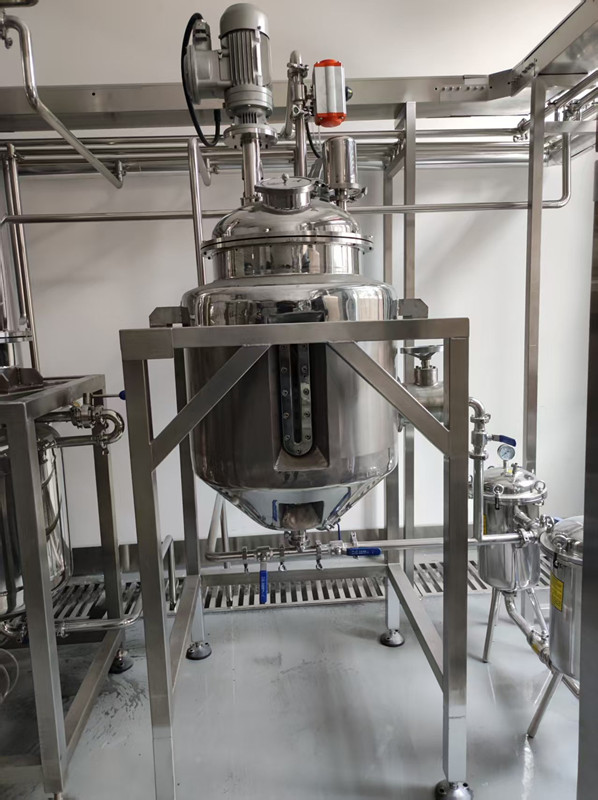
Typical process flow of solvent extraction concentration plant
1. Process flow based on hot reflux extraction and concentration
Taking a small-scale extraction and concentration unit as an example, its typical process flow is as follows:
Preparation stage: Put the medicinal herbs into the extraction tank and add an appropriate amount of solvent (such as water, ethanol, etc.).
Extraction stage: Turn on the heating system of the extraction tank and heat the extraction solution to boiling for 20-30 minutes. Then use a filter tube to draw some of the extract into the concentration tank.
Concentration and reflux stage: Close the extraction tank and jacket steam, and turn on the concentration tank and heating system. The secondary steam generated during concentration is converted into condensate through the condenser and cooler and refluxed to the extraction tank as a new solvent. The new solvent passes through the medicinal layer from top to bottom, dissolving the active ingredients. The extract is continuously drawn into the concentration tank for concentration.
Completion and recovery stage: Continue concentration until the extract is colorless (the active ingredients are completely dissolved) and reach the desired specific gravity of the ointment. The colorless liquid in the extraction tank can be reused next time. If organic solvent extraction is used, an appropriate amount of water should be added first to recover the solvent, and then the residue should be discharged.
2. Process flow based on MVR technology
Feeding and evaporation: The medicine enters the heating chamber of the MVR evaporation system and vaporizes the solvent in the material through heating.
Secondary steam compression: The generated secondary steam is compressed by a compressor, causing an increase in pressure and temperature.
Heat source utilization: Compressed secondary steam is used as a heat source to return to the heating chamber, providing energy for material evaporation.
Condensation and Separation: The heated material undergoes vapor-liquid separation in the separator, with the concentrated liquid discharged and secondary steam condensation recovered.
Automated control: The entire process is automated through a PLC system to stabilize various parameters
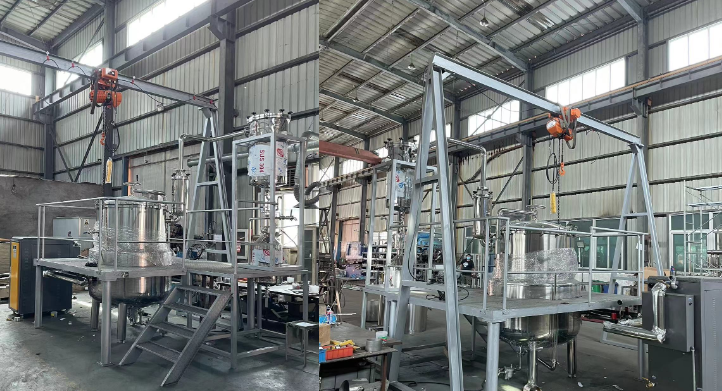
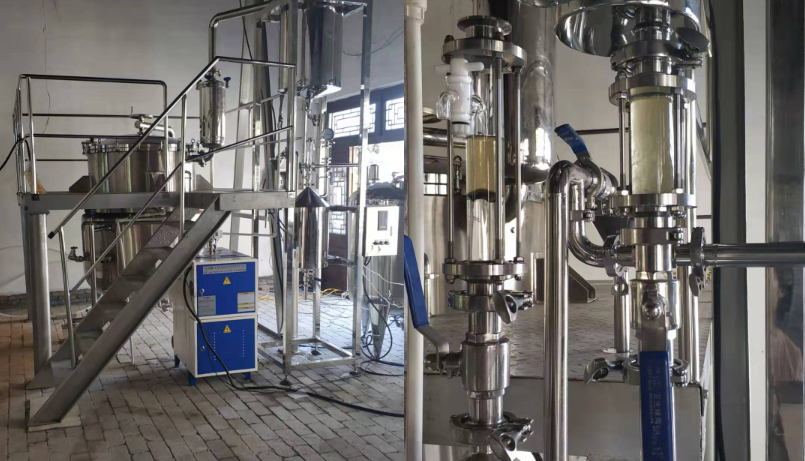
The application areas of solvent extraction concentration plant include:
Traditional Chinese Medicine and Plant Extraction: The extraction of active ingredients from Chinese herbal medicine, drug concentration, and the application of extraction and concentration processes in the pharmaceutical industry.
Food and beverages: Extraction and concentration of fruit juice, tea, coffee, seasonings, etc. to remove moisture and improve product concentration.
Cosmetics industry: extract natural essence from plants, and produce skin care products, essential oils, etc.
Environmental protection industry: extraction of effective ingredients from wastewater and exhaust gas, or removal of harmful substances.
Chemical industry: Extraction and concentration of chemical raw materials, especially the extraction of some heat sensitive chemicals.
Chemical industry: salt solution concentration, organic solution treatment, wastewater treatment, etc.
Pharmaceutical field: concentration of traditional Chinese medicine extracts, concentration of Western medicine solutions, biopharmaceuticals, etc.
Food and beverage industry: fruit juice concentration, dairy product concentration, other food concentration, etc.
Environmental protection field: industrial wastewater treatment, garbage leachate treatment, etc.
In the field of new energy: production of lithium battery materials, production of photovoltaic materials, etc.
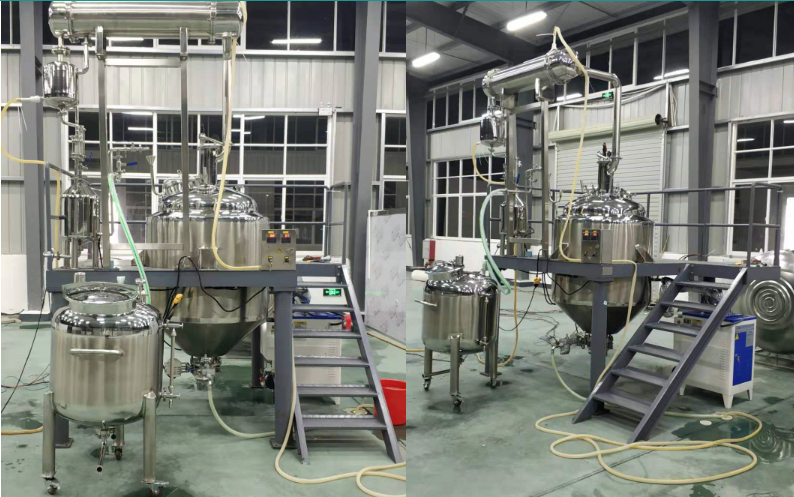
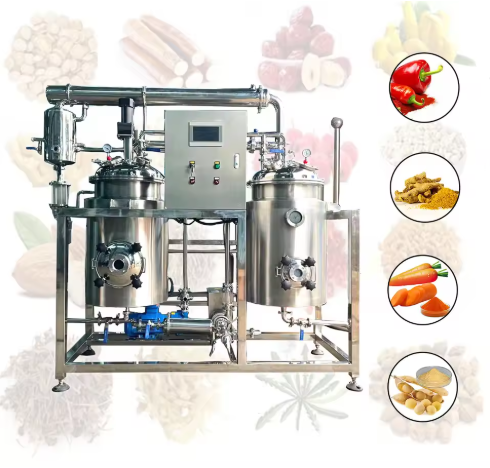
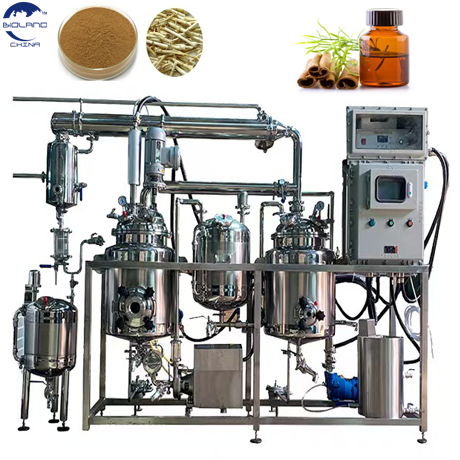
These devices extract active ingredients from raw materials through physical and chemical methods, and achieve the goal of improving the quality or concentration of the extract through process steps such as concentration and drying. They usually combine the principles of solvent extraction, distillation/evaporation concentration, filtration and separation, vacuum concentration and other processes to achieve an integrated process, seamlessly connecting extraction to concentration
Consultation