
- Home
- >
- Products
- >
- Extraction
- Ultrasonic assisted Extraction Equipment
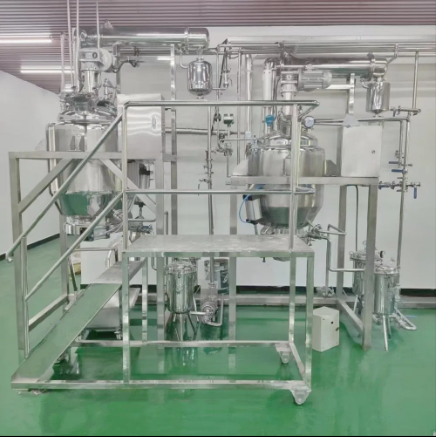
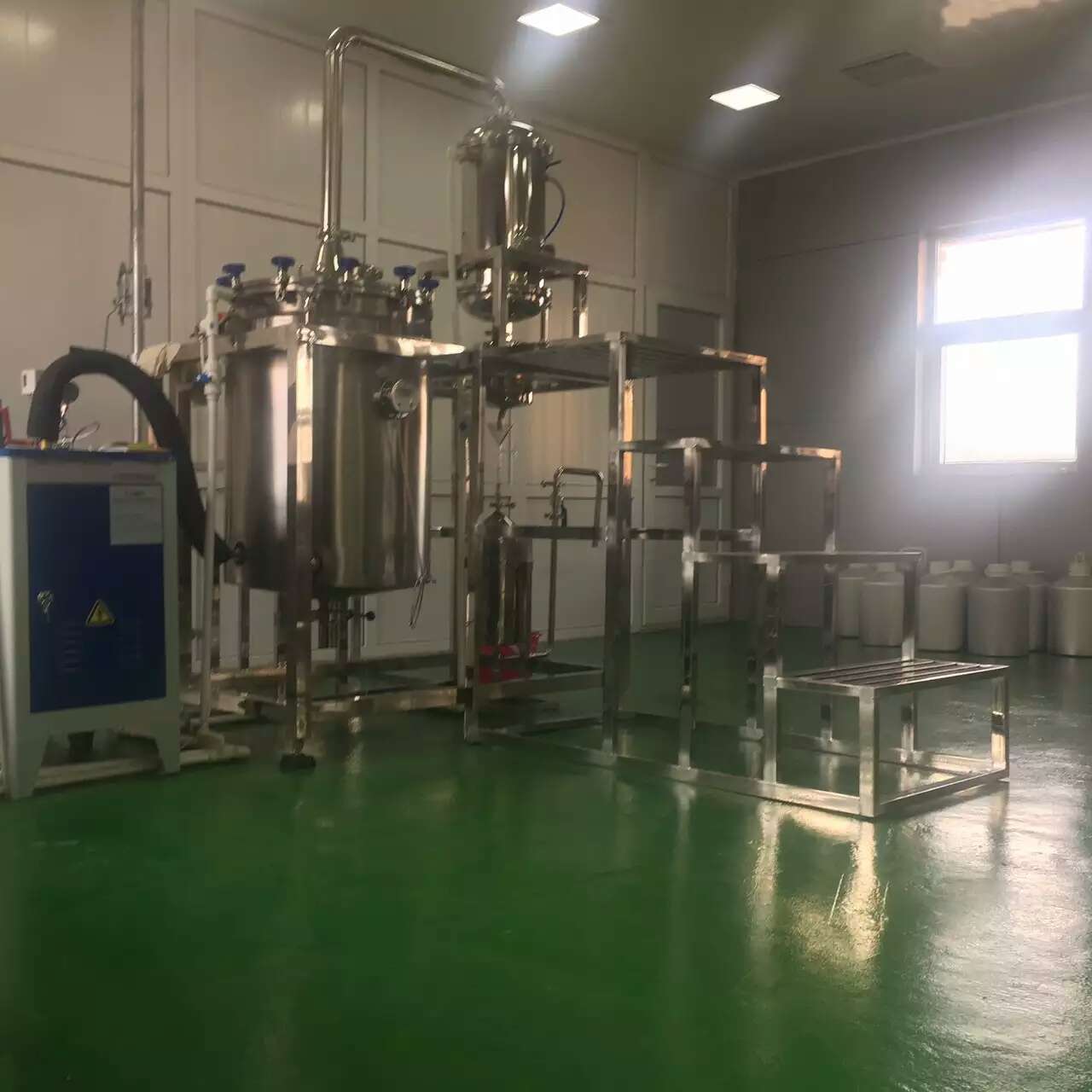
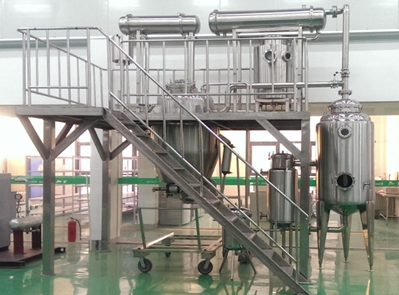
ultrasonic assisted solvent extraction equipment
ultrasonic assisted solvent extraction equipment
ultrasonic assisted solvent extraction equipment
Product Detail
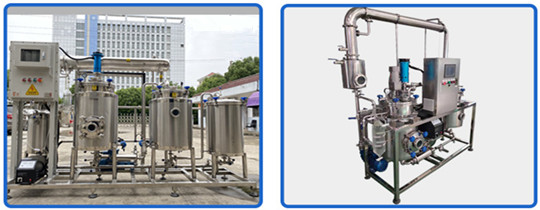
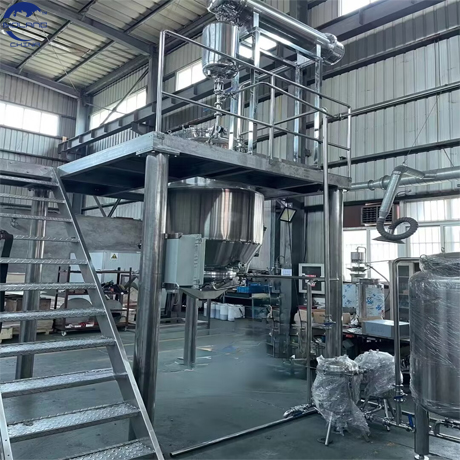
Ultrasonic assisted solvent extraction equipment is a laboratory/pilot scale extraction system that couples ultrasonic energy with solvent extraction. Its core goal is to break cell walls through cavitation effect, accelerate mass transfer, and significantly improve the extraction efficiency and yield of target components (such as flavonoids, polysaccharides, alkaloids). Its essence is not simply "adding an ultrasonic instrument", but a closed-loop system that integrates transducers, reaction chambers, temperature control, stirring, and safety protection
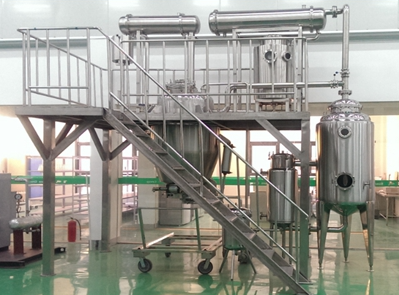
1、 Basic principles
The core principle of ultrasound assisted solvent extraction is to use the cavitation effect, mechanical vibration, and thermal effect generated by ultrasound to accelerate the dissolution of target componentsCavitation effect: Ultrasonic waves generate high-frequency pressure waves in liquids, forming local high-pressure microbubbles that collapse instantly, releasing shock waves (>1000 atm) to destroy cell wall structures and promote solvent permeation.
Mechanical effect: Acoustic vibration enhances the collision frequency between solvent molecules and samples, improving mass transfer efficiency.
Thermal effect: Ultrasonic energy is partially converted into thermal energy (usually with a temperature rise of<50 ℃), reducing solvent viscosity and accelerating diffusion process.
Compared with traditional methods such as Soxhlet extraction, UASE has advantages such as shorter time (usually<60 minutes), less solvent usage (reduced by 30-50%), and suitability for thermosensitive substances
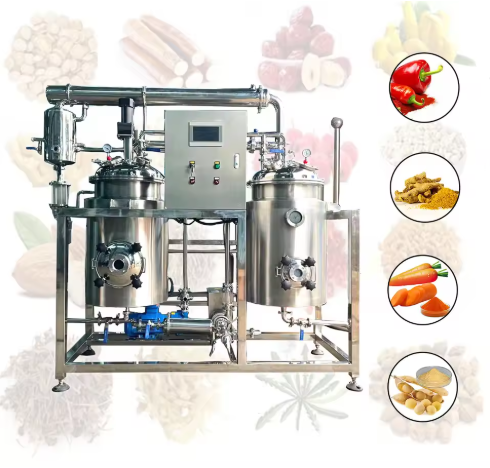
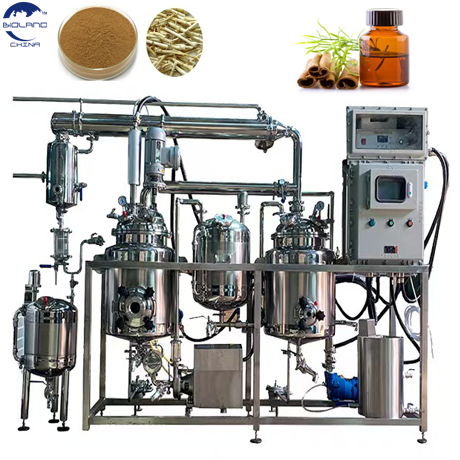
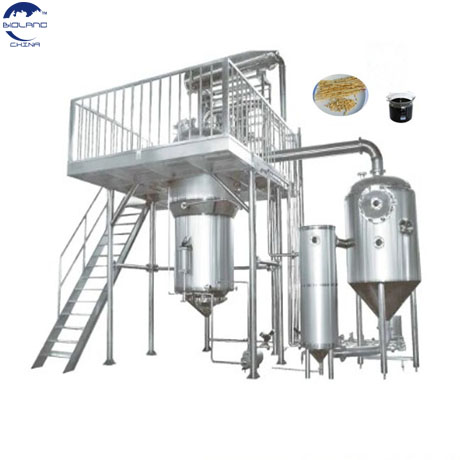
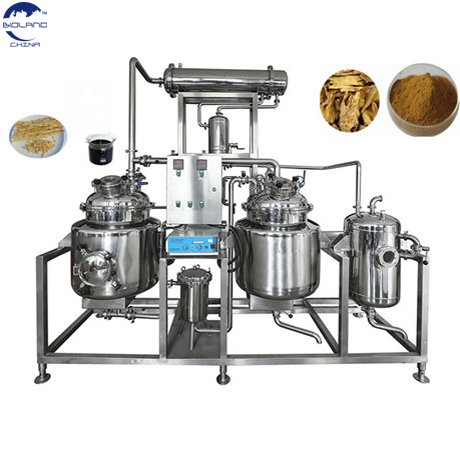
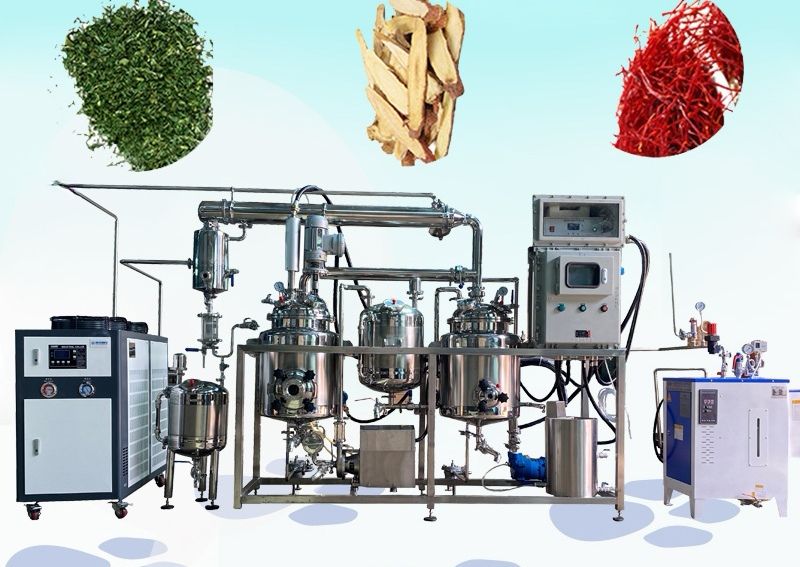
2、 Equipment composition
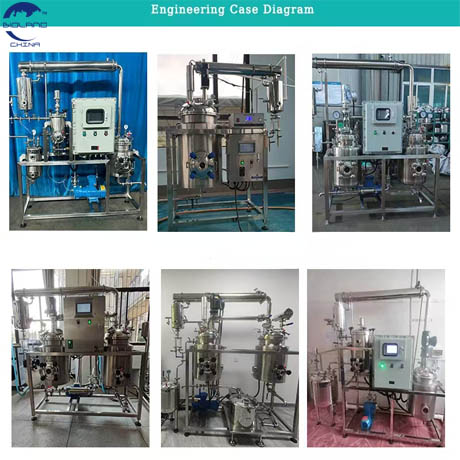
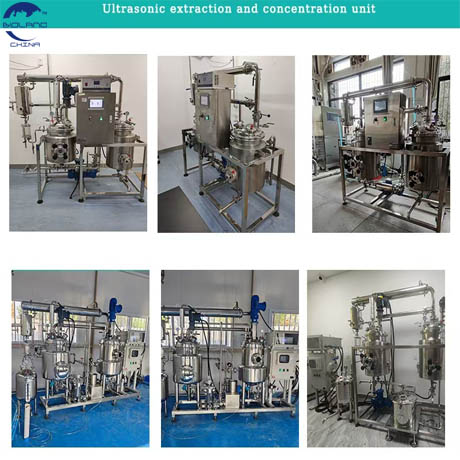
A typical UASE device includes the following modules:
Ultrasonic generator: frequency range 20-100 kHz (commonly 40 kHz), adjustable power (50-3000 W).
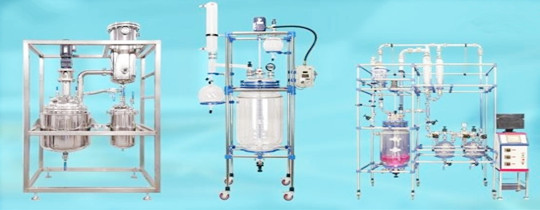
Extraction container: made of chemically resistant materials such as glass and stainless steel, equipped with a temperature control system (with an accuracy of ± 1 ℃).
Cooling circulation device: prevents solvent evaporation (especially low boiling point solvents such as ether).
Separation unit: centrifuge (≥ 12000 rpm) or filtration system, used for solid-liquid separation
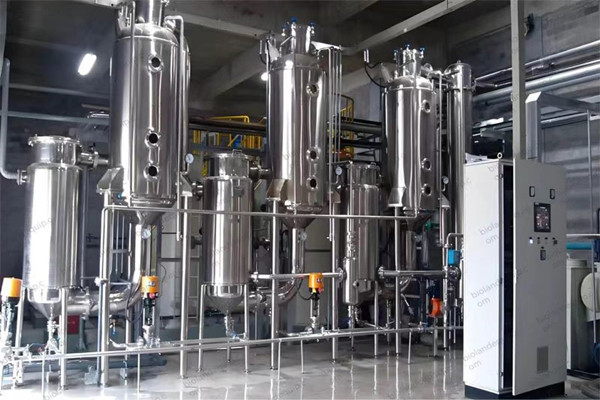
Low temperature concentration device: Under the action of vacuum negative pressure, the boiling point is lowered, and the original liquid is heated to boiling and evaporating at more than 30 degrees. The evaporated steam is condensed into liquid water through the condensation system and discharged through the drainage tank. Depending on the specific gravity of the water, the concentration reduction rate can reach 70%~95%
3、 Process flow
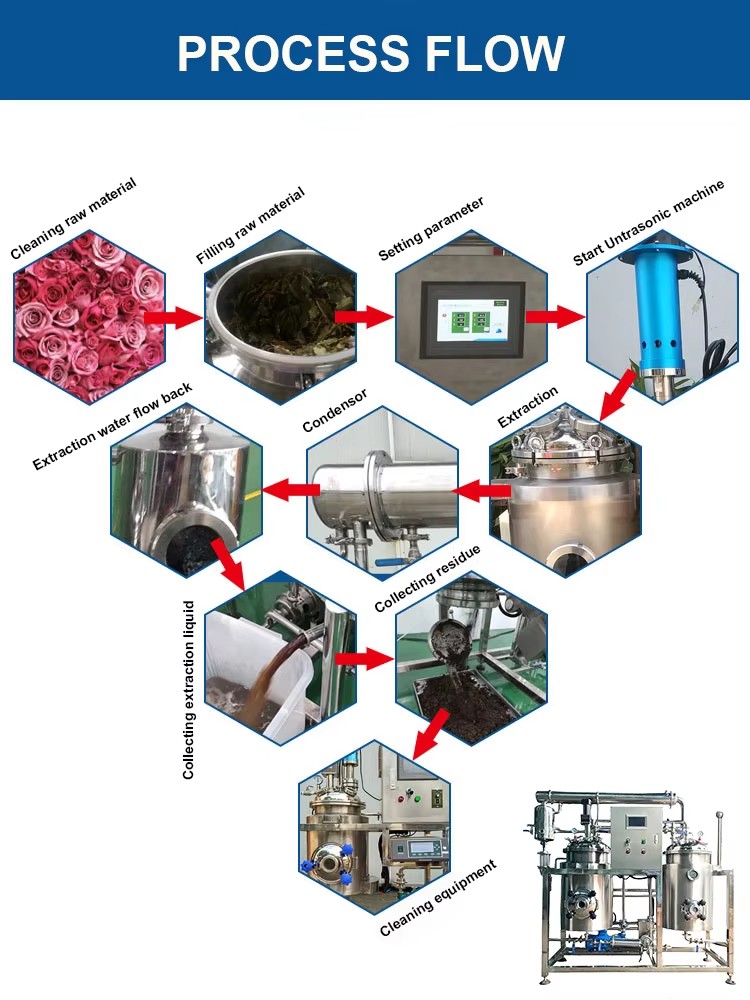
1. Sample pretreatment
Crushing: particle size<0.5 mm (such as ultrafine pulverizer treatment).
Defatting/dewaxing: For oil and fat samples (such as pepper seeds that require pre dewaxing with petroleum ether).
2. Solvent selection and optimization
Green solvent trend: Deep eutectic solvents (DES) are widely used due to their low toxicity and degradability, such as choline chloride/lactic acid (1:2) for phenolic extraction.
Parameter optimization: Use response surface methodology (RSM) or artificial neural network (ANN) to determine the optimal conditions, for example:
Goji berry seed oil: ethanol concentration of 52%, solid-liquid ratio of 1:18 g/mL, ultrasound power of 610 W.
Sophora bean gum: material to liquid ratio 1:47 g/mL, temperature 43 ℃, time 63 min.
3. Ultrasonic extraction stage
Dynamic parameter control:
Temperature: 40-60 ℃ (to avoid degradation of thermosensitive materials).
Time: 20-40 minutes (too long can cause component oxidation).
Power density: 0.5-1.5 W/mL (too high can cause free radical damage).
4. Post processing and purification
Centrifuge/Filter: Remove at 12000 rpm for 10 minutes.
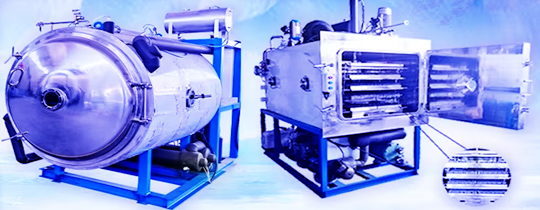
Solvent recovery: Low temperature concentration device or rotary evaporation or freeze-drying (such as polysaccharides).
Purification: Sevag method for protein removal (chloroform: n-butanol=3:1) or AB-8 resin for target substance enrichment
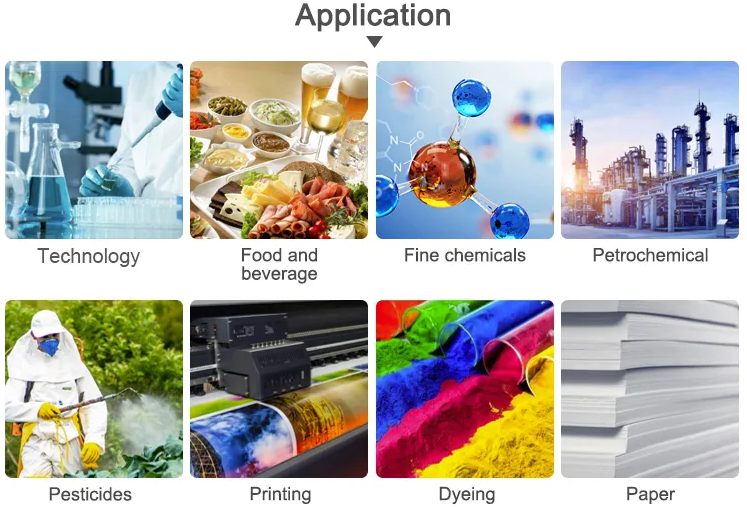
4、 Application Fields
1. Natural product extraction
Active ingredients: flavonoids (Prunella vulgaris), saponins (Paeonia lactiflora), polysaccharides (soybean residue).
Case: The extraction rate of anthocyanins from red meat apples reached 3.62% (acetone volume fraction of 80%, solid-liquid ratio of 1:14 g/mL).
2. Food industry
Functional oil: Sichuan pepper seed oil (yield 27.25%, petroleum ether solvent).
Antioxidant: Total phenolic extraction from Moringa leaves (DES solvent enhances activity by 30%).
3. Environmental and Pharmaceutical Analysis
Heavy metal detection: NADES-UAME method is used to extract arsenic/selenium from rice, with a detection limit as low as 1.7 ng/L.
Drug purification: UPLC/Q-TOF-MS rapid analysis of components in eczema mixture.
4. Emerging interdisciplinary fields
Nanomaterial preparation: Ultrasonic assisted electrophoretic deposition of graphene (to avoid agglomeration).
Nanoenzyme synthesis: ultrasound induced H ₂ O ₂ generation for biosensing
Consultation