

- Home
- >
- Products
- >
- Extraction
- Ultrasonic assisted Extraction Equipment
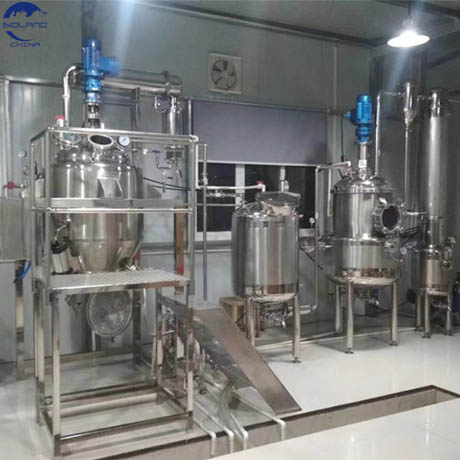
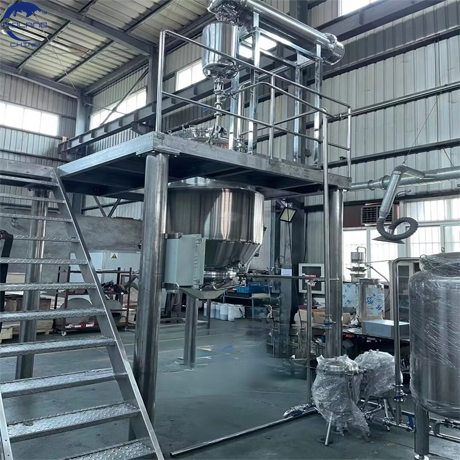
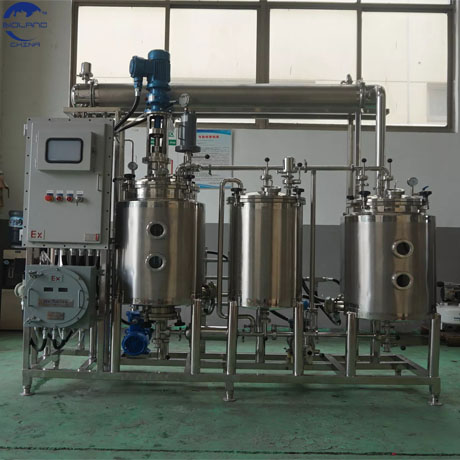
ultrasonic solvent extraction equipment
ultrasonic solvent extraction equipment ,ultrasonic solvent extraction,ultrasonic ethanol extraction
ultrasonic solvent extraction equipment ,Ultrasonic assisted Extraction Equipment,alcohol extraction equipment
Product Detail
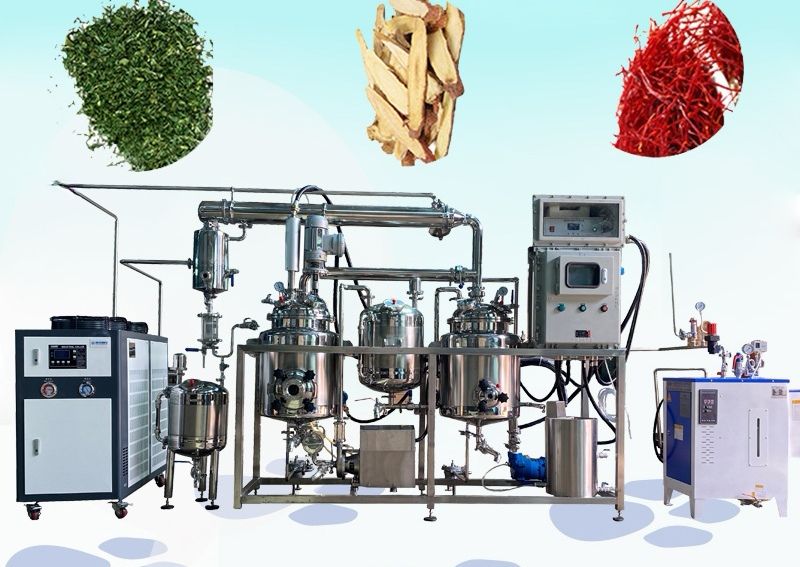
The ultrasonic solvent extraction equipment achieves an efficient, low-temperature, and environmentally friendly extraction process through a physical strengthening mechanism, and has irreplaceable advantages in the field of high-value utilization of natural products.
Ultrasonic Solvent Extraction equipment(UAE) utilizes high-frequency ultrasound cavitation effect to destroy plant cell walls, accelerate the diffusion of target components (such as polyphenols, alkaloids, collagen, etc.) into the solvent, significantly improve extraction efficiency and yield, while reducing temperature and time requirements, which is beneficial for the retention of thermosensitive components. This technology has been widely used in fields such as optimizing the compatibility of traditional Chinese medicine, extracting collagen from the food industry, analyzing pesticide residues, and enriching cannabinoids
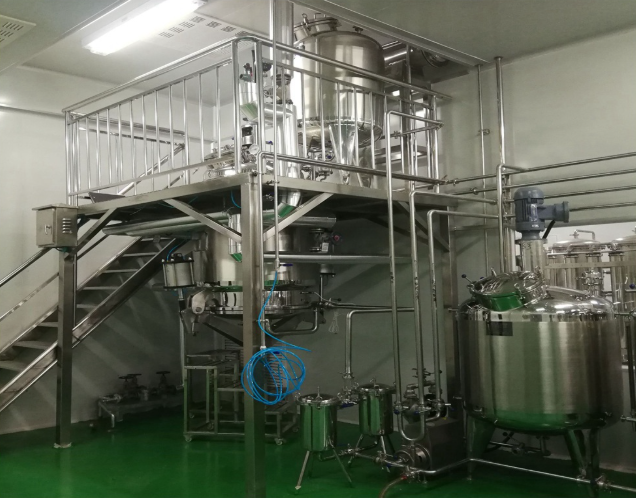
Product advantages
Efficient extraction: The extraction rate is improved by 50-500% compared to traditional methods, such as the extraction rate of chili red pigment reaching 64.2%.
Low temperature protection: The working temperature is 40-60 ℃ to avoid the decomposition of heat sensitive components such as flavonoids and anthocyanins.
Energy saving and environmental protection: Time is reduced by 2/3 (such as 50 minutes for red rice pigment), and solvent usage is reduced by 30%.
Broad spectrum applicability: Compatible with solvents such as water, ethanol, and petroleum ether, suitable for polar/non-polar components.
High degree of automation: one click operation, support for multi parameter programming, reduce manual intervention
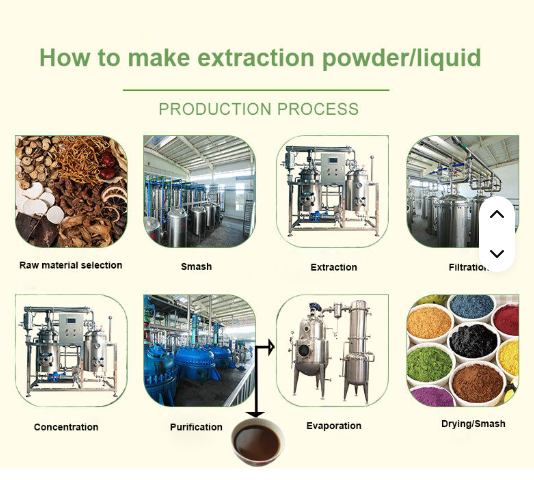
process flow
The process of ultrasonic solvent extraction and concentration usually includes the following steps:
Pre treatment: Grind the raw materials to a suitable particle size (such as 80 mesh) to increase the contact area.
Ultrasonic extraction: Raw materials and solvents (ethanol, acetone, etc.) are mixed in a solid-liquid ratio (1:8-1:50) and exposed to an ultrasonic field (frequency 20-40kHz, power 40-3000W) for 20-60 minutes to release effective ingredients through cavitation effect.
Filtration and separation: The extract is filtered or centrifuged to remove residue, and some equipment is integrated with an online filtration system.
Solvent recovery: Vacuum depressurization or distillation technology is used to recover organic solvents (such as ethanol) and recycle them.
Concentrated drying: The extract is concentrated into a paste or powder under low temperature (≤ 60 ℃) vacuum conditions, retaining thermosensitive components
working principle
The core mechanism is based on the three major physical effects of ultrasound:
Cavitation effect: Ultrasonic waves generate microbubbles in liquid and instantly collapse, forming local high temperature and high pressure (up to 5000K, 1000atm), breaking cell walls and accelerating component dissolution.
Mechanical vibration: High frequency vibration enhances solvent permeation and diffusion, shortening the mass transfer path.
Thermal effect: Mild heating (usually 40-60 ℃) promotes molecular motion and avoids high-temperature degradation
Equipment structure
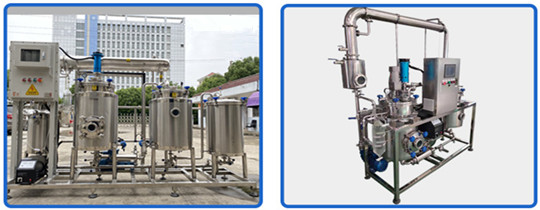
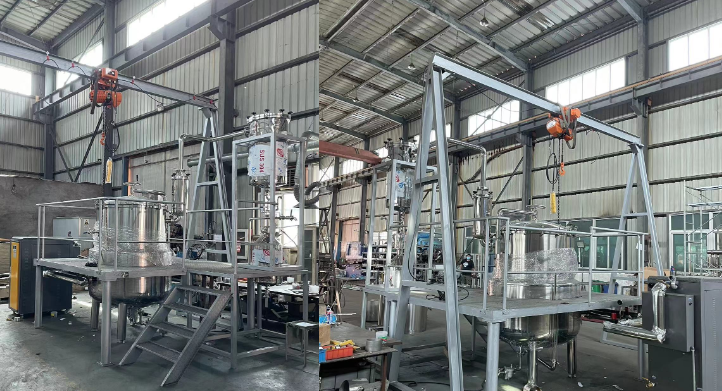
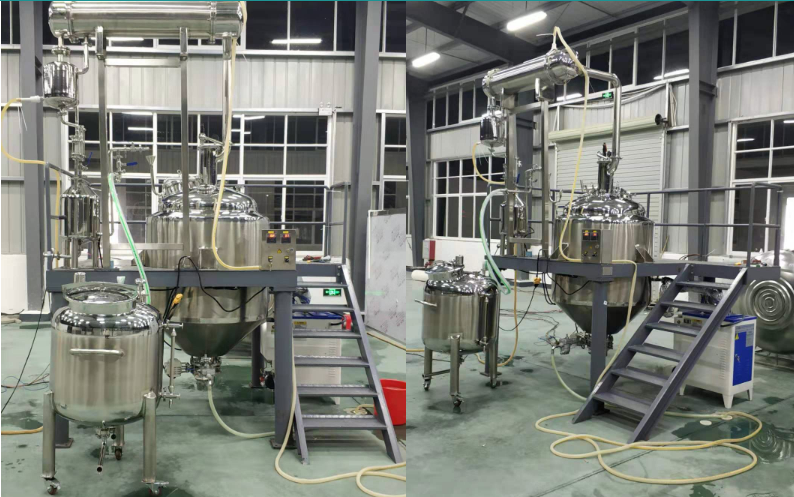
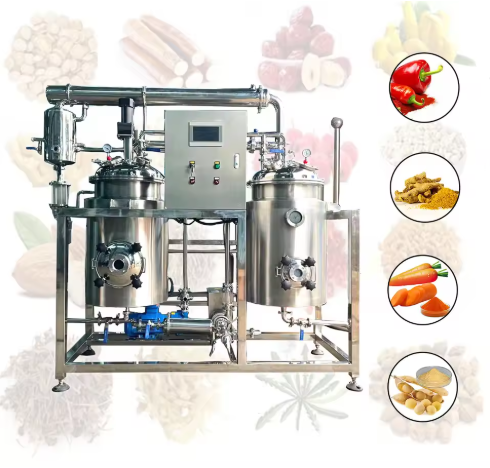
A typical device includes the following modules:
Ultrasonic generator: titanium alloy probe or energy gathering transducer, adjustable power (500-3000W), frequency range 20-40kHz.
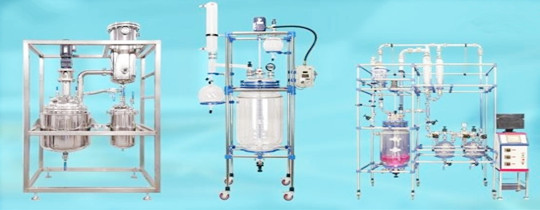
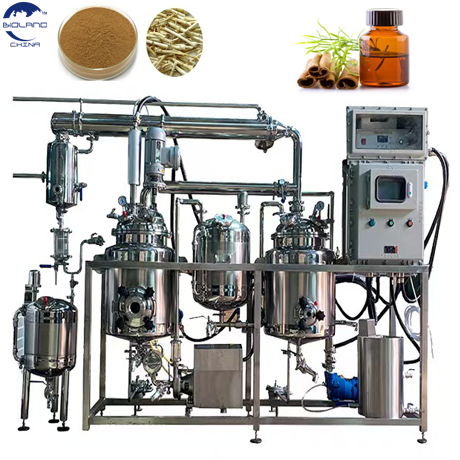
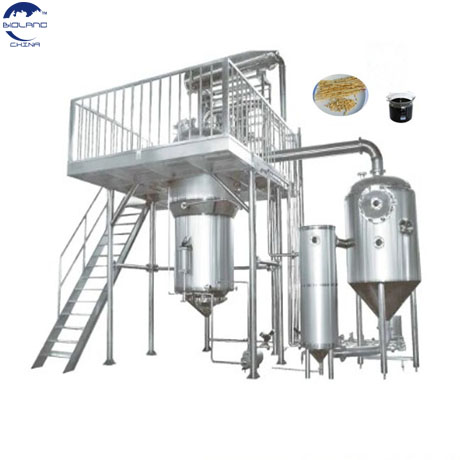
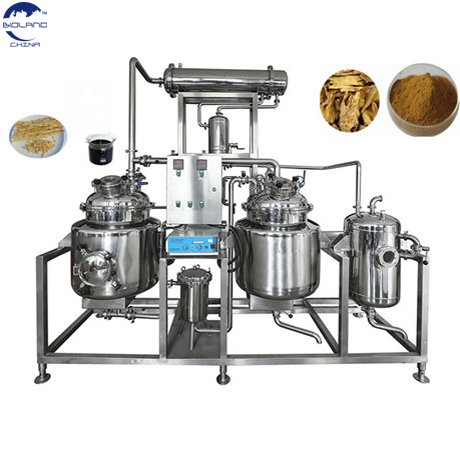
Extraction tank: made of stainless steel material (304/316L), corrosion-resistant, equipped with pneumatic stirring device and interlayer temperature control system.
Condensation and recovery system: Spiral condenser tube combined with solvent recovery tank to achieve organic solvent recycling.
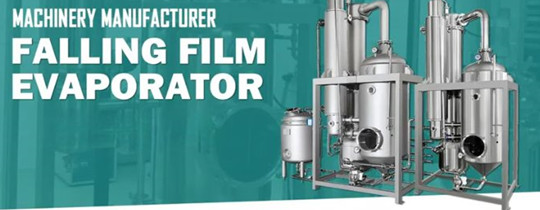
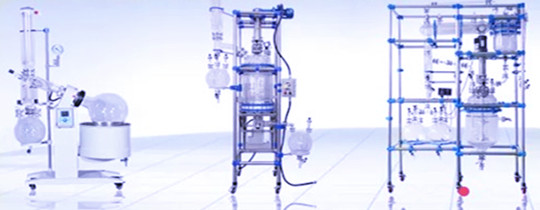
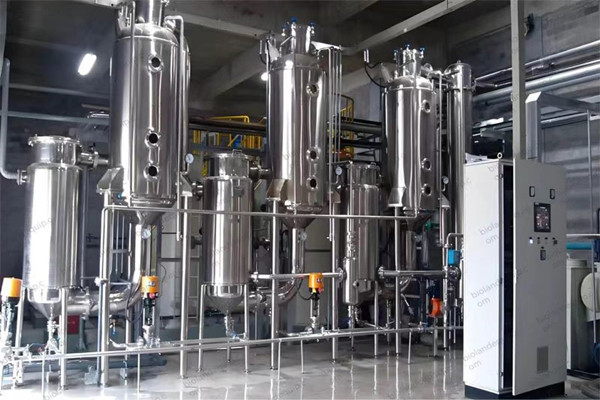
Concentration unit: Vacuum falling film evaporator or rotary evaporator, low-temperature and high-efficiency concentration (evaporation temperature ≤ 60 ℃).
Automation control: PLC integrated touch screen, real-time control of temperature, power, time and other parameters, supporting CIP online cleaning
application field
Traditional Chinese medicine pharmaceuticals: extract active ingredients such as saponins (such as white ginseng leaves with an extraction rate of 16.32%), alkaloids, polysaccharides, etc.
Industrial preparation of natural pigments: chili red, red rice anthocyanins, and peanut coat red pigments.
Food industry: Extraction of functional ingredients (pine shell polysaccharides, marigold lutein).
Cosmetics: Plant essential oils (such as roses and lemongrass) and antioxidant extracts.
Biopharmaceuticals: Low temperature extraction of active ingredients such as proteins, DNA, and CBD
Consultation