



selection skills -low-temperature chiller for reactors vessels/rotary evaporators
2026-04-27
In laboratory and industrial production, the efficient operation of reaction vessels and rotary evaporators relies on the precise matching of ultra-low temperature refrigeration cycles or low-temperature chiller . Proper selection not only ensures experimental stability, but also improves efficiency and safety. This article will extract the core points and provide users with concise and practical selection guidance.
Key points of chemical reactors matching low temperature chiller : dynamic thermal equilibrium and system adaptation
1. Accurate evaluation of heat load: The thermal effect of the reaction process is complex, and it is necessary to comprehensively calculate all influencing factors such as material mass, specific heat capacity, heating and cooling rate, reaction release/absorption rate, stirring heat, equipment and pipeline heat leakage, environmental heat exchange, etc., and determine the required refrigeration capacity based on the heat exchange area and heat exchange efficiency. It is strictly prohibited to estimate solely based on the volume of the reaction vessel. The actual process curve should be calculated and a safety margin of 15% to 30% should be reserved to ensure stable and controllable temperature.
2. Adaptation of refrigeration architecture: Select a refrigeration system based on the reaction temperature range (such as single-stage compression refrigeration or cascade compression refrigeration), focusing on the actual refrigeration capacity under the target operating conditions, rather than the no-load limit indicator.
3. Optimize the circulation system: match the jacket or coil structure to ensure that the flow rate and head of the circulation pump meet the heat transfer requirements and avoid local temperature differences. The material should be compatible with the reaction medium, and explosion-proof configuration should be selected for flammable and explosive scenarios.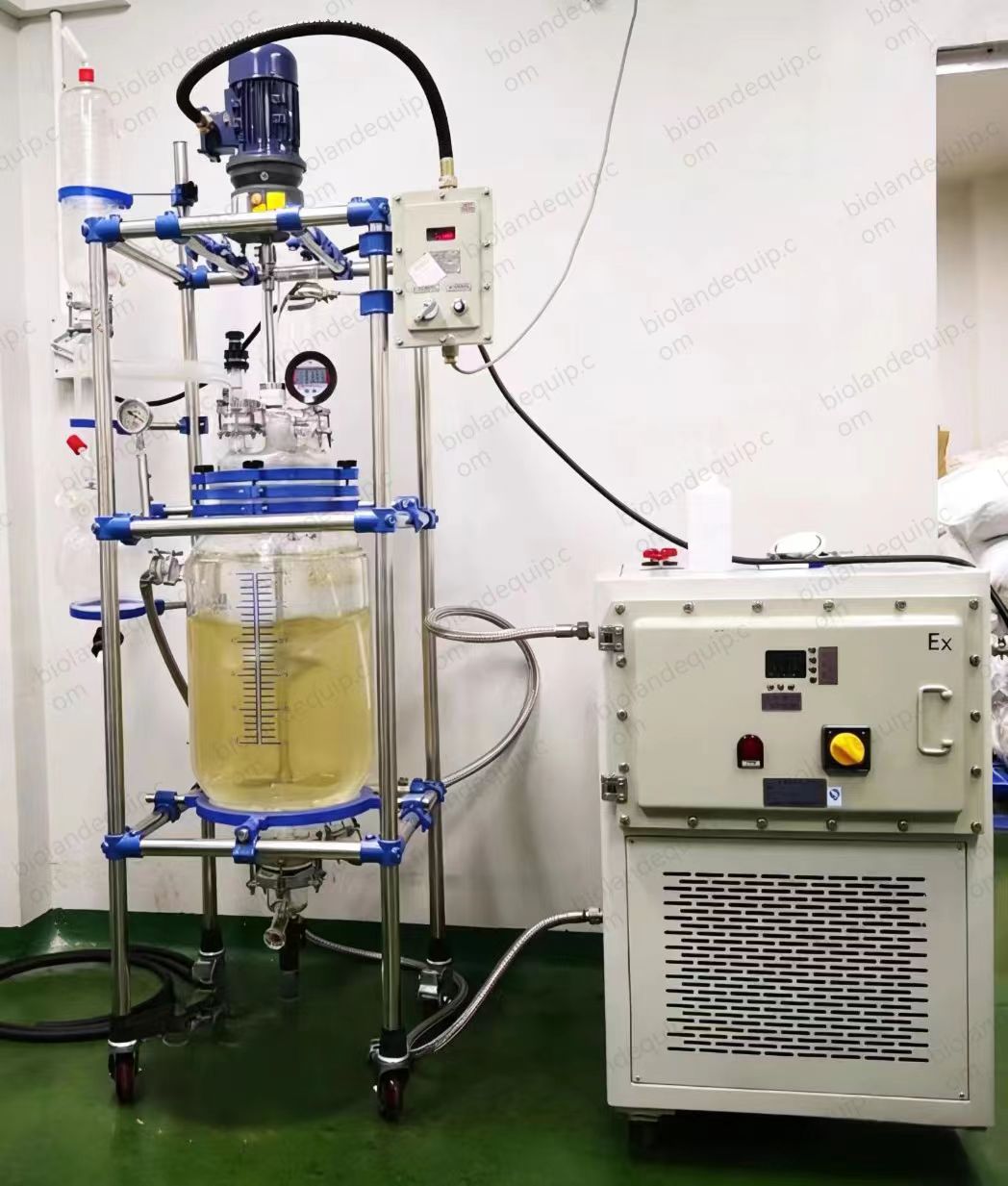
2、 Key points for matching rotary evaporator: condensation efficiency and temperature control accuracy
1. Temperature difference driven condensation: The temperature of the refrigeration cycle should be at least 15-25 ℃ lower than the boiling point of the solvent to ensure sufficient temperature difference to improve condensation efficiency and prevent solvent escape from contaminating the vacuum pump.
2. Matching cooling capacity and evaporation capacity: The cooling demand is determined based on the capacity of the evaporator bottle and the properties of the solvent. Large capacity rotary evaporation requires higher cooling capacity, while ensuring that the circulating flow evenly covers the condenser to avoid the failure of temperature difference between the upper and lower parts.
3. Vacuum linkage control: The low-temperature and vacuum systems work together to stabilize and avoid pressure fluctuations affecting the condensation effect.
3、 General selection principles and pit avoidance guidelines
1. Avoid the four major misconceptions:
Only focus on the maximum temperature and ignore the actual cooling capacity under working conditions;
Estimate cooling capacity based on equipment volume;
Blindly pursuing low-temperature areas, neglecting energy consumption and costs;
Ignore the requirements for flow rate and head of the circulating pump.
2. Safety and maintenance: Choose equipment with safety functions such as over temperature protection and liquid level alarm; Regularly replace the refrigerant (1-2 years/time), check the pipeline sealing and electrical safety.
3. Professional support: Provide manufacturers with detailed process parameters (such as material characteristics, temperature curves), obtain customized solutions, and avoid "big horses pulling small cars" or "small horses pulling big cars".
4、 Long term value: equal emphasis on efficiency and reliability
A precisely matched refrigeration system can significantly improve experimental reproducibility and reduce failure rates. Pay attention to equipment installation, debugging, and regular maintenance to ensure long-term stable operation. You can choose manufacturers with technical strength to obtain reliable after-sales support and reduce lifecycle costs.
Summary: Selection should be based on actual processes, balancing cooling capacity, temperature control accuracy, safety, and cost.
Xi'an Bioland Instrument Co., Ltd has been focusing on the field of laboratory equipment for many years. We can provide reliable temperature control solutions for laboratory and industrial users, helping them break through temperature control bottlenecks and achieve efficient scientific research and production. Welcome to Visit us! -info@bioland-china.com
Related News
MORE >-

What are the characteristics of pilot plant glass reactor used in chemical and pharmaceutical industries?
chemical reactor,reactor in chemical plant,batch chemical reactor ,chemical reactor plant,glass reactor vessel ,jacketed reactor vessel
-

Common Troubleshooting Methods for chemical glass reactor
batch glass reactor,lab glass reactor ,jacketed glass reactor,100 liter glass reactor,jacketed reactor vessel
-

Chemical synthesis glass reactor selection guide
chemical synthesis reactor,chemical glass reactor, 50L Chemical Glass Reactor, Agitated Nutsche Filter Jacket Reactor
Consultation