
What are the characteristics of pilot plant glass reactor used in chemical and pharmaceutical industries?
2026-07-08
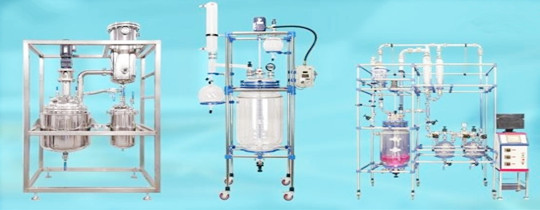
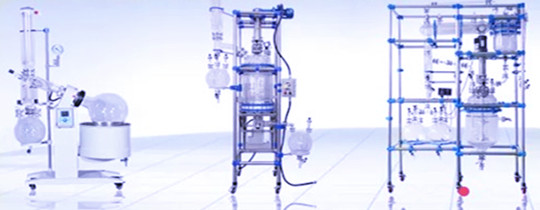
A pilot plant glass reactor (also called a pilot-scale double-layer glass reactor) is a scaled-up version of laboratory glass reactors, designed to bridge the gap between small-scale R&D experiments and full-scale industrial production. It replicates the core functionality of lab reactors while accommodating larger batch sizes (typically 20L–200L), enabling process validation, safety testing, and economic feasibility analysis before committing to industrial-scale manufacturing.

Core Design & Technical Specifications
-
Capacity & Scalability:
- Volume range: 20L to 200L (customizable up to 100L 200L for specialized applications).
- Scales 10–100x larger than lab reactors (1L–20L), while retaining identical process parameters (e.g., temperature, agitation, vacuum) for direct comparison with R&D data.
-
Material & Durability:
- Glass: High borosilicate glass (GG-17) with thermal shock resistance (–80°C to +300°C) and chemical inertness against acids, bases, and organic solvents.
- Seals & Bearings: PTFE or ceramic mechanical seals, corrosion-resistant stainless steel (316L) support structures, and explosion-proof motors (ATEX/IECEx certified for hazardous environments).
-
Process Control Systems:
- Temperature: ±0.5°C accuracy with PID-controlled heating/cooling jackets (supports silicone oil, hot/cold water, or glycol for –80°C to +250°C ranges).
- Agitation: Variable-speed magnetic or mechanical stirrers (0–2000 rpm), with torque sensors to monitor viscosity changes during scaling.
- Vacuum/Pressure: Integrated vacuum pumps (–0.098 MPa) and pressure gauges for distillation, degassing, or inert atmosphere reactions (N₂/Ar purging).
-
Safety & Compliance:
- Explosion-proof design: Essential for flammable solvents (e.g., THF, diethyl ether) used in pharmaceutical or fine chemical synthesis.
- GMP-ready: Smooth interior surfaces (no dead zones) for easy cleaning (CIP/SIP compatible), with data logging for batch record traceability (FDA 21 CFR Part 11 compliant).
Key Applications in Pilot Plant Operations
-
Process Scale-Up Validation:
- Replicate lab-scale reaction kinetics (e.g., exothermic rates, mixing efficiency) at pilot scale to identify deviations (e.g., heat transfer limitations, mass transfer bottlenecks).
- Example: Validating a 100L batch process for API synthesis after optimizing a 20L lab reaction.
-
Safety & Risk Assessment:
- Test hazardous reactions (e.g., nitration, hydrogenation) under near-industrial conditions to evaluate thermal runaway risks, pressure build-up, or solvent compatibility.
-
Regulatory & Quality Testing:
- Generate GMP-compliant batch data for regulatory submissions (e.g., FDA, EMA), proving process reproducibility and product quality consistency.
-
Economic Feasibility Studies:
- Calculate yield, energy consumption, and material costs at pilot scale to justify capital investment in full-scale reactors.
-
Specialized Process Development:
- Distillation/Crystallization: Pilot-scale solvent recovery or polymorph screening for pharmaceuticals.
- Continuous Flow Integration: Test semi-continuous operation (e.g., fed-batch reactions) before transitioning to fully continuous manufacturing.

Critical Considerations for Pilot Plant Selection
In the modern chemical and pharmaceutical industries, double-layer pilot plant glass reactor are important experimental equipment. It is widely used in synthesis reactions, distillation concentration, extraction and separation processes due to its unique structural design and excellent performance. So, what are the key features that a double-layer glass reactor suitable for the chemical and pharmaceutical industries needs to meet?
1、 Material safety and chemical stability
Firstly, material selection is the foundation of reactor design. High quality double-layer glass reaction vessels usually use high borosilicate glass as the main material. This type of glass has an extremely low coefficient of thermal expansion and can withstand drastic temperature changes from -80 ℃ to over 200 ℃ without breaking, making it the "stainless steel of glass".
In the pharmaceutical industry, equipment materials must also comply with GMP requirements to ensure that they do not react with drug ingredients or release harmful substances. The smoothness of the glass surface should reach the mirror level to avoid material residue and cross contamination, which is the basic guarantee of drug purity.
2、 Accurate temperature control system
The double-layer structure is the core design of this type of reactor - the inner layer accommodates the reactants, and the outer layer is filled with a heat transfer medium (such as heat transfer oil, water, or refrigerant). This design makes temperature control more uniform and efficient.
A qualified reaction kettle should be equipped with an intelligent temperature control system, and the temperature control accuracy is usually required to reach ± 0.5 ℃ or even higher. In pharmaceutical synthesis, many reactions are extremely sensitive to temperature, and a deviation of a few degrees can lead to an increase in by-products or a decrease in yield. In addition, the ability to quickly raise and lower temperatures is also important, as it can improve production efficiency and cope with certain special processes that require rapid cooling and heating.
3、 Excellent sealing performance
Chemical reactions often involve toxic, flammable, or volatile substances, while pharmaceutical processes require strict sterile environments. Therefore, the sealing system of the reaction vessel must meet high standards.
Usually, seals made of polytetrafluoroethylene (PTFE) or special alloy materials are used, combined with mechanical seals or magnetic stirring sealing technology, to ensure zero leakage under vacuum or pressure conditions. For pharmaceutical grade equipment, sealing integrity testing is also required to verify its compliance with aseptic operation requirements.
4、 Flexible mixing and blending ability
Uniform mixing is the key to successful reaction. The stirring system of the reaction kettle needs to be flexibly configured according to the characteristics of the materials: anchor stirring is suitable for high viscosity materials, paddle stirring is suitable for general liquids, and vortex stirring can meet the needs of gas-liquid dispersion or solid suspension.
The stirring speed should be infinitely adjustable, and the stirring shaft should have sufficient mechanical strength to avoid bending or breaking under high viscosity conditions. The application of magnetic stirring technology has eliminated the leakage hazard at the shaft seal and become the preferred solution in the pharmaceutical industry.
5、 The security protection mechanism of pilot plant glass reactor
Chemical reactions often involve heat release, gas production, or pressure changes, and safety risks cannot be ignored. Modern double-layer glass reaction vessels need to integrate multiple protections: automatic power-off for overheating, overpressure relief device, explosion-proof motor, emergency cooling system, etc. The glass jacket should also be equipped with pressure protection to prevent equipment damage caused by overpressure of the thermal conductive medium.
In the pharmaceutical field, equipment also needs to have online cleaning (CIP) and online sterilization (SIP) functions to ensure no residue or microbial contamination between batches.
6、 Advantages of Visualization and Automation
The important advantage of glass material lies in the visualization of the entire process - operators can directly observe the reaction status, color changes, and phase separation, which is a characteristic that stainless steel reactors cannot compare to.
At the same time, modern equipment is generally equipped with PLC or touch screen control systems, which can be programmed to set parameters such as temperature, speed, and time, automatically record process data, and meet the strict requirements of the pharmaceutical industry for production traceability.

A pilot plant glass reactor is the critical “proof-of-concept” tool for de-risking process scale-up, ensuring that lab-scale innovations translate reliably to industrial manufacturing. For industries like pharmaceuticals, fine chemicals, and agrochemicals, it reduces time-to-market by 30–50% by catching scale-up issues early.
Need help with pilot plant reactor sizing calculations or scale-up methodology guidelines? please contact -info@bioland-china.com
Related News
MORE >-

Common Troubleshooting Methods for chemical glass reactor
batch glass reactor,lab glass reactor ,jacketed glass reactor,100 liter glass reactor,jacketed reactor vessel
-

Chemical synthesis glass reactor selection guide
chemical synthesis reactor,chemical glass reactor, 50L Chemical Glass Reactor, Agitated Nutsche Filter Jacket Reactor
-
The principle of ultrasonic herbal extraction equipment
ultrasonic herbal extraction equipment,ultrasound assisted extraction machine,ultrasonic herbal extraction equipment,extraction concentration unit
Consultation