


Common Troubleshooting Methods for chemical glass reactor
2026-07-08
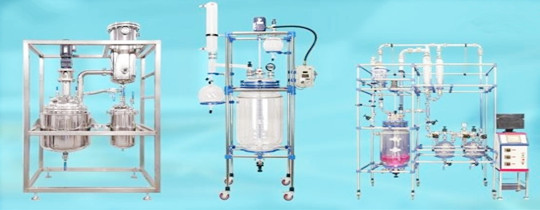
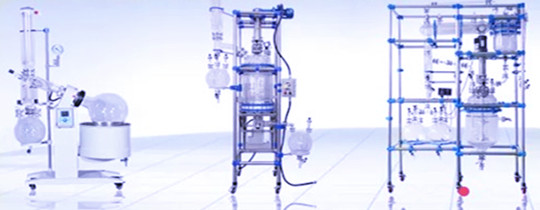
A chemical glass reactor (also known as a double-layer glass reactor or vacuum jacketed reactor) is a precision laboratory or industrial-scale equipment designed for conducting chemical reactions, distillation, crystallization, and other process operations under controlled conditions. It consists of a double-walled glass vessel (inner reaction chamber + outer heating/cooling jacket), enabling precise temperature regulation, vacuum/pressure control, and inert atmosphere management.

Core Components & Structure
-
Inner Glass Chamber:
- Made from high borosilicate glass (e.g., GG-17) for high thermal shock resistance and chemical inertness.
- Equipped with ports for stirrers, thermometers, condensers, and sampling valves.
-
Outer Heating/Cooling Jacket:
- A double-walled annular space between the inner and outer glass layers.
- Circulates heating media (e.g., silicone oil, hot water) or cooling media (e.g., chilled water, liquid nitrogen) to maintain target temperatures (-80°C to +300°C).
-
Drive System:
- Magnetic drive or mechanical seal-driven motor for stirring, ensuring leak-free operation under vacuum/inert gas.
-
Vacuum/Pressure Control:
- Integrated vacuum pump and pressure gauge for vacuum distillation, azeotropic dehydration, or inert atmosphere reactions (e.g., nitrogen/argon purging).
-
Safety Features:
- Over-temperature protection, pressure relief valves, and explosion-proof electrical components (for hazardous reactions).

Key Applications
- Pharmaceuticals: Synthesis of active ingredients (APIs), crystallization, and purification.
- Fine Chemicals: Production of dyes, pesticides, and specialty polymers.
- Materials Science: Nanomaterial synthesis, battery electrolyte preparation, and semiconductor-grade chemical processing.
- Academic Research: Small-scale reaction optimization, kinetic studies, and scale-up testing.
- Food & Flavor: Extraction of essential oils, enzymatic reactions, and flavor compound synthesis.
Common faults in double-layer chemical glass reactors
Vacuum leakage is the most frequent fault, primarily manifested as the inability to meet the required vacuum level and rapid pressure stabilization. The causes are mostly due to aging and deformation of the sealing ring, loose interface screws, or minor scratches on the glass reactor body. During troubleshooting, valves can be closed for observation of vacuum level changes, and each sealing point such as the reactor cover, feed port, and stirring shaft should be inspected one by one. The solutions are simple and controllable: replace the aged PTFE sealing ring, evenly tighten all interface bolts, and if there are minor gaps in the reactor body, promptly stop the operation and replace the components, prohibiting operation with faults
Temperature control failure is also a common problem, which can be divided into three situations: slow heating, insufficient cooling, and large temperature fluctuations. The main reasons are insufficient thermal conductivity medium in the interlayer, blockage of the circulation pipeline, offset or scaling of the temperature control sensor. Daily troubleshooting can start by checking the liquid level of the cold and hot cycle machine medium, cleaning up residual impurities and crystalline materials in the pipeline, and recalibrating the sensor position. If the equipment is used alternately at high and low temperatures for a long time, it is necessary to regularly replace the heat transfer oil, antifreeze and other media to ensure heat transfer efficiency.
In addition, stirring lag, abnormal noise, and condensation and dripping of the kettle body are also common. Mixing failures are often caused by eccentric mixing rods, loose couplings, and excessive viscous loads on materials. It is necessary to shut down and tighten the connecting components, adjust the mixing coaxiality, and reduce the mixing speed for high viscosity materials. The dripping of water from the kettle body is usually caused by a large temperature difference in the interlayer or high environmental humidity. It can be solved by adjusting the temperature change rate and maintaining laboratory ventilation and dryness.
Daily maintenance is the key to reducing malfunctions. After the experiment, it is necessary to thoroughly clean the kettle body and pipelines to avoid material residue and corrosion of accessories; Regularly replace sealing consumables, calibrate temperature control and vacuum systems; Strictly following the operating procedures, preventing rapid temperature rise and fall, and excessive negative pressure operation can significantly extend the service life of the equipment and ensure stable experimental progress.

The above are common faults and troubleshooting methods for double-layer chemical glass reactors. We hope it can be helpful for your problem. If you have any other questions, please feel free to leave a message online or call our factory staff. Bioland Instrument will be dedicated to serving you! -info@bioland-china.com
Related News
MORE >-

What are the characteristics of pilot plant glass reactor used in chemical and pharmaceutical industries?
chemical reactor,reactor in chemical plant,batch chemical reactor ,chemical reactor plant,glass reactor vessel ,jacketed reactor vessel
-

Chemical synthesis glass reactor selection guide
chemical synthesis reactor,chemical glass reactor, 50L Chemical Glass Reactor, Agitated Nutsche Filter Jacket Reactor
-
The principle of ultrasonic herbal extraction equipment
ultrasonic herbal extraction equipment,ultrasound assisted extraction machine,ultrasonic herbal extraction equipment,extraction concentration unit
Consultation