



- Home
- >
- Cases
ultrasound-assisted polysaccharide extraction
Ultrasonic-Assisted Polysaccharide Extraction Technology
Ultrasound generates strong impact and shear forces on solvent molecules through high-frequency vibrations, accelerating the dissolution and diffusion of polysaccharides. Among these, ultrasound power is the core parameter affecting extraction efficiency
Low power: The cavitation effect weakens, leading to slower dissolution and diffusion of polysaccharides, resulting in low extraction efficiency;
Excessive power: Local solvent overheating may damage the polysaccharide molecular structure, affecting extraction quality. The optimal power should be determined through experimentation based on polysaccharide type and solvent properties (e.g., 60% power is suitable for Dendrobium officinale polysaccharide extraction)
Translate the text directly into English without any explanation, ensuring the meaning is smooth and coherent.
2.Typical Process Parameters and Optimization Cases
The ultrasonic extraction processes for different raw materials require targeted optimization, with the following three typical research conclusions:
Dendrobium officinale polysaccharides: The optimal process parameters are a material-to-liquid ratio of 1:120, ultrasonic time of 2.0 hours, temperature of 50°C, and power of 60%, with ultrasonic temperature being the primary factor affecting the extraction rate
Corn husk polysaccharides: Key parameters to control include ultrasonic power (balancing cell disruption and polysaccharide integrity), extraction time (ensuring thorough extraction), and temperature (avoiding degradation), with water as the common extraction solvent
Translate the text into English, output the translation directly without any explanation, ensuring the meaning is coherent.
Astragalus Polysaccharides: Process optimization via response surface methodology significantly enhances extraction efficiency while reducing experimental costs, providing technical support for the modernization of traditional Chinese medicine
Translate into English, output the translation directly without explanation, ensuring smooth semantics.
3.Technical Advantages and Application Value
Compared to the traditional water-alcohol precipitation method, ultrasound-assisted extraction features fast extraction speed, high efficiency, mild conditions, and low energy consumption, making it suitable for the extraction of heat-sensitive polysaccharides. It has been widely applied in the following fields:
Development of Chinese Medicinal Resources: Efficient Extraction of Polysaccharides from Herbs like Astragalus and Dendrobium, Promoting the Modernization of Traditional Chinese Medicine;
Food Industry: Polysaccharide extraction from by-products such as corn husks and lychee pulp to develop functional food ingredients;
Pharmaceutical R&D: Extracting polysaccharides with immunomodulatory, antioxidant, and antitumor activities for drug or health supplement development
4.Latest Technological Advancements: Collaborative Extraction Technology
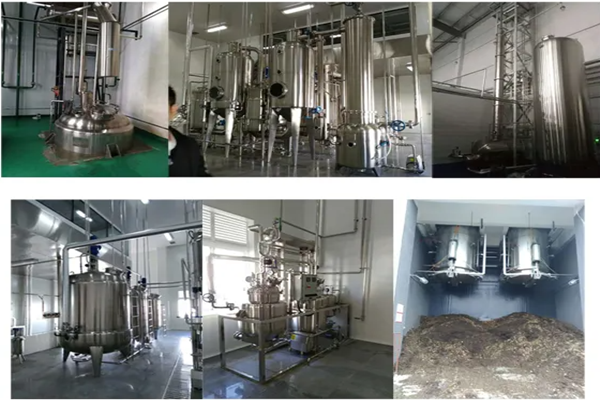 Do you need to clarify the specific synergistic extraction process parameters for a particular type of polysaccharide extraction(such as Ganoderma lucidum, Goji berry, Astragalus membranaceus)? Or would you like to know the equipment adaptation plan for this technology in industrial production? Please contact our engineers promptly via email info@bioland-china.com
Ultrasound-assisted polysaccharide extraction is a technique that utilizes the high-frequency vibrations of ultrasonic waves to generate cavitation effects, mechanical effects, and thermal effects, which disrupt the plant cell wall structure, accelerate solvent penetration and polysaccharide molecular diffusion, thereby achieving efficient extraction.
You can refer the more details of ultrasound-assisted extraction :https://youtu.be/VDXV2TXcMGo
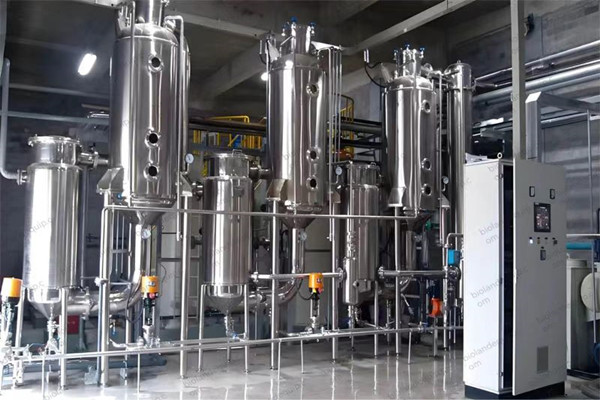
The complete process of ultrasound assisted extraction of polysaccharides can be divided into five core steps: raw material pretreatment, ultrasound extraction, extraction solution pretreatment, purification, and drying. The following are detailed steps, key parameters, and precautions:
1、 Raw material pretreatment (the basis for determining extraction efficiency)
Objective: To disrupt the physical structure of the raw material, expose the cell wall wrapped in polysaccharides, and improve subsequent extraction efficiency.
Steps:
Cleaning: Rinse the raw materials (such as Ganoderma lucidum, wolfberry, corn husk, etc.) with clean water 3-5 times to remove surface dust and impurities.
dry:
Natural air drying or low-temperature drying (40-50 ℃, 12-24h) to avoid polysaccharide degradation caused by high temperature;
After drying, grind (pass through a 40-60 mesh sieve) to increase the specific surface area of the raw material and improve the contact efficiency of ultrasonic cavitation effect.
Weighing: Weigh the raw materials according to the extraction scale (such as laboratory 10-50g, industrial 100g -1kg).
Key parameters:
Particle size: 40-60 mesh (too fine can clog the ultrasonic probe, too coarse can reduce extraction efficiency);
Drying temperature: ≤ 50 ℃ (temperature must be strictly controlled for thermosensitive polysaccharides such as Ganoderma lucidum polysaccharides).
2、 Ultrasonic extraction (core step, determining polysaccharide yield and activity)
Objective: To break down cell walls through ultrasonic cavitation effect, accelerate polysaccharide dissolution, and achieve efficient extraction.
Steps:
Preparation of extraction solution:
Solvent selection: deionized water (most commonly used), dilute ethanol (30% -50%, suitable for raw materials with high protein impurities), buffer solution (pH 6.0-7.0, stable polysaccharide structure);
Material to liquid ratio: 1:10-1:20 (g/mL, such as 1:11.6 for Ganoderma lucidum and 1:20 for wolfberry). Excessive solvent will reduce extraction efficiency, while insufficient solvent will result in incomplete extraction.
Ultrasonic extraction:
Mix the raw materials with the extraction solution and place them in an ultrasonic extractor;
Set parameters:
Temperature: 40-60 ℃ (thermosensitive polysaccharides ≤ 50 ℃, such as Ganoderma lucidum and wolfberry; high-temperature resistant materials such as corn husks can reach up to 60 ℃);
Power: 50% -80% (rated power of equipment, such as 60% Ganoderma lucidum and 50% Goji berry);
Time: 10-20 minutes (10-30 minutes for thermosensitive materials, 30-60 minutes for dense materials such as yew);
Mode: Continuous ultrasound or intermittent ultrasound (working for 5 minutes, stopping for 2 minutes to avoid local overheating).
Extraction liquid separation:
After extraction, take a constant temperature water bath at 60-80 ℃ for 30 minutes to fully dissolve the large molecular polysaccharides;
Centrifuge (8000-10000 rpm, 15-20 min), remove residue, and collect supernatant (extract containing polysaccharides).
Key parameters:
Temperature equilibrium point: 50 ℃ is the optimal extraction temperature for polysaccharides (balancing dissolution efficiency and structural protection);
Power threshold: Exceeding 80% power can easily lead to polysaccharide molecule breakage and a decrease in yield;
Time optimization: Determine the optimal time through pre experiments (such as 30 minutes for Ganoderma lucidum and 10 minutes for Goji berry) to avoid excessive extraction.
3、 Pre treatment of extraction solution (preparation for purification)
Objective: To remove large particle impurities from the extraction solution, concentrate the polysaccharide solution, and reduce the difficulty of subsequent purification.
Steps:
Coarse filtration: Filter the extract through a 0.45-0.22 μ m filter membrane to remove unbroken cell debris and large particle impurities.
concentrate:
Rotary evaporation: Concentrate to 1/3-1/5 of the original volume at 40-50 ℃ under reduced pressure (0.08-0.1MPa);
Ultrafiltration concentration: Select an ultrafiltration membrane with a molecular weight cutoff of 10-100kDa, filter under pressure (0.2-0.5MPa), and collect the permeate.
Key parameters:
Concentration temperature: ≤ 50 ℃ (to avoid degradation of heat sensitive polysaccharides);
Concentration factor: Adjust according to the polysaccharide content of the raw material (such as concentrating Ganoderma lucidum to a concentration of 10% -20% and goji berry to a concentration of 15% -25%).
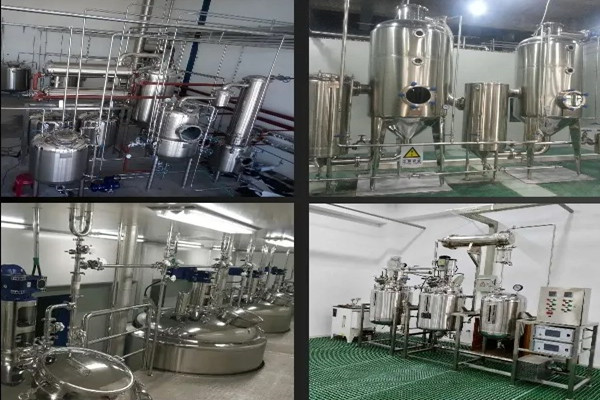
Objective: To remove large particle impurities from the extraction solution, concentrate the polysaccharide solution, and reduce the difficulty of subsequent purification.
Steps:
Coarse filtration: Filter the extract through a 0.45-0.22 μ m filter membrane to remove unbroken cell debris and large particle impurities.
concentrate:
Rotary evaporation: Concentrate to 1/3-1/5 of the original volume at 40-50 ℃ under reduced pressure (0.08-0.1MPa);
Ultrafiltration concentration: Select an ultrafiltration membrane with a molecular weight cutoff of 10-100kDa, filter under pressure (0.2-0.5MPa), and collect the permeate.
Key parameters:
Concentration temperature: ≤ 50 ℃ (to avoid degradation of heat sensitive polysaccharides);
Concentration factor: Adjust according to the polysaccharide content of the raw material (such as concentrating Ganoderma lucidum to a concentration of 10% -20% and goji berry to a concentration of 15% -25%).
Analysis of specific advantages and details
Extraction efficiency: synergistically accelerates cell wall fragmentation and component release
The cavitation effect of ultrasound can quickly break down plant cell walls, while the thermal effect of microwave accelerates solvent penetration and polysaccharide dissolution. The synergistic effect of the two shortens extraction time by 60% -80%. For example, jackfruit peel polysaccharide extraction, collaborative technology compressed the time from 2 hours to 30 minutes, and the extraction rate increased by 30%
In the extraction of polysaccharides from Taxus chinensis fruit, the synergistic technology achieved a yield of 4.33%, significantly higher than traditional hot reflux and single ultrasound/microwave methods.
Product quality: Improve purity and biological activity
Collaborative technology can more thoroughly remove impurities such as proteins and pigments from polysaccharides. After synergistic extraction of soybean seed coat polysaccharides, the total sugar mass fraction reached 50.67% (38.24% by single ultrasound, 44.06% by single microwave), and the protein residue was only 2.83% (3.5% by single ultrasound, 4.1% by single microwave). Moreover, the molecular homogeneity of polysaccharides was better (polydispersity 0.528, 0.755 by single microwave).
Structural characteristics: Retain natural conformation and functional groups
Single ultrasound or microwave extraction can easily lead to the breakage or structural deformation of polysaccharide molecular chains, while synergistic technology preserves the natural monosaccharide composition and spatial structure of polysaccharides through mild synergistic effects. For example, after synergistic extraction of soybean seed coat polysaccharides, the monosaccharide ratio is closer to that of the raw material, and the infrared spectrum shows a lower degree of unsaturated bond breakage. The microstructure appears as regular leaf like (loose block like under single ultrasound and dense sheet like under single microwave).
Scope of application: Suitable for more heat sensitive raw materials
Single microwave extraction can easily degrade thermosensitive polysaccharides (such as Ganoderma lucidum polysaccharides and wolfberry polysaccharides), while synergistic technology can balance extraction efficiency and structural protection by regulating the ratio of ultrasound power to microwave energy, making it suitable for a wider range of plant materials (such as traditional Chinese medicine, fruit and vegetable by-products).
3、 Typical application case evidence
Jackfruit peel polysaccharide: The polysaccharide extracted in collaboration can reshape the intestinal flora, increase the production of short chain fatty acids, and reduce inflammatory factors in animal experiments, which has an auxiliary therapeutic effect on inflammatory bowel disease (IBD), while the activity of polysaccharide extracted by a single technology does not reach the same level.
Taxus chinensis fruit polysaccharide: The synergistic extraction process was optimized by response surface methodology, with a yield of 4.33%, providing a technical solution for the efficient utilization of scarce medicinal resources
Below is a summary of the core content:
Ultrasound generates strong impact and shear forces on solvent molecules through high-frequency vibrations, accelerating the dissolution and diffusion of polysaccharides. Among these, ultrasound power is the core parameter affecting extraction efficiency
Low power: The cavitation effect weakens, leading to slower dissolution and diffusion of polysaccharides, resulting in low extraction efficiency;
Excessive power: Local solvent overheating may damage the polysaccharide molecular structure, affecting extraction quality. The optimal power should be determined through experimentation based on polysaccharide type and solvent properties (e.g., 60% power is suitable for Dendrobium officinale polysaccharide extraction)
Translate the text directly into English without any explanation, ensuring the meaning is smooth and coherent.
2.Typical Process Parameters and Optimization Cases
The ultrasonic extraction processes for different raw materials require targeted optimization, with the following three typical research conclusions:
Dendrobium officinale polysaccharides: The optimal process parameters are a material-to-liquid ratio of 1:120, ultrasonic time of 2.0 hours, temperature of 50°C, and power of 60%, with ultrasonic temperature being the primary factor affecting the extraction rate
Corn husk polysaccharides: Key parameters to control include ultrasonic power (balancing cell disruption and polysaccharide integrity), extraction time (ensuring thorough extraction), and temperature (avoiding degradation), with water as the common extraction solvent
Translate the text into English, output the translation directly without any explanation, ensuring the meaning is coherent.
Astragalus Polysaccharides: Process optimization via response surface methodology significantly enhances extraction efficiency while reducing experimental costs, providing technical support for the modernization of traditional Chinese medicine
Translate into English, output the translation directly without explanation, ensuring smooth semantics.
3.Technical Advantages and Application Value
Compared to the traditional water-alcohol precipitation method, ultrasound-assisted extraction features fast extraction speed, high efficiency, mild conditions, and low energy consumption, making it suitable for the extraction of heat-sensitive polysaccharides. It has been widely applied in the following fields:
Development of Chinese Medicinal Resources: Efficient Extraction of Polysaccharides from Herbs like Astragalus and Dendrobium, Promoting the Modernization of Traditional Chinese Medicine;
Food Industry: Polysaccharide extraction from by-products such as corn husks and lychee pulp to develop functional food ingredients;
Pharmaceutical R&D: Extracting polysaccharides with immunomodulatory, antioxidant, and antitumor activities for drug or health supplement development
4.Latest Technological Advancements: Collaborative Extraction Technology
To further enhance extraction efficiency, the synergistic technology of ultrasonic-microwave enzymatic hydrolysis has become a research hotspot. By combining the cavitation effect of ultrasonic waves, the high-energy action of microwaves, and the cell wall disruption effect of enzymatic hydrolysis, this technology can significantly improve polysaccharide extraction rates while maintaining structural integrity. For instance, studies on the synergistic extraction of lychee fruit flesh polysaccharides have demonstrated superior performance in both antioxidant and immune-regulating activities compared to traditional hot water methods
The ultrasound extraction technology, with its core advantages of efficient extraction, structural integrity preservation, and adaptability to heat sensitive raw materials, is particularly suitable for the following types of the extraction of polysaccharides:
1、 Thermal sensitive polysaccharides (preferred for adaptation scenarios)
These polysaccharides are prone to degradation and structural damage at high temperatures, leading to loss of biological activity. The thermal effect of single microwave extraction can easily cause damage, while synergistic technology can lead to the fragmentation of cell walls through ultrasonic cavitation and microwave-assisted solvent penetration, reducing heat exposure time and preserving the natural structure of polysaccharides.
Typical case:
Ganoderma lucidum polysaccharides: have immunomodulatory activity, but are easily degraded at high temperatures. Collaborative extraction can avoid structural damage and preserve their anti-tumor and anti fatigue functions;
Lycium barbarum polysaccharide: sensitive to heat, synergistic technology can improve extraction rate while maintaining its antioxidant and liver protecting biological activity.
2、 Plant raw material polysaccharides with dense cell wall structure
These polysaccharides are encapsulated in hard plant cell walls (such as lignin and cellulose), and single ultrasonic or microwave extraction is difficult to fully break down the cell walls, resulting in low extraction rates. The dual physical effects of collaborative technology (ultrasonic cavitation+microwave thermal/non thermal effects) can quickly and thoroughly break down cell walls, accelerating polysaccharide release.
Typical case:
Polysaccharides from Taxus chinensis fruit: The cell wall of Taxus chinensis contains a large amount of lignin, and the synergistic extraction yield reaches 4.33%, significantly higher than traditional hot reflux and single ultrasound/microwave methods;
Jackfruit pericarp polysaccharide: the pericarp fiber is coarse and hard, the collaborative extraction time is compressed from 2 hours to 30 minutes, the extraction rate is increased by 30%, and the polysaccharide can assist in the treatment of inflammatory bowel disease.
3、 Complex polysaccharides with high levels of impurities/pigments
These polysaccharides often coexist with impurities such as proteins and pigments, and it is difficult to completely separate them from a single extraction, which affects the purity of the product. Collaborative technology can effectively remove impurities and improve polysaccharide purity through the shear force of ultrasound and the thermal denaturation effect of microwave.
Typical case:
Soybean seed coat polysaccharides: After synergistic extraction, the total sugar mass fraction reached 50.67% (single ultrasound 38.24%, single microwave 44.06%), and the protein residue was only 2.83% (single ultrasound 3.5%, single microwave 4.1%), with better molecular uniformity;
Corn husk polysaccharides: Corn husks contain a large amount of fiber and protein, which can be synergistically extracted to simultaneously break cell walls and denature proteins, improving the purity and yield of polysaccharides.
4、 Scarce/high-value medicinal polysaccharides
This type of polysaccharide raw material is scarce and has high extraction costs, requiring efficient technology to improve yield and reduce production costs. The efficiency of collaborative technology can shorten extraction time, improve yield, and provide solutions for the large-scale utilization of scarce resources.
Typical case:
Dendrobium officinale polysaccharides: with high medicinal value but scarce raw materials, synergistic extraction can optimize process parameters (such as power and time), improve extraction efficiency while reducing energy consumption, and help efficiently utilize traditional Chinese medicine resources;
Huangqi polysaccharide: a core component of traditional Chinese medicine, synergistic extraction can significantly improve extraction rate and reduce experimental costs by optimizing the process through response surface methodology, promoting the modernization of traditional Chinese medicine.
5、 Fruit and vegetable by-product polysaccharides (resource utilization direction)
These polysaccharides come from by-products of food processing (such as skin, fruit kernels, straw), which are difficult to extract but have low costs. Collaborative technology can achieve "low-cost, high-yield" resource utilization, which is in line with the trend of circular economy.
Typical case:
Lychee pulp polysaccharides: synergistic extraction outperforms traditional hot water methods in antioxidant and immune regulatory activities, and can be developed as functional food ingredients;
Corn cob polysaccharides: Corn cob is a byproduct of brewing and feed, and synergistic extraction can efficiently extract polysaccharides for use as feed additives or in the development of biomaterials.
Related Cases
MORE >-
![Latest Project Deliveries -100L Hastelloy Reactor for Highly Corrosive Systems]()
Latest Project Deliveries -100L Hastelloy Reactor for Highly Corrosive Systems
100L Hastelloy Reactor for Highly Corrosive Systems
-
![Non-Customized glass reactors - research on high viscosity flow field]()
Non-Customized glass reactors - research on high viscosity flow field
Research on High viscosity Flow Field of Non Customized Glass Reactor 10000mPas
-
![ultrasonic assisted extraction in pharmacy]()
ultrasonic assisted extraction in pharmacy
ultrasonic assisted extraction in pharmacy
-
![ultrasonic assisted enzymatic extraction process]()
ultrasonic assisted enzymatic extraction process
ultrasonic assisted enzymatic extraction process
-
![China herbals Extraction Equipment]()
China herbals Extraction Equipment
China herbals Extraction Equipment,herbal extraction tank
-
![Ultrasonic-assisted Extraction Volatile Oil from Rosmarinus officinalis]()
Ultrasonic-assisted Extraction Volatile Oil from Rosmarinus officinalis
ultrasonic-assisted extraction ,Rosmarinus officinalis ,volatile oil
Consultation