
What is solid phase chemical synthesis reactor ?
2026-06-02
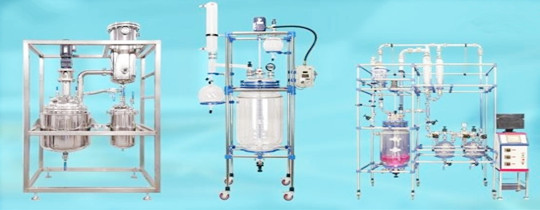
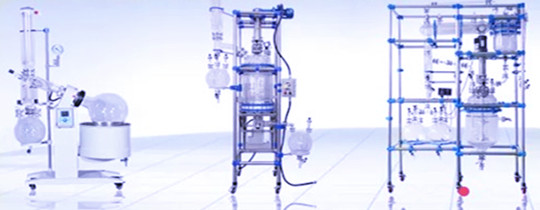
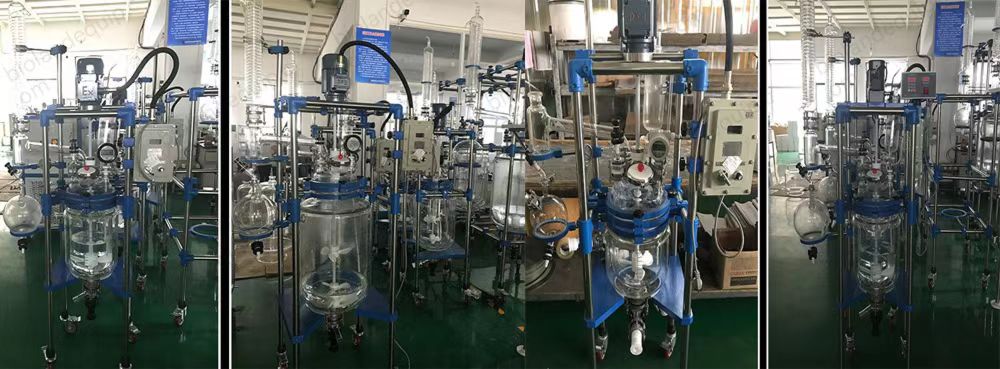
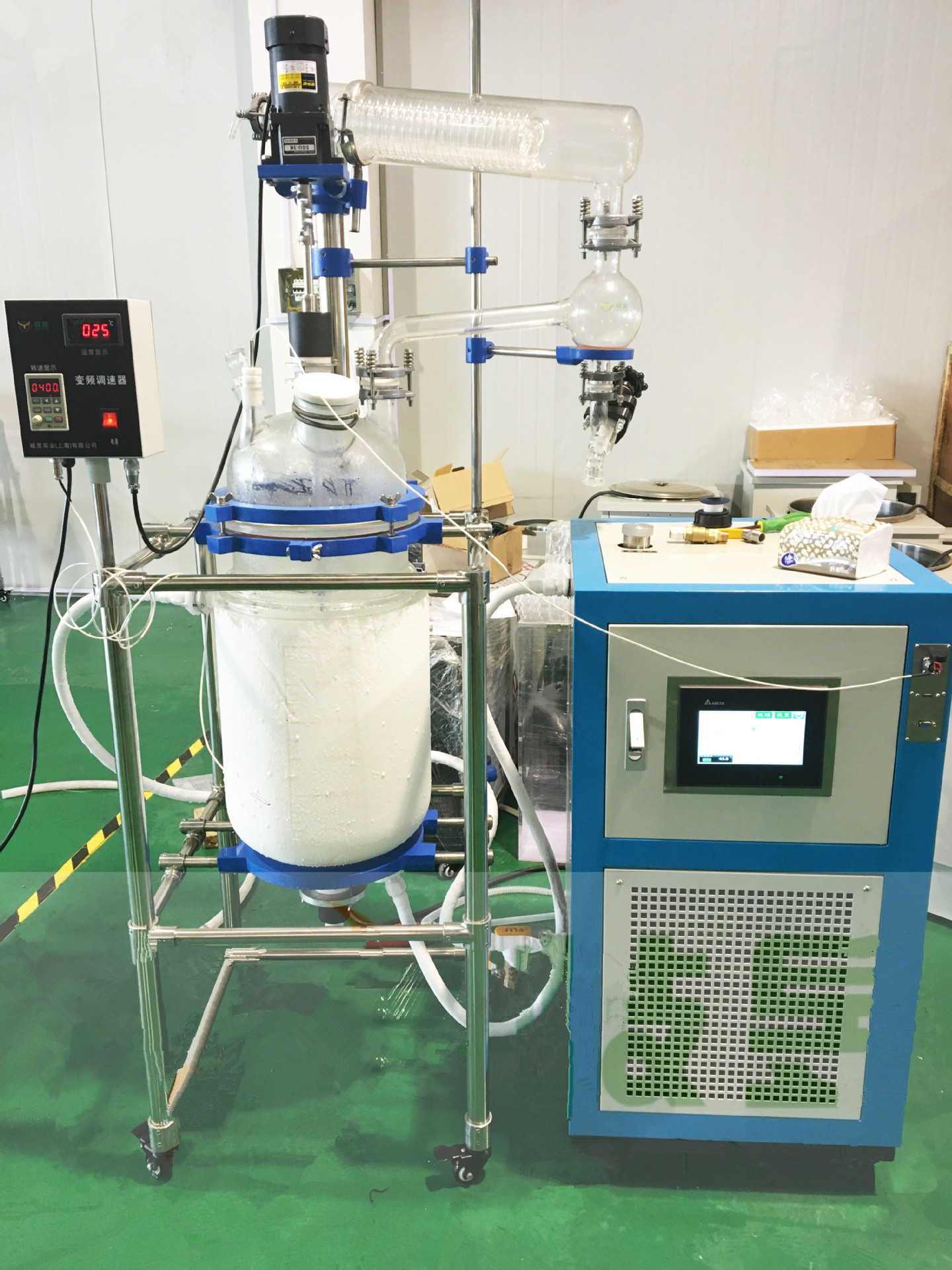
Solid phase synthesis reactor, also known as double-layer glass filtration reactor, is a laboratory reaction device that adds a filtration device at the bottom of the double-layer glass reactor body to provide stirring, temperature control, and filtration for the reactants. The filtering device is made of flange and PTFE material and connected to the kettle body. It has a unique design, good sealing performance, does not pollute materials, is corrosion-resistant and wear-resistant, and is easy to disassemble. It is mainly used in organic synthesis laboratories such as pharmaceuticals, chemical engineering, and laboratories, and is one of the main equipment in biopharmaceuticals.
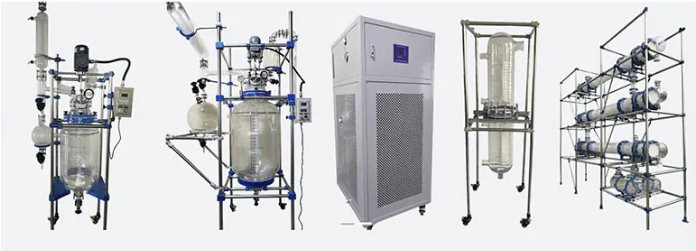
The solid-phase synthesis reactor filtration device adopts vacuum negative pressure for filtration. The high borosilicate glass reactor body has high transparency and can be easily observed during the experimental process. The filtering sand core can be glass sand core, PTFE sand core or PTFE plate with holes. Mechanical seal mixing system, frame structure, insulation device, explosion-proof device, and PT100 temperature probe can be optionally selected. The error is small, the temperature measurement accuracy is high, and the temperature inside the kettle is displayed digitally. After the material reaction is completed, the liquid material needs to be filtered out and discharged through the discharge valve, while the solid material remains on the filter plate. The quick opening design can be manually or electrically lifted and rotated left and right, making it easy to replace the filter membrane. The operation is very simple. The filtered liquid of the discharge valve can also be directly connected to the collection bottle through a connecting pipe to complete liquid collection.
In summary, the solid-state synthesis reactor is an efficient, safe, simple, widely applicable, energy-saving and environmentally friendly chemical synthesis equipment.
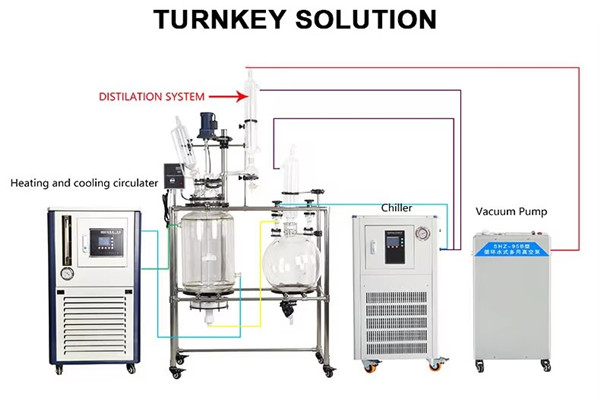
Solid phase chemical synthesis reactor is a reaction device designed specifically for solid-phase synthesis technology. Its core is to fix the reactants on a solid carrier and achieve the synthesis of the target product through the reaction between liquid-phase reagents and solid-phase carriers. It is widely used in the fields of biomacromolecules (peptides, oligonucleotides, oligosaccharides), fine chemicals, new materials, etc.
1.Core types and characteristics
Double layer glass filtration reactor
The commonly used equipment in the laboratory includes an integrated filtration device at the bottom of the kettle, which realizes the integration of stirring, temperature control, and filtration. Adopting high borosilicate glass material (with high transparency and observable reaction process), the filtering device supports vacuum negative pressure filtration and is compatible with glass/PTFE sand cores. It has acid and alkali resistance, anti-corrosion and wear-resistant properties, and is suitable for organic synthesis scenarios such as pharmaceuticals and chemicals.
Peptide specific solid-phase synthesis reactor
For peptide synthesis optimization design, some new devices support large-scale high-throughput synthesis, which can complete the synthesis of multiple polypeptide chains at once. The structure includes a reaction vessel, a filter element, and an extrusion element. The reaction solution is pushed through the filter element by extrusion to discharge the waste liquid, achieving efficient connection between reaction and separation, reducing costs, and improving efficiency.
Tubular gas-solid phase catalytic reactor
Specially designed for gas-solid phase catalytic reactions, compatible with acid-base media, enhances gas-solid mass transfer efficiency, suitable for catalytic reaction scenarios in chemical synthesis, and some models support high viscosity media to enhance heat transfer.
Intelligent micro reactor
Targeting research and development of small-scale experiments and micro synthesis, with high-precision temperature control and pressure monitoring functions, supporting rapid iterative experiments, and adapting to the micro synthesis needs of universities and research institutes
2.Working principle and key technologies
The core of solid-state synthesis reactor is to solve the integration problem of solid-liquid mixing efficiency and reaction separation:
Mixing mechanism: Rapid homogeneous mixing of liquid-phase reagents and solid-phase carriers is achieved through mechanical stirring (100-1300rpm) or argon gas bubbling (1-30cm ³/min), achieving dispersion in seconds (dispersion coefficient is linearly related to Reynolds number), avoiding excessive reagents and increased by-products.
Separation efficiency: Integrated filtration device (vacuum/extrusion filtration) achieves rapid separation of reaction solution and solid carrier, reduces product loss, and improves synthesis purity.
Process optimization: For the synthesis of biomolecules, it is necessary to match the solvent properties (such as homogeneous flow of bubbles in DMF and heterogeneous flow of bubbles in DCN/ACN), and balance reaction efficiency and product quality through precise control of bubble velocity and stirring speed.
3.Core application scenarios
The automated synthesis of biological macromolecules, including peptides, oligonucleotides (DNA/RNA), and oligosaccharides, is a core equipment in the fields of biopharmaceuticals and gene editing.
Fine chemical synthesis: Solid phase synthesis of organic small molecule drugs and functional materials, supporting laboratory small-scale to pilot scale scale-up.
Catalytic Reaction Research: Simulation and Optimization of Gas Solid Phase Catalytic Reactions for Performance Evaluation and Process Development of New Catalysts
4.Advantages and Latest Developments
Core advantages: easy control of reaction conditions (temperature, pressure, mixing efficiency), high product purity, convenient waste liquid treatment, and support for automated continuous production.
Technological trend: towards high throughput, intelligence, and miniaturization, with some devices integrating online monitoring (such as HPLC and mass spectrometry) to achieve real-time feedback and process optimization of reaction processes
Typical application: Solid phase synthesis of peptide drugs
The research on the preparation process of peptide drugs has become the forefront and hotspot of current research. The synthesis and purification methods of peptides are important components of peptide pharmaceutical processes, among which peptide synthesis methods mainly include biosynthesis and chemical synthesis. Among the chemical synthesis methods, solid-phase synthesis is easy to operate, and repeated coupling operations are easy to automate. The product yield and purity are high, greatly promoting the research and development of peptide drugs.
Before the emergence of solid-phase synthesis, liquid-phase synthesis was the only method for peptide chemical synthesis, which, like most chemical reactions, involved the condensation and connection of amino acids in the liquid phase. Solid phase synthesis has advantages in the synthesis of peptides with unconventional structures, but due to the time-consuming and laborious steps of repeated condensation, separation, and purification, it is not suitable for the synthesis of long-chain peptides. Therefore, solid-phase synthesis reactor has become the mainstream method for peptide synthesis.
How to select solid-phase synthesis reactors in different scale research and development scenarios?
The selection of solid-phase synthesis reactors should be based on three dimensions: research and development stage, peptide type, and core requirements. The following are selection guidelines and recommended solutions for different scenarios:
1、 Laboratory trial stage
Core requirements: rapid iteration, minimal synthesis, flexible adaptation to different sequences/modifications
Key selection parameters:
Reaction capacity: 100ml-500ml (suitable for 1-10mg/batch peptide synthesis)
Automation level: semi-automatic (supporting manual feeding, automatic mixing/temperature control)
Material: High borosilicate glass (transparent and visible, easy to observe the reaction process)
Function extension: Supports online UV monitoring and solvent recovery module
Recommended device type:
Intelligent Micro Solid Phase Synthesis Instrument
Advantages: Integrated "synthesis filtration washing" full process, supporting parallel synthesis of 1-96 wells, suitable for high-throughput screening needs;
Applicable scenarios: rapid iteration of peptide sequences, non natural amino acid modification experiments, and micro synthesis during target validation stage.
Double layer glass filtration reactor
Representative product: Bioland instrument BL-FR-100L
Advantages: The stirring speed can be adjusted from 100-1300rpm, the vacuum filtration efficiency is ≥ 95%, and it is suitable for complex reactions of spatially hindered peptides;
Applicable scenarios: Complex peptide synthesis involving N-methylation, α, α - disubstituted amino acids, requiring precise control of mixing efficiency.
2、 Preclinical research stage
Core requirements: Multi gram level delivery, batch consistency, feasibility of process scaling up
Key selection parameters:
Reaction capacity: 1L-10L
Automation level: fully automatic (supporting programmed control of temperature, flow rate, and feeding)
Material: Full PTFE/high borosilicate glass (corrosion-resistant, easy to clean, in compliance with GMP preliminary requirements)
Function extension: Integrated online HPLC/mass spectrometry monitoring and solvent circulation system
Recommended device type:
Continuous Flow Solid Phase Synthesis (CF-SPPS) Reactor
Advantages: The synthesis cycle has been shortened from 2 weeks to 1 day, and solvent consumption has been reduced by 50%; Fixed resin for packed bed reactor, supporting direct scaling up of process parameters to industrial production;
Applicable scenarios: The preparation of ten gram level raw materials for large cyclic peptides such as PCSK9 inhibitors, which require rapid delivery of IND application samples.
Integrated solid phase synthesis kettle with lifting and rotating mechanism
Advantages: Integrated "synthesis filtration drying" full process, jacket temperature control accuracy of ± 0.1 ℃, suitable for the temperature sensitive characteristics of peptide synthesis;
Applicable scenarios: The synthesis of GLP-1/GIP receptor agonists and long-chain peptides at the gram to ten gram level, requiring consistency between batches.
3、 Industrial production stage
Core requirements: high production capacity, low marginal cost, GMP compliance, environmental compliance standards
Key selection parameters:
Reaction capacity: 100L-1000L (suitable for peptide synthesis from 100g to 10kg/batch)
Automation level: fully automatic+remote monitoring (supporting DCS system integration, real-time collection of process data)
Material: 316L stainless steel (corrosion-resistant, high-strength, in compliance with GMP production standards)
Function extension: solvent recovery system, waste liquid treatment module, online quality monitoring (QbD)
Recommended device type:
Large scale continuous flow solid-phase synthesis reactor
Advantages: Single batch production capacity ≥ 10kg, solvent recycling rate ≥ 90%, in line with green manufacturing requirements;
Applicable scenarios: The ton scale production of commercial peptide drugs such as tilpotide and semaglutide requires low-cost and high-capacity scenarios.
Modular solid-phase synthesis reaction system
Advantages: Supports flexible combination of "unit modules" (such as independent configuration of reaction modules, filtration modules, and drying modules), and can be quickly expanded according to production capacity requirements;
Applicable scenarios: Production of customized peptide drugs with multiple varieties and small batches (such as rare disease drugs and personalized tumor treatment peptides).
Related News
MORE >-
chemical glass reactor is a key experimental equipment that Across multiple industries ?
chemical glass reactor,laboratory chemical glass reactor,100L glass reactor ,jacketed batch reactor,jacketed glass reactor,100 liter glass reactor,double-layer glass reactor, vacuum jacketed reactor, glass-lined reactor
-
Selection tips for temperature control system - chemical glass reactor
temperature control system,high low temeperature control system,temperature control system , low tempeature cooler
-
ultrasonic-assisted extraction in pharmacy
ultrasonic-assisted extraction in pharmacy
Consultation