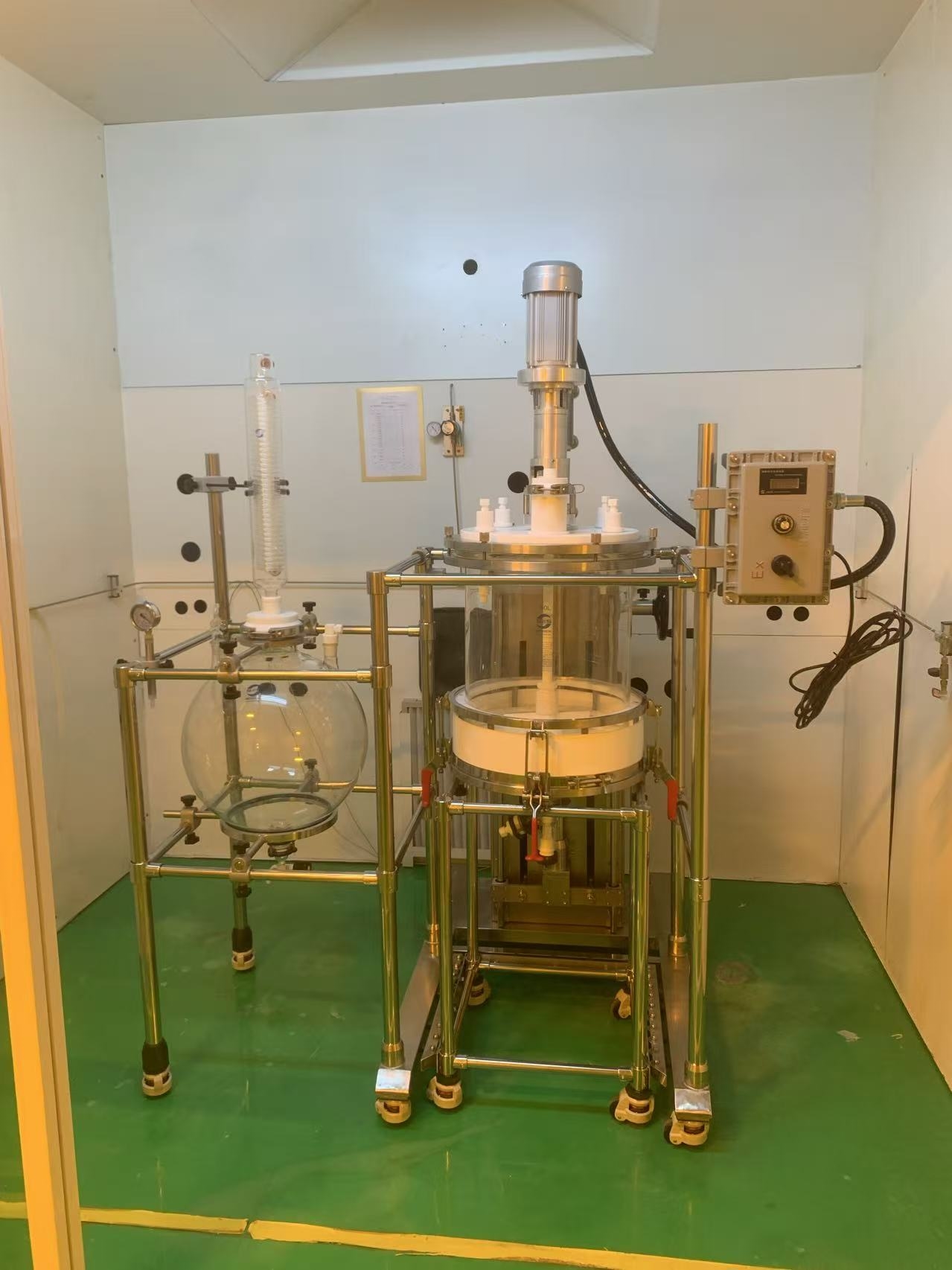
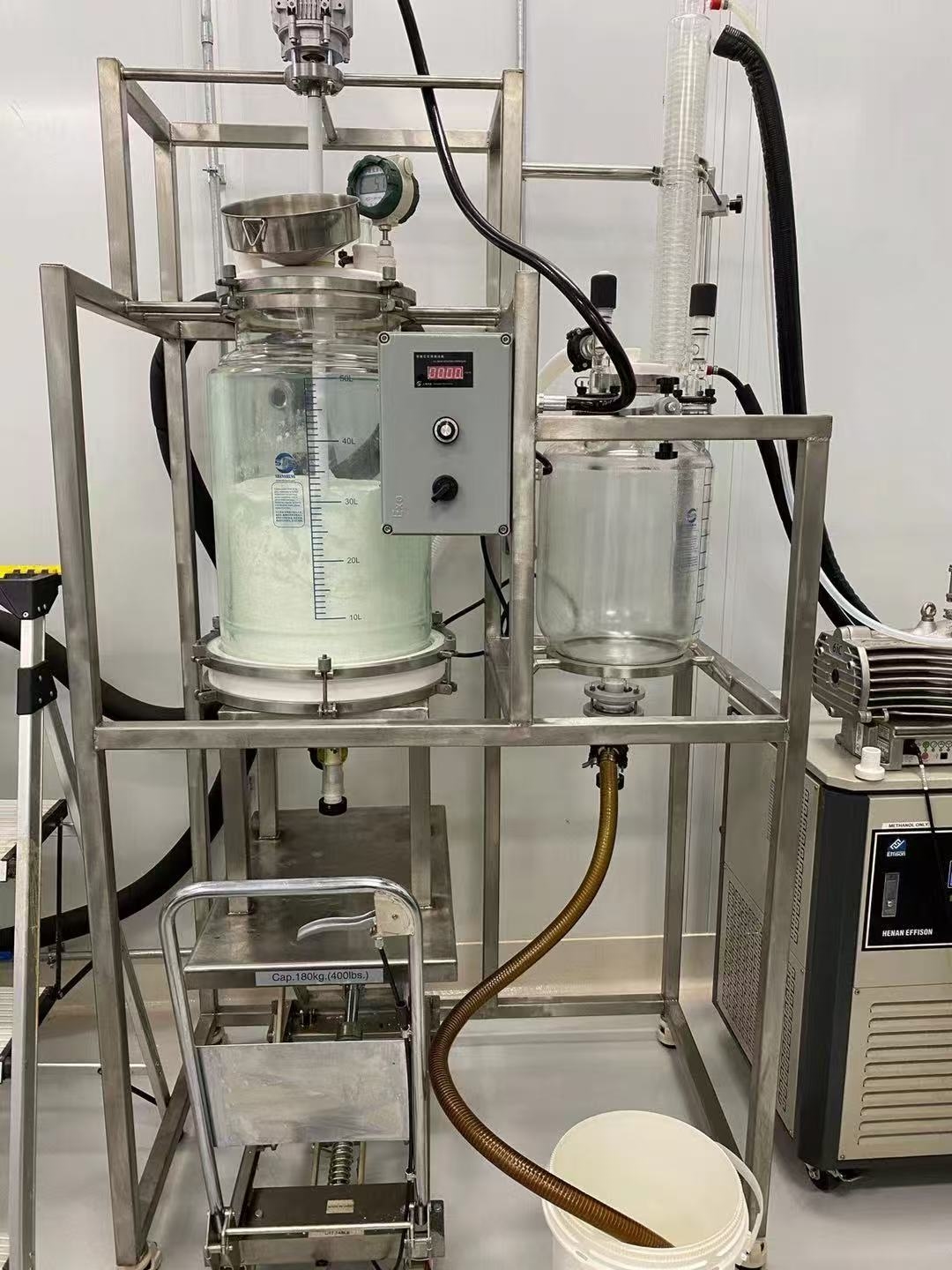
crystallization chemical reactor
crystallization chemical reactor ,100L crystallization reactor
crystallization chemical reactor ,100L chemical filter reactor, crystallization filter reactor
Product Detail
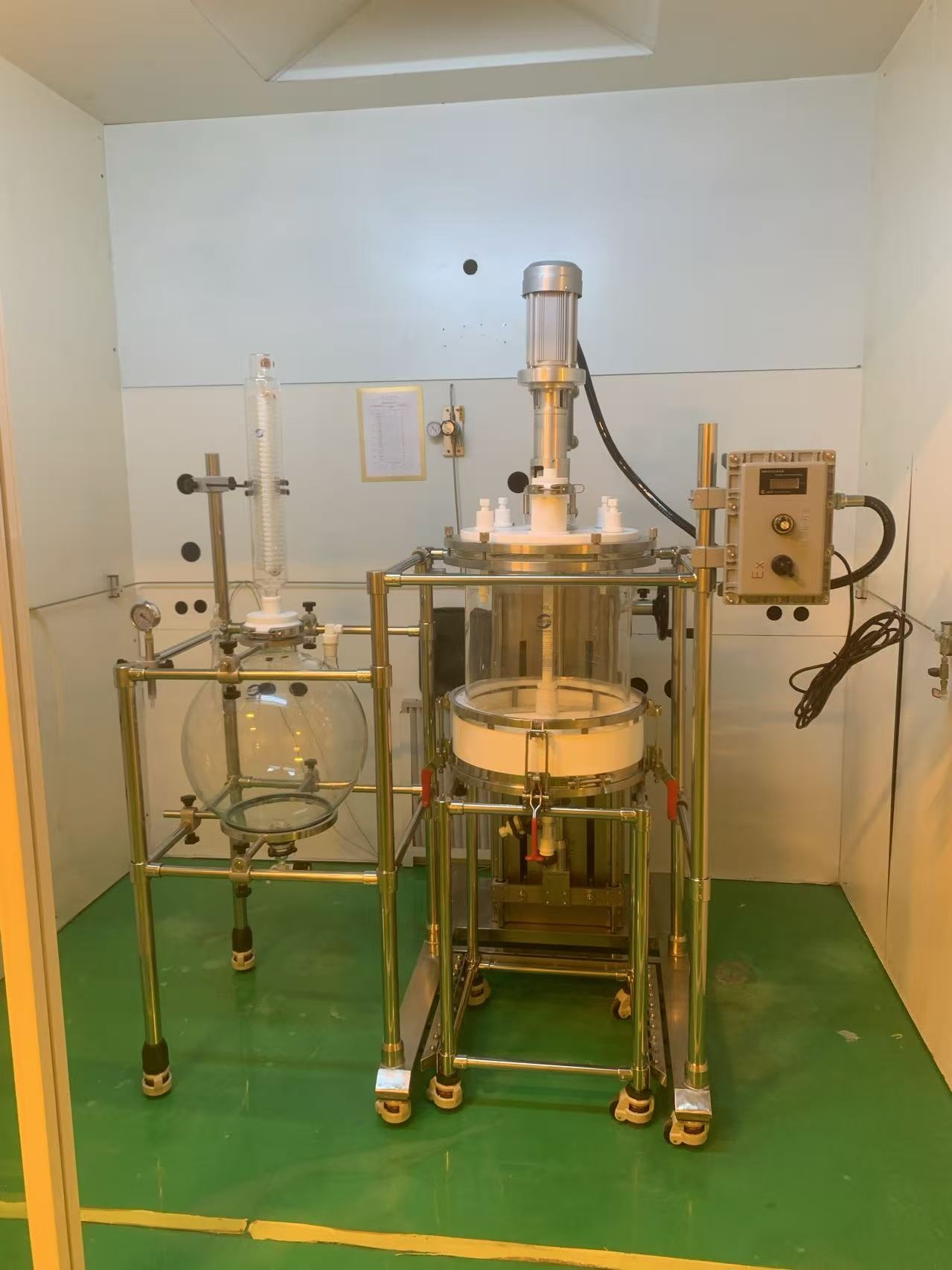
crystallization chemical reactor is a key equipment used in the chemical industry to achieve the coupling of chemical reactions and crystallization processes. It induces the precipitation of crystals from solutions by controlling reaction conditions (temperature, concentration, stirring, etc.), and is widely used in industries such as pharmaceuticals, chemical engineering, and environmental protection.
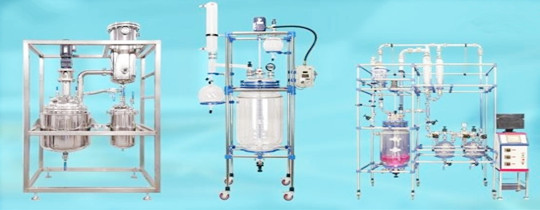
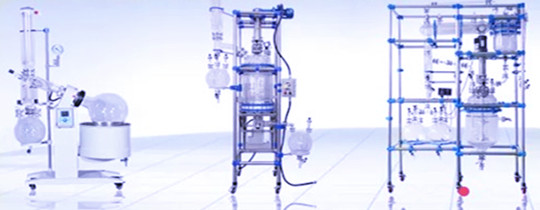
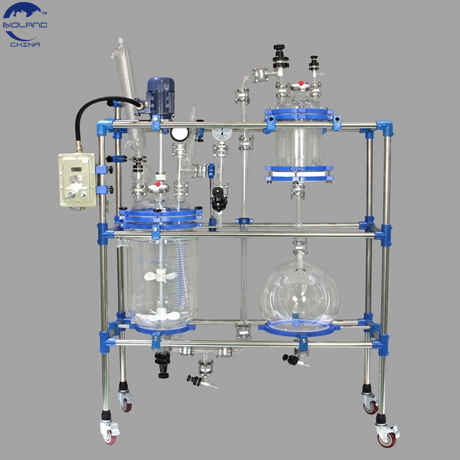
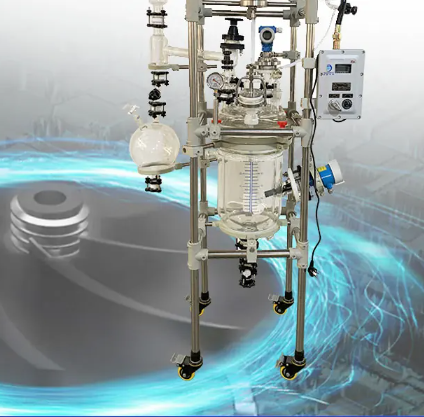
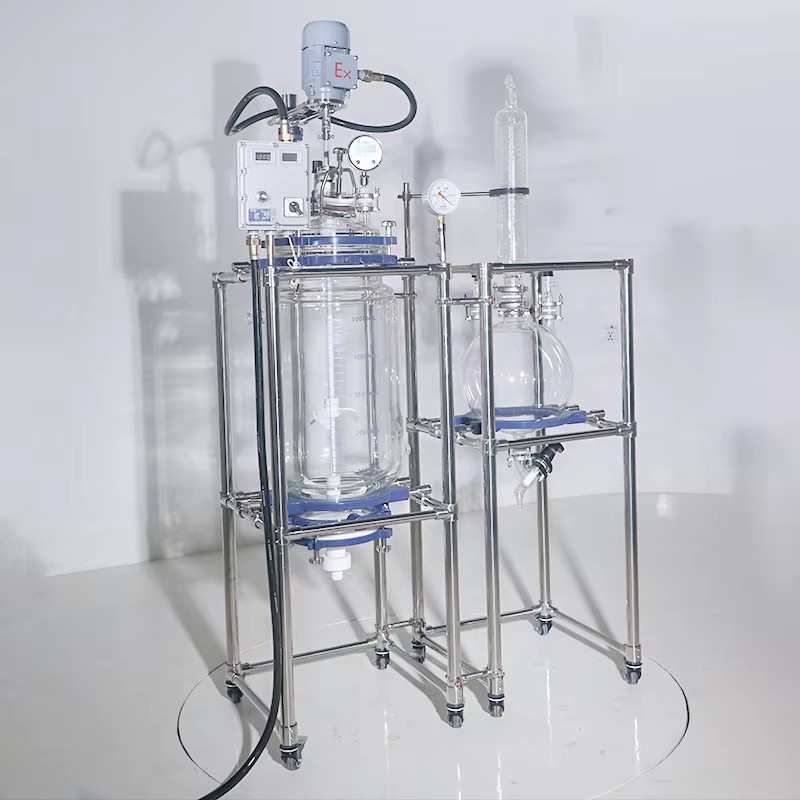
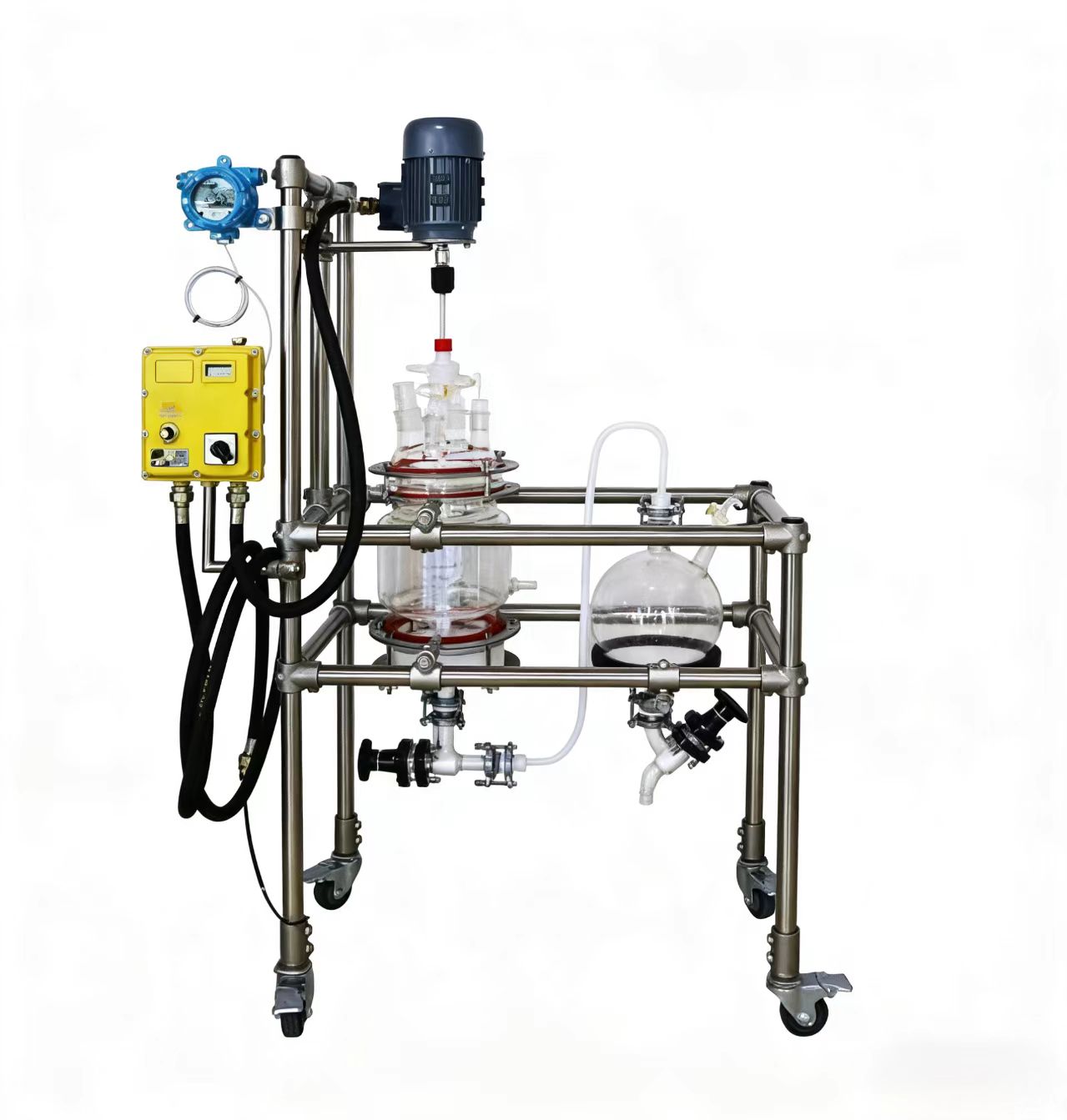
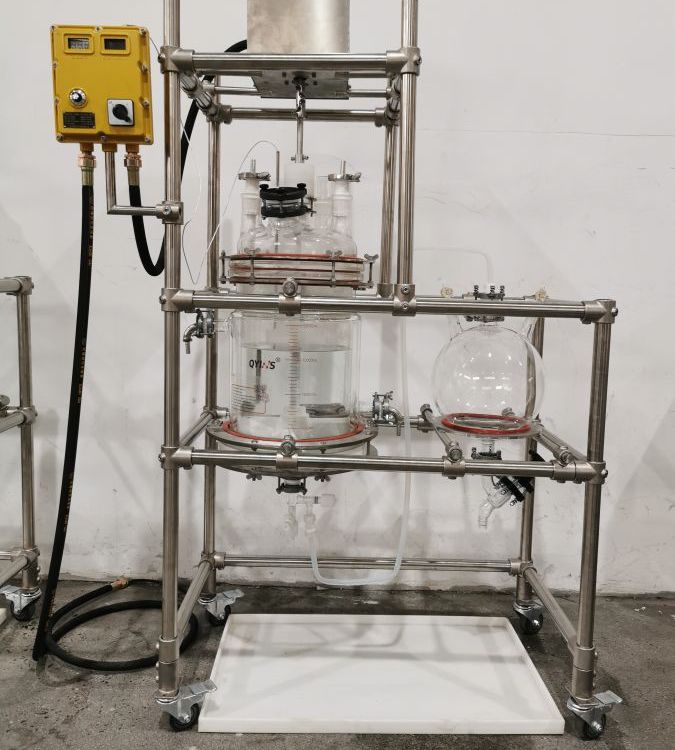
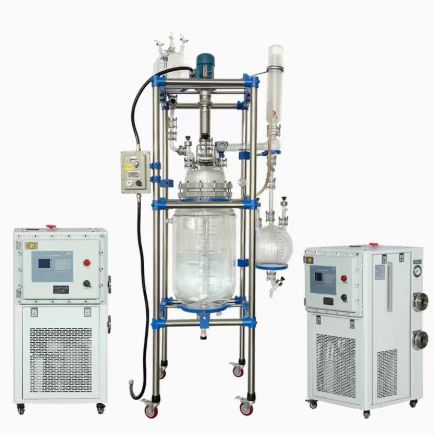
crystallization chemical reactor /Glass filter reactor is a laboratory and industrial equipment that integrates reaction and filtration functions, mainly used for organic synthesis experiments and pilot production in pharmaceutical, chemical, laboratory and other institutions. BIOLAND INSTRUMENT glass filter kettle has excellent performance and a high reputation in the industry, as well as a good market reputation
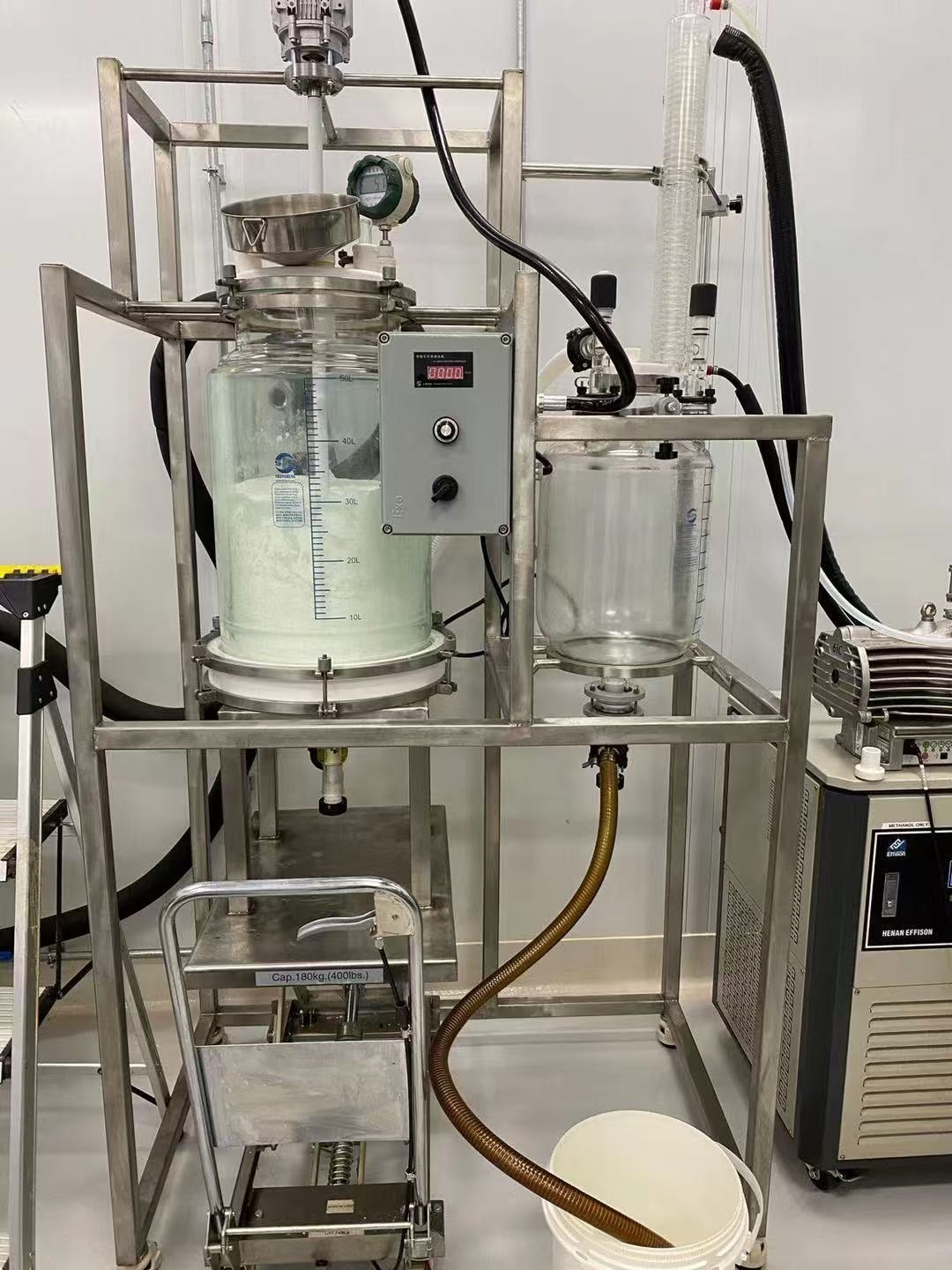
100L double-layer glass filter kettle/crystallization chemical reactor - model BL-FR-100L can be directly filtered inside the kettle after jacket heating and cooling reactions. Especially suitable for thermal filtration of materials that are highly prone to crystallization after reaction, that is, the filtration process that maintains the temperature of the solid-liquid mixture within a certain range. Has good sealing performance. The double-layer filtration kettle can also be used as a peptide reaction tank.
Glass filter kettles are widely used in industries such as chemistry, pharmaceuticals, and food, especially in experimental and production environments that require high cleanliness and corrosion resistance. Due to their excellent corrosion resistance, transparency, and chemical stability, glass filter kettles have become one of the ideal equipment. With the continuous increase in market demand, more and more high-performance manufacturers of glass filter kettles have invested in the production of glass filter kettles.
Product Parameters:
-Kettle capacity: 100 L (with additional 5L, 10L, 30L, 50L, 100L);
-Integrated reaction and thermal filtration;
-The jacket is fully covered, with significant insulation effect, ensuring that the filtrate does not crystallize;
-Quick detachable PTFE filter components, easy to remove filter cake or replace filter elements;
-Can be equipped with a mechanical lifting device to make the opening and closing of the filter components more convenient;
-Mechanical seal, wear-resistant and corrosion-resistant, long service life, with a maximum vacuum degree of<20 mbar;
-Polytetrafluoroethylene kettle cover, safe and durable;
-Deceleration motor, high torque, speed not affected by material viscosity;
-Imported variable frequency speed regulation, speed range: 10-300 rpm;
-High quality borosilicate glass (GG-17, BORO3.3);
-Working temperature range: -60 ℃ -200 ℃;
-Bottom valve with downward expansion type polytetrafluoroethylene discharge, minimizing dead volume and cleaning discharge;
-Digital display of rotational speed and temperature inside the kettle.
Core product advantages:
Glass filter kettle: fully covered jacket, uniform temperature, three in one equipment, can directly filter after reaction, easy discharge, service life of over 10 years, low maintenance, ppb level high cleanliness, extremely low metal ion precipitation, high-quality 3.3 high borosilicate glass and polytetrafluoroethylene material.
Laboratory type crystallization reactor
With miniaturization and high-precision control as the core, commonly made of stainless steel (SUS304/316L) or jacketed glass, suitable for process validation in the research and development stage. For example, a laboratory crystallization reactor with a capacity of 1-100L, equipped with a temperature control system, stirring device, and timing equipment, can accurately control the crystallization nucleation and growth process, meeting the experimental needs of industries such as food and medicine.
Industrial crystallization chemical reactor
For large-scale production, the mainstream types include:
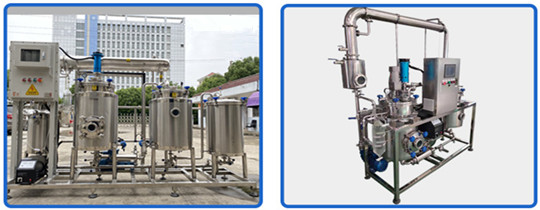
Ultrasonic Crystallization Reactor: By enhancing mass transfer through ultrasonic waves, crystallization efficiency is improved, suitable for scenarios with a production capacity of 50L or more. It is equipped with PLC control systems and pressure vessels and widely used in industries such as construction, food, and manufacturing;
Working principle and key influencing factors
The crystallization reaction process is usually divided into three core steps: mixing, reaction, and crystallization:
Mixing stage: The reactants are rapidly and uniformly mixed to form a supersaturated solution (driving force for crystallization);
Reaction stage: Generate target solutes through chemical reactions while controlling side reactions;
Crystallization stage: The solute precipitates crystals in a supersaturated state, and the crystal growth rate is directly affected by factors such as stirring intensity, supersaturation, and temperature gradient.
The key control parameters include:
Supersaturation: determines the nucleation rate and crystal growth rate. If it is too high, it can easily lead to the formation of fine crystals, while if it is too low, the crystallization efficiency will be low;
Mixing intensity: affects mass transfer efficiency and crystal particle size distribution, requiring a balance between mixing effect and crystal breakage risk;
Temperature control: By using a jacket or built-in heating/cooling system, the crystallization temperature can be precisely controlled to avoid local overheating or undercooling.
Precise control of core process parameters
The essence of the crystallization process is the nucleation and crystal growth of supersaturated solutions, which requires the coordinated control of multiple parameters to achieve the desired crystal morphology
Supersaturation control
Supersaturation is the driving force for crystallization, too high can lead to explosive nucleation (too many fine crystals, difficult filtration), and too low can result in insufficient crystallization efficiency. Accurate control of temperature gradient, solvent evaporation rate, and anti solvent addition rate is required. For example, in the crystallization of acetaminophen, stabilizing the pH at 6.5-6.7 can avoid the formation of fine crystals caused by excessive supersaturation and improve the recovery rate to 88%.
Uniformity of temperature field
Temperature directly affects solubility and crystal growth rate. A temperature gradient greater than 5 ℃ can cause the crystal morphology to change from sheet to needle (such as recombinant protein crystallization). A segmented heating/cooling strategy is required, for example, in a certain project, the removal rate of impurities can be increased to 88% through alternating cold and hot cycles; For every 1 ℃ increase in temperature, the crystal growth rate increases by 15%, and the temperature range needs to be optimized in conjunction with the solubility curve.
Mixing strength and shear force
Stirring affects mass transfer efficiency and crystal particle size distribution, and excessive shear force can lead to crystal breakage (such as microchannel stirring, which can reduce crystal breakage rate by 70%). The type of stirring blade should be selected based on the characteristics of the crystal (anchor type and frame type low shear blades are suitable for large crystals, and push type blades are suitable for rapid mixing), and the speed should be dynamically adjusted to balance the mixing effect and crystal integrity.
PH and solvent system
A pH fluctuation of 0.5 may lead to crystal transformation, which needs to be precisely controlled within the optimal range (such as 5.5-6.5); The solvent selection needs to match the solubility curve. The solubility of the propylene glycol water system is 43% higher than that of the glycerol water system, and the viscosity is moderate (300cP), making it more suitable for antibody drug crystallization
Typical User Feedback
We have used three brands of reactors in our laboratory at the same time, and the BIOLAND INSTRUMENT one runs stably. After more than four years of use, the vacuum degree can still be easily drawn to -0.098MPa, and the sealing ring has not been replaced or leaked. The noise of the mixing motor is also very low, and the torque is sufficient at low speeds, making it very convenient for conducting polymer polymerization reactions. ”-- Laboratory of the School of Materials Science and Technology at a certain 211 university
The biggest fear of equipment chain failure during pilot scale-up is that the explosion-proof reactor of BIOLAND INSTRUMENT has been running continuously for over a year without any sealing failure or mixing jamming issues. One night when we encountered a problem during operation, the technical support phone was able to reach us, and they patiently guided us to solve it. This kind of service attitude is not common in the industry. ”Production Manager of a Pharmaceutical R&D Enterprise in East China
summary
In the fields of chemical synthesis, pharmaceutical research and development, and new material preparation, glass reaction vessels are one of the most common and critical experimental equipment. It is directly related to the sealing, temperature resistance, operational safety, and reproducibility of experimental data in the reaction process. Faced with numerous brands and models in the market, the truly "good reputation" enterprises are often not the ones with the loudest publicity, but those equipment providers who have been quietly and stably operating in user laboratories for many years.
In the niche field of glass reaction vessels, truly reputable enterprises rely not on overwhelming advertising, but on stable operation of equipment, satisfied users, and timely technical support. Xi'an Bioland Instrument Co., Ltd has won first-line recognition from research laboratories to production workshops with solid materials, rigorous processes, and attentive services. If you are looking for a glass reactor that can withstand the test of time, we are worth your in-depth understanding. If you have any needs, please feel free to contact us at any time :info@bioland-china.com !
The crystallization reaction process is usually divided into three core steps: mixing, reaction, and crystallization:
Mixing stage: The reactants are rapidly and uniformly mixed to form a supersaturated solution (driving force for crystallization);
Reaction stage: Generate target solutes through chemical reactions while controlling side reactions;
Crystallization stage: The solute precipitates crystals in a supersaturated state, and the crystal growth rate is directly affected by factors such as stirring intensity, supersaturation, and temperature gradient.
The key control parameters include:
Supersaturation: determines the nucleation rate and crystal growth rate. If it is too high, it can easily lead to the formation of fine crystals, while if it is too low, the crystallization efficiency will be low;
Mixing intensity: affects mass transfer efficiency and crystal particle size distribution, requiring a balance between mixing effect and crystal breakage risk;
Temperature control: By using a jacket or built-in heating/cooling system, the crystallization temperature can be precisely controlled to avoid local overheating or undercooling.
Precise control of core process parameters
The essence of the crystallization process is the nucleation and crystal growth of supersaturated solutions, which requires the coordinated control of multiple parameters to achieve the desired crystal morphology
Supersaturation control
Supersaturation is the driving force for crystallization, too high can lead to explosive nucleation (too many fine crystals, difficult filtration), and too low can result in insufficient crystallization efficiency. Accurate control of temperature gradient, solvent evaporation rate, and anti solvent addition rate is required. For example, in the crystallization of acetaminophen, stabilizing the pH at 6.5-6.7 can avoid the formation of fine crystals caused by excessive supersaturation and improve the recovery rate to 88%.
Uniformity of temperature field
Temperature directly affects solubility and crystal growth rate. A temperature gradient greater than 5 ℃ can cause the crystal morphology to change from sheet to needle (such as recombinant protein crystallization). A segmented heating/cooling strategy is required, for example, in a certain project, the removal rate of impurities can be increased to 88% through alternating cold and hot cycles; For every 1 ℃ increase in temperature, the crystal growth rate increases by 15%, and the temperature range needs to be optimized in conjunction with the solubility curve.
Mixing strength and shear force
Stirring affects mass transfer efficiency and crystal particle size distribution, and excessive shear force can lead to crystal breakage (such as microchannel stirring, which can reduce crystal breakage rate by 70%). The type of stirring blade should be selected based on the characteristics of the crystal (anchor type and frame type low shear blades are suitable for large crystals, and push type blades are suitable for rapid mixing), and the speed should be dynamically adjusted to balance the mixing effect and crystal integrity.
PH and solvent system
A pH fluctuation of 0.5 may lead to crystal transformation, which needs to be precisely controlled within the optimal range (such as 5.5-6.5); The solvent selection needs to match the solubility curve. The solubility of the propylene glycol water system is 43% higher than that of the glycerol water system, and the viscosity is moderate (300cP), making it more suitable for antibody drug crystallization
Typical User Feedback
We have used three brands of reactors in our laboratory at the same time, and the BIOLAND INSTRUMENT one runs stably. After more than four years of use, the vacuum degree can still be easily drawn to -0.098MPa, and the sealing ring has not been replaced or leaked. The noise of the mixing motor is also very low, and the torque is sufficient at low speeds, making it very convenient for conducting polymer polymerization reactions. ”-- Laboratory of the School of Materials Science and Technology at a certain 211 university
The biggest fear of equipment chain failure during pilot scale-up is that the explosion-proof reactor of BIOLAND INSTRUMENT has been running continuously for over a year without any sealing failure or mixing jamming issues. One night when we encountered a problem during operation, the technical support phone was able to reach us, and they patiently guided us to solve it. This kind of service attitude is not common in the industry. ”Production Manager of a Pharmaceutical R&D Enterprise in East China
summary
In the fields of chemical synthesis, pharmaceutical research and development, and new material preparation, glass reaction vessels are one of the most common and critical experimental equipment. It is directly related to the sealing, temperature resistance, operational safety, and reproducibility of experimental data in the reaction process. Faced with numerous brands and models in the market, the truly "good reputation" enterprises are often not the ones with the loudest publicity, but those equipment providers who have been quietly and stably operating in user laboratories for many years.
In the niche field of glass reaction vessels, truly reputable enterprises rely not on overwhelming advertising, but on stable operation of equipment, satisfied users, and timely technical support. Xi'an Bioland Instrument Co., Ltd has won first-line recognition from research laboratories to production workshops with solid materials, rigorous processes, and attentive services. If you are looking for a glass reactor that can withstand the test of time, we are worth your in-depth understanding. If you have any needs, please feel free to contact us at any time :info@bioland-china.com !
Consultation