

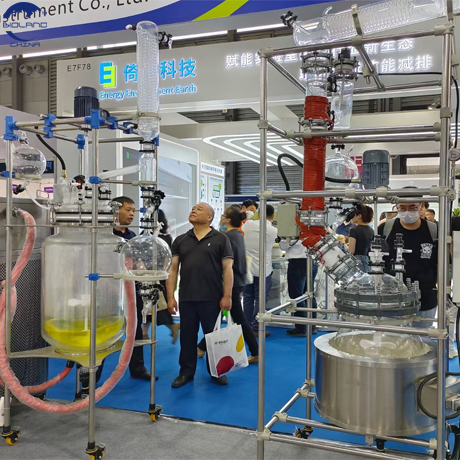
Peptide Synthesis Glass Nutsche Filter
Peptide Synthesis Glass Nutsche Filter
Peptide Synthesis Glass Nutsche Filter
Product Detail
Background
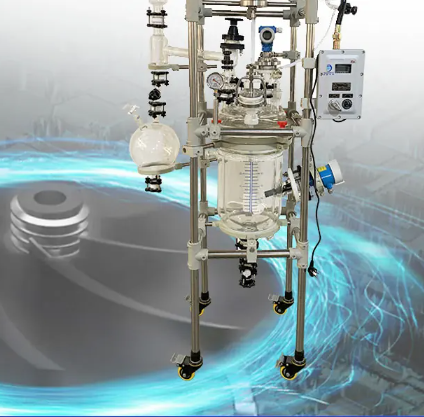
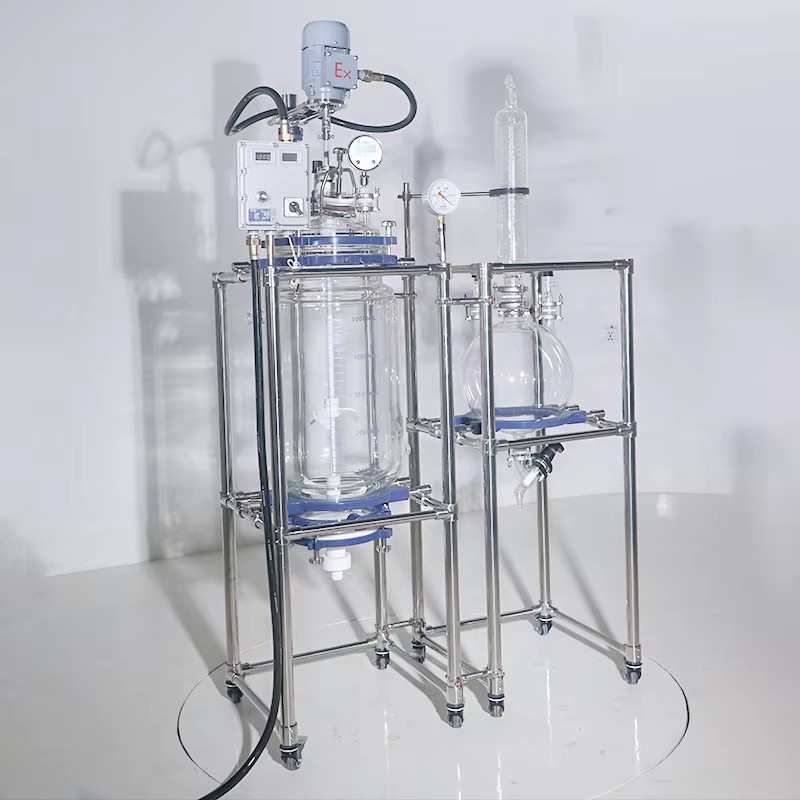
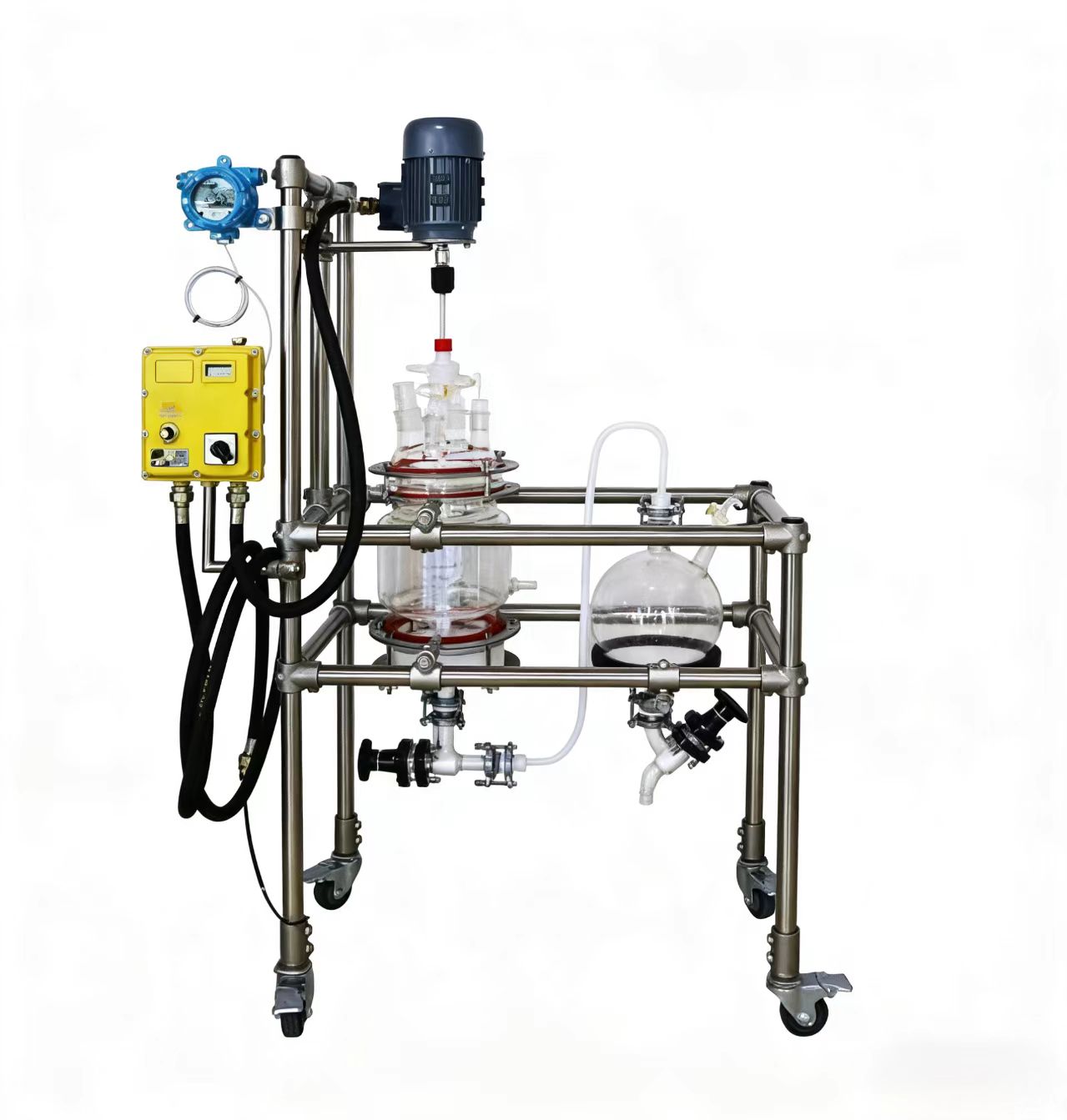
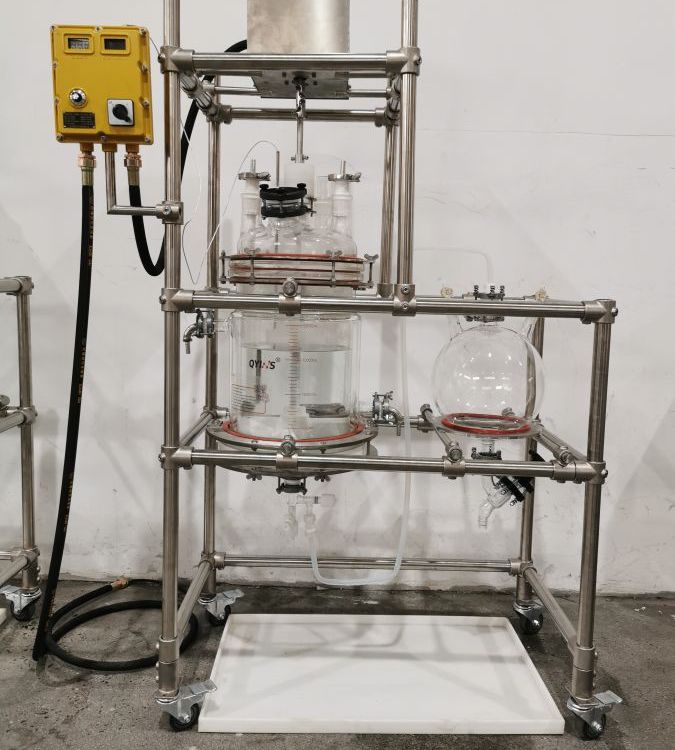
Peptide Synthesis Glass Nutsche Filter is a laboratory device designed for integrated reaction and filtration in Solid Phase Peptide Synthesis (SPPS). It typically consists of a high borosilicate glass body, a stainless steel jacket, and PTFE valves, supporting vacuum/pressure operation and suitable for small-batch peptide purification processes.
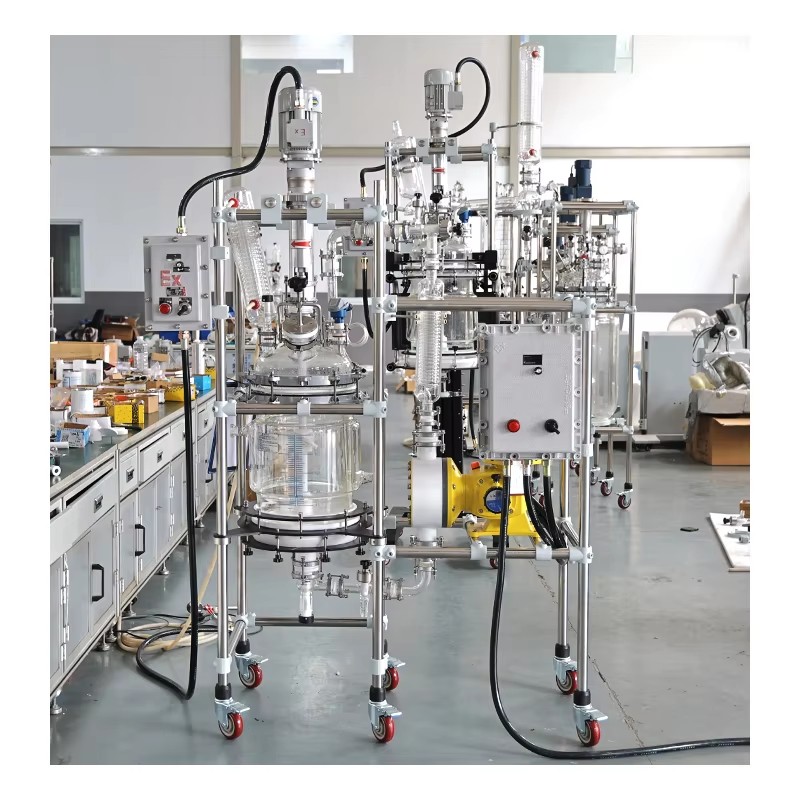
During solid-phase peptide synthesis, amino acids are gradually coupled onto insoluble resin, with washing and filtration required after each reaction step to remove byproducts. Traditional methods using ordinary funnels or centrifugation are inefficient and prone to resin loss.
The Glass Nutsche Filter enables integrated stirring, reaction, filtration, and drying operations in a sealed environment, making it particularly suitable for peptide chain extension processes sensitive to oxygen or requiring strict temperature control.
This type of Glass Nutsche Filter equipment is commonly used in laboratory-scale peptide drug development, combining vacuum filtration with nitrogen protection functions to effectively enhance synthetic reproducibility and yield. Some high-end systems even integrate reactors and filtration units, forming a "reaction-filtration" integrated machine
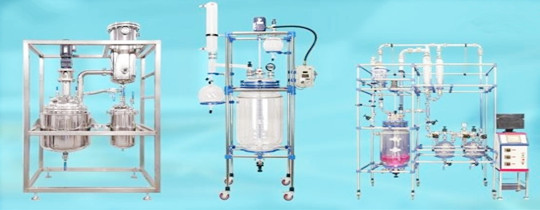
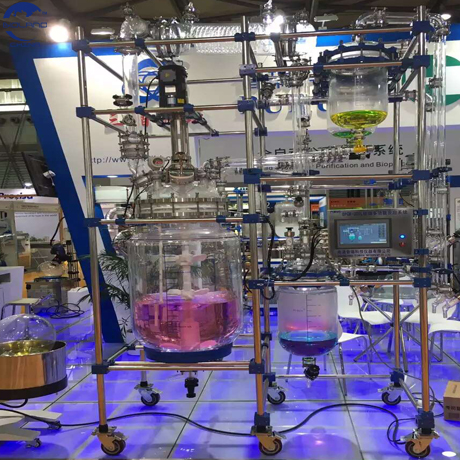
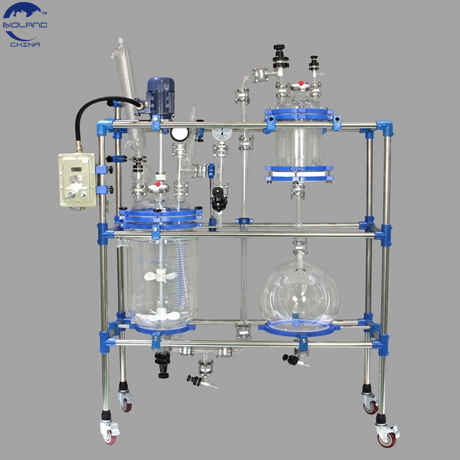
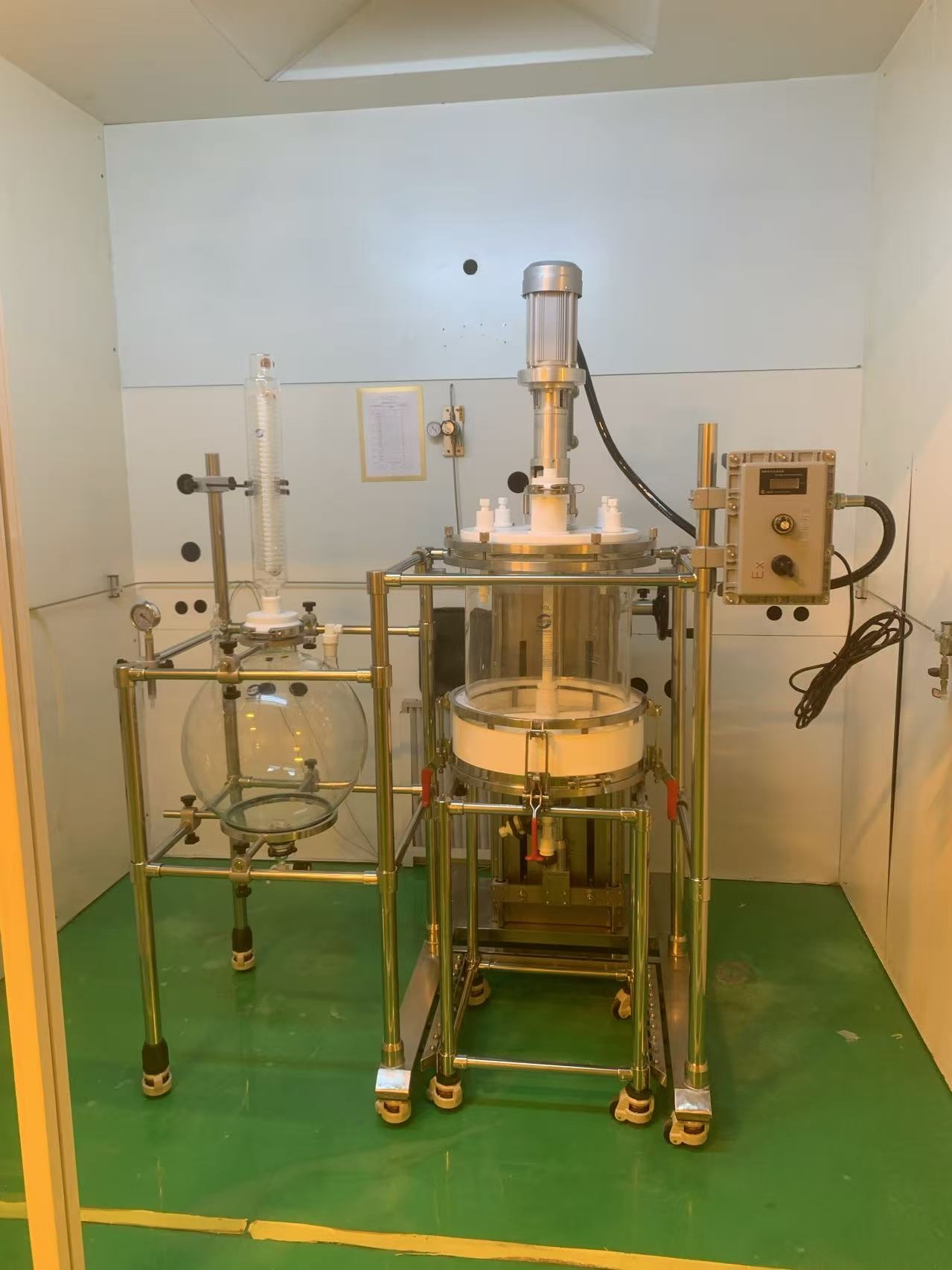
The glass solid-phase Glass Nutsche Filter reactor features a 304 stainless steel tube frame and a GG17 double-layer borosilicate glass vessel, equipped with a PTFE filter plate, suitable for mixing, stirring, and reacting materials under negative pressure conditions, as well as solid-phase synthesis, pyrolysis, material crystallization, and vacuum filtration experiments. This double-layer glass peptide solid-phase Glass Nutsche Filter synthesis reactor adopts a fully jacketed vessel body and a PTFE filter plate with micrometer-level pore size, ensuring stable reactions and strong corrosion resistance.
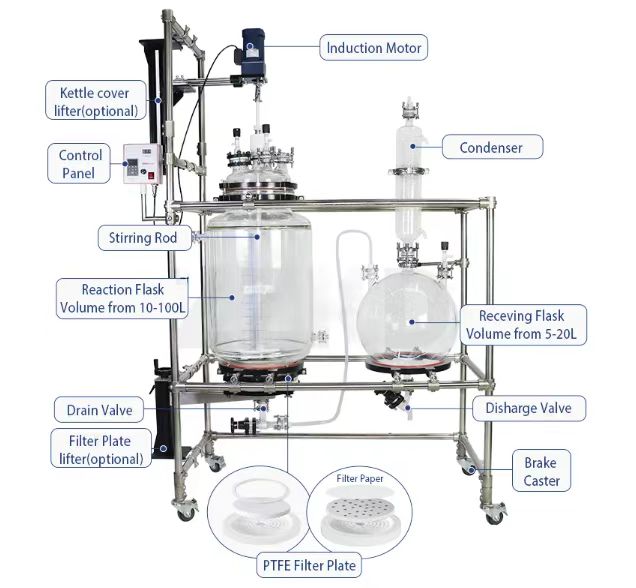
Glass Solid Phase Reactor/Peptide Synthesis Glass Nutsche Filter - Features:
1. Variable speed control, AC induction motor. Constant speed, no electric brush, no spark, safe and stable, can work continuously.
The complete set of instruments is made of SUS316L / SUS304 stainless steel, with good chemical and physical properties.
3. Interlayer interface through the hot oil through the circulation, can do the heating reaction, through the frozen liquid can do the low temperature reaction.
4. Can react at normal temperature, through the tap water can quickly take away the reflected heat.
5. The discharge port uses stainless steel ball valve, removable for easy solid material discharge.
6. Eight-port reactor cover, super-large port design is easy to clean, standard port socket can be selected to assemble reflow, distillation synthesis device
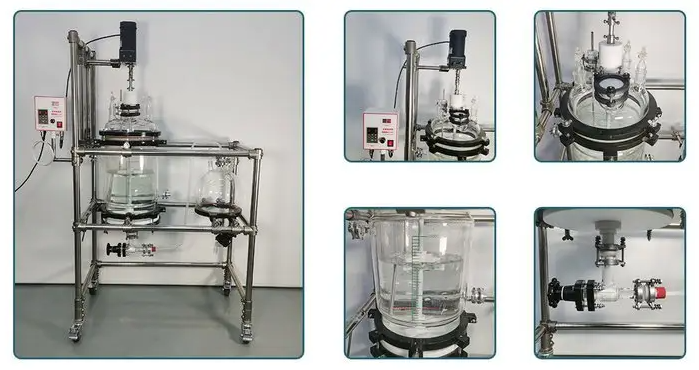
Application of Peptide Synthesis Glass Nutsche Filter
Solid phase reaction kettle can be used for processes such as stirring, filtration, suction filtration, peptide synthesis, crystallization, and cracking. It has an additional replaceable filter screen (optional filter cloth and filter plate) compared to conventional reaction kettles, and uses vacuum negative pressure for suction filtration. The high borosilicate glass kettle body has excellent physical and chemical properties, and the bottle body is transparent, making it easy to observe the experimental process. It can be used in various fields such as biopharmaceuticals, precious metal purification, material crystallization, and petrochemicals
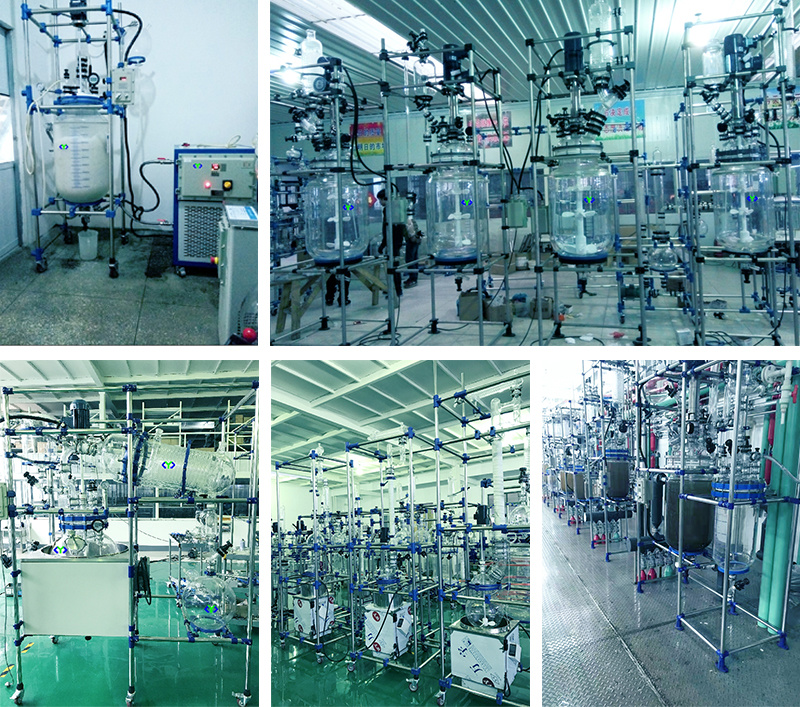
XI'AN BIOLAND INSTRUMENT CO.,LTD -
We're known as one of the most professional herbal extraction machine ,ultrasonic herb assissted extraction machine,low temperature solvent extraction machine, Aromatic Plant Oil Extraction machine,Supercritical co2 extractor,Thermal reflux extraction equipment ,low temperature extraction and concentration equipment,
stainless steel ultrasonic reactor,electric heating mixing tanks,jacketed glass chemical reactor, ultrasonic homogenizer sonacitor,Chemical crystallization filtration reactor,Chemical distillation purification reactor,high shear homogenizer mixer,nutsche filter, low temperature drying equipment, cosmetic nano emulsion mixing equipment...
manufacturers in China. We warmly welcome you to buy cost-effective equipment for sale here from our factory. For more information, please contact us !!!
info@bioland-china.com/info@biolandlab.com
Consultation