

Advantages of vacuum low-temperature concentrator
2026-06-12
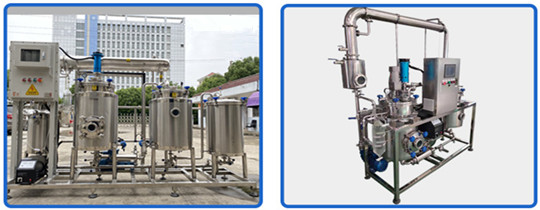
The vacuum low-temperature concentrator is a professional equipment that achieves low-temperature evaporation of materials by reducing system pressure. It has irreplaceable advantages in the field of heat sensitive material processing.
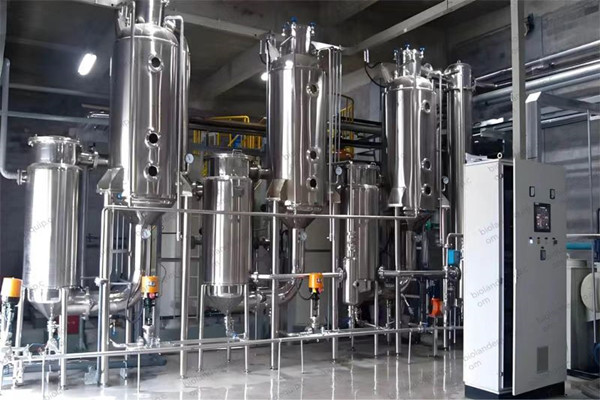
Experiment on vacuum low-temperature concentrator of Medicine herbal plants Powder :https://youtube.com/shorts/c4zLXaO6pas
Concentrator refers to the process of evaporating a portion of the water in a liquid to achieve the required concentration. There are generally two types of concentration methods, one is heating evaporation, including vacuum concentration and atmospheric pressure concentration; Another type is non heating evaporation, which includes freeze concentration and membrane technology concentration. Today, we will introduce one of them - vacuum concentration, and explain its purpose, advantages and disadvantages, principle characteristics, and classification.
1、 The purpose of vacuum concentration
1) Remove most of the moisture from food ingredients to reduce packaging, storage, and transportation costs.
2) By increasing the concentration of the product, the aim is to enhance its storage capacity.
3)Meet the process requirements of food processing, such as pre-treatment for product drying, dehydration, or crystallization.
During the concentration process, aromatic substances in the juice can be extracted.
2、 Advantages of vacuum low-temperature concentrator
1. Advantages
(1) Reduce boiling point, increase the temperature difference between steam and material, improve concentration rate, and minimize heat loss.
(2) Concentrate at low temperatures, suitable for food and herbal medicine. The characteristic of low temperature prevents the loss of thermosensitive substances.
(3) Low temperature steam can be utilized.
(4) It has a reverse osmosis effect, further improving the evaporation rate.
2. Characteristics
(1) Most food ingredients with complex compositions have thermal sensitivity and quality requirements for product color, aroma, and taste, making the concentration of food strive for "low temperature and short time". Due to the boiling point of the liquid being related to external pressure, low pressure corresponds to low temperature, and vacuum concentration ensures the quality of the product.
(2) Vacuum concentration eliminates air and oxygen dissolved in the liquid, and due to the lack of oxygen in the evaporation space, it is beneficial for the processing quality of easily oxidizable materials.
(3) The evaporation rate is fast, saving time compared to atmospheric concentration.
(4) Plays a role in pre sterilization or partial sterilization.
(5) The enclosed operating space helps to reduce microbial contamination of materials.
3. Classification of vacuum low-temperature concentrator
1. Classified by the number of times the heating steam is utilized
Single effect concentration equipment, multi effect concentration equipment, and concentration equipment with heat pumps.
2. Divided by the process of material liquid
Loop, single program.
3. Classified by the distribution state of the material liquid during evaporation
Non membrane type: The material liquid gathers together in the evaporator, only rolling or flowing in the tube, forming a large evaporation surface. Non membrane evaporators can be divided into coil concentrators and central circulation tube concentrators.
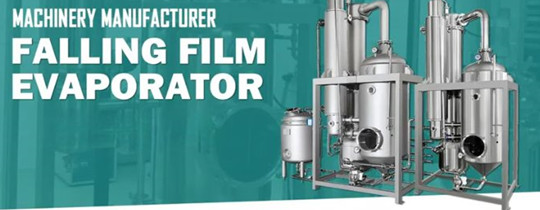
Thin film type: When the liquid material evaporates in the evaporator, it is dispersed into a thin film. Thin film evaporators can be divided into rising film type, falling film type, sheet type, scraper type, centrifugal thin film concentrator, etc.
The following is a comprehensive analysis of the working principle, core advantages, application scenarios, and selection points:
1、 working principleBy establishing a vacuum environment through a vacuum pump or hydraulic jet, the boiling point of the material is significantly reduced (such as water boiling at 100 ℃ under normal pressure, which can be reduced to around 30 ℃ at a vacuum degree of 0.09MPa), and evaporation concentration is completed at a low temperature of 40-90 ℃. Mainstream technologies are divided into two categories:
External circulation concentration: The material circulates between the heating chamber and the evaporation chamber, and the steam enters the next stage heater for reuse (multi effect design). Finally, it is condensed and recovered in the condenser, suitable for large batches and various types of materials.
Falling film concentration: The feed liquid is evenly distributed from the upper tube box of the heating chamber into the heat exchange tubes, forming a uniform liquid film that flows from top to bottom under the induction of gravity and vacuum. After being heated and vaporized, the steam is separated from the concentrated liquid, and the steam can enter the next effect as a heat source, achieving multi effect energy saving. It is suitable for heat sensitive materials with small batches and multiple varieties.
2、 structure composition
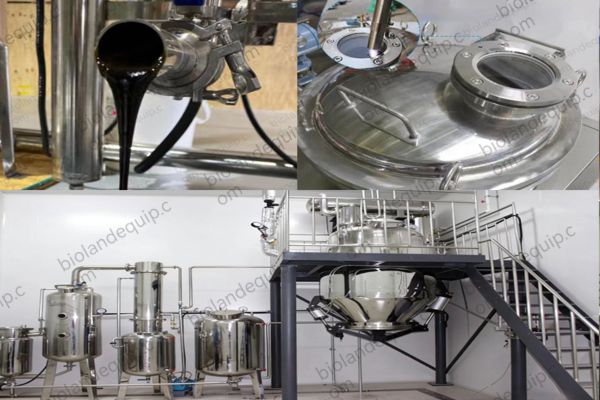
Heating chamber: a double layered insulation structure with a tubular structure, connected to the evaporation chamber through nozzle elbows, and the upper hole cover supports cleaning of the tubular structure.
Evaporation chamber: inner cylinder+jacket (optional) design, equipped with sight glass, manhole, process pipe mouth, supporting material entry and exit and process monitoring.
Condenser+Cooler: A two-stage condensing system that condenses the secondary steam generated by evaporation into liquid, recovers solvent or discharges it.
Auxiliary systems: heating device, stirring device, CIP online cleaning interface, vacuum valve, temperature control sensor, etc., to improve automation and cleaning efficiency.
3、 advantages
Low temperature protection, preserving the activity of ingredients
The boiling point of materials decreases in a vacuum environment and can be concentrated at a low temperature of 40-60 ℃, avoiding the decomposition, oxidation, or denaturation of thermosensitive components (vitamins, enzymes, aromatic substances, proteins, etc.). It is particularly suitable for materials such as fruit juice, traditional Chinese medicine extracts, and essential oils.
Efficient concentration, shortened production cycle
The vacuum viscosity reduction property reduces the viscosity of high viscosity materials (such as traditional Chinese medicine extracts and honey) by about 40%. Combined with thin film evaporation, it increases the heat transfer area, improves the evaporation efficiency by 2-3 times compared to atmospheric concentration, and shortens the concentration time by more than 50%.
Oxygen barrier to prevent changes and enhance product stability
A sealed vacuum environment isolates oxygen, inhibits the oxidation reaction of easily oxidizable substances such as vitamin C and unsaturated fatty acids, reduces the risk of microbial contamination, and extends the shelf life of the product.
Energy conservation and consumption reduction, lowering production costs
Low temperature secondary steam of 0.2-0.4 MPa can be utilized, and multi effect design can reuse evaporated steam, reducing energy consumption by 30% -50%; Automated control reduces manual intervention and improves production efficiency.
Easy to operate, adaptable to multiple scenarios
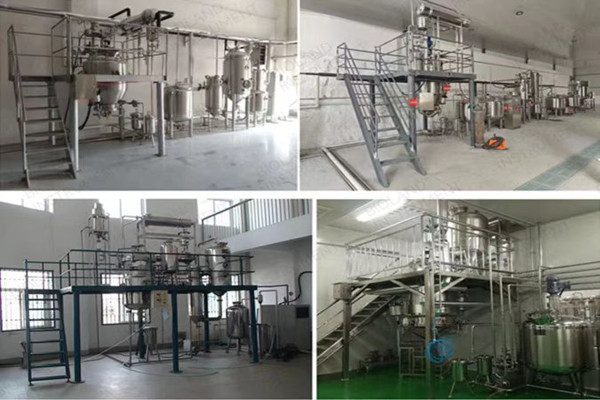
Modular design for small and medium-sized trial models, with small size and minimal footprint; The fully automatic control system supports parameter preset and real-time monitoring; Some models are equipped with CIP online cleaning modules to reduce maintenance costs
Traditional Chinese Medicine Industry: Extract and concentrate effective ingredients (flavonoids, alkaloids, polysaccharides) from Chinese medicinal materials to avoid damage to the active ingredients. The extraction rate of total flavonoids from lotus seed hearts and Danshen is increased by 30% -50%; Pollen cell components have a short breaking time and a 40% reduction in production costs
Food industry: Concentrated fruit juice, jam, dairy products and condiments retain natural flavor and nutrition. The extraction rate of instant tea is nearly 20% higher than that of spray drying; Sugar extraction time of sugar beet is reduced by half, resulting in a 12-14% increase in yield
Chemical industry: Concentrate high viscosity solutions and easily oxidizable chemicals to ensure product purity and stability Uniform dispersion of coatings and graphene materials; Recovery of heavy metal ions from industrial wastewater
Research field: Preparation of biopharmaceutical samples and environmental detection samples, rapid concentration and retention of target components Pesticide residue and harmful heavy metal detection, extraction efficiency increased by 50% compared to conventional methods
Cosmetics industry: concentrate plant essence, essential oil and active peptide to improve the efficacy and safety of products Aloe vera and ginseng extracts retain thermosensitive active substances at low temperatures to avoid high-temperature damage
vacuum low-temperature concentrator -Key points of selection
Material characteristic matching: For thermosensitive materials, priority should be given to the falling film type (with short heating time), while for high viscosity materials, the external circulation type (with good viscosity reduction effect) should be selected; Materials containing a large amount of non-volatile solids need to be paired with a scraper evaporator to prevent coking.
Capacity and scale adaptation: Choose multi effect external circulation units (energy-saving and efficient) for large batches and few varieties; Select a small trial film lowering unit with small batch size and multiple varieties (flexible adaptation).
Automation and cleaning requirements: Prioritize models with CIP online cleaning interfaces and fully automatic control systems to reduce manual intervention and maintenance costs.
Energy consumption and cost balance: Although multi effect design requires high initial investment, long-term operation consumes low energy; Comprehensive evaluation based on enterprise budget and production cycle is required
Material characteristic matching: For thermosensitive materials, priority should be given to the falling film type (with short heating time), while for high viscosity materials, the external circulation type (with good viscosity reduction effect) should be selected; Materials containing a large amount of non-volatile solids need to be paired with a scraper evaporator to prevent coking.
Capacity and scale adaptation: Choose multi effect external circulation units (energy-saving and efficient) for large batches and few varieties; Select a small trial film lowering unit with small batch size and multiple varieties (flexible adaptation).
Automation and cleaning requirements: Prioritize models with CIP online cleaning interfaces and fully automatic control systems to reduce manual intervention and maintenance costs.
Energy consumption and cost balance: Although multi effect design requires high initial investment, long-term operation consumes low energy; Comprehensive evaluation based on enterprise budget and production cycle is required
Do you still want to know the specific selection suggestions for vacuum low-temperature concentrator in a specific industry (such as traditional Chinese medicine, fruit juice)? Or do you need to compare its differences with other concentration techniques such as freeze concentration and membrane concentration? Please contact our engineers promptly via email info@bioland-china.com.
Related News
MORE >-

What are the characteristics of pilot plant glass reactor used in chemical and pharmaceutical industries?
chemical reactor,reactor in chemical plant,batch chemical reactor ,chemical reactor plant,glass reactor vessel ,jacketed reactor vessel
-

Common Troubleshooting Methods for chemical glass reactor
batch glass reactor,lab glass reactor ,jacketed glass reactor,100 liter glass reactor,jacketed reactor vessel
-

Chemical synthesis glass reactor selection guide
chemical synthesis reactor,chemical glass reactor, 50L Chemical Glass Reactor, Agitated Nutsche Filter Jacket Reactor
Consultation