



The principle of ultrasonic herbal extraction equipment
2026-06-16
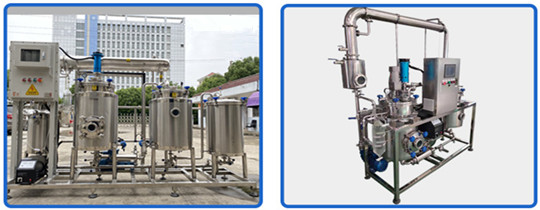
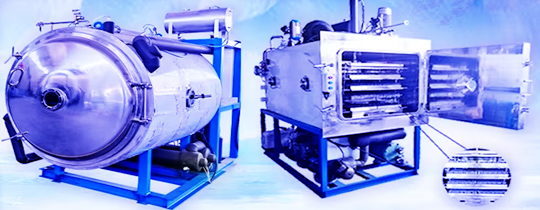
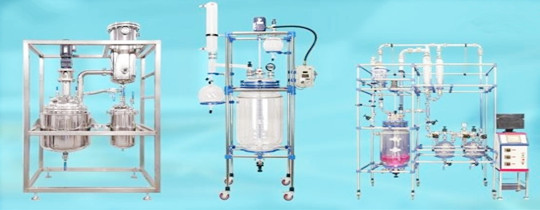
The is an industrialized equipment that integrates "ultrasonic extraction" and "vacuum concentration" technologies. Through the synergistic effect of physical fields, it achieves efficient extraction of active ingredients in natural raw materials (such as Chinese medicinal herbs, fruits and vegetables, flowers) and rapid concentration of solvents. The equipment covers the entire process of extraction, solid-liquid separation, concentration, and drying, and can be adapted to multiple industries such as traditional Chinese medicine pharmaceuticals, food and beverage, cosmetics, and environmental protection. It is the core equipment that replaces the traditional "decoction evaporation" process.
You can refer our more details of ultrasonic herbal extraction concentration equipment: https://youtube.com/shorts/2Q0PLkYhmBo
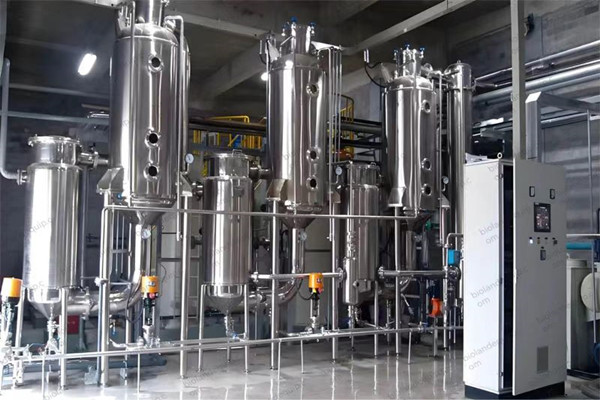
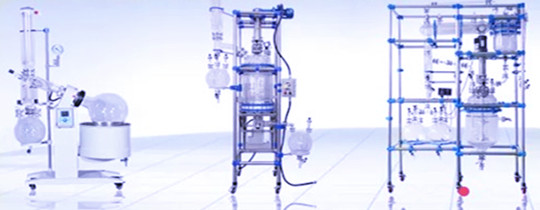
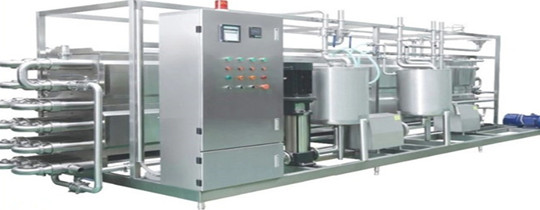
Ultrasonic herbal extraction equipment is suitable for extracting and concentrating effective ingredients from Chinese herbs and various plants, and can achieve solvent recovery and aromatic oil collection. Specially suitable for hospitals, pharmaceutical factories, and research institutions to develop new products and produce in small quantities.
1. It has the advantages of small footprint, exquisite production, complete supporting facilities, and easy operation. Especially suitable for small-scale and multi variety production methods.
2. This equipment is equipped with: ultrasonic system, vacuum pump, liquid pump, filter, liquid receiving tank, control cabinet and other supporting accessories. The equipment is divided into steam heating and electric heating. After purchasing, the equipment only needs to be connected to water, electricity or steam to be used.
3. The equipment is fully functional, suitable for water extraction and alcohol extraction, capable of atmospheric and negative pressure extraction, and can recover volatile oils. Configure a vacuum converter and control box, easy to operate, capable of achieving extraction and concentration at room temperature and low temperature; Ultrasonic assisted extraction, extraction and concentration at room temperature; Process requirements for low-temperature extraction and concentration.
4. The electric heating structure design is advanced, efficient, * *, fast heating and cooling, and uniform heating. The tank is equipped with a pressure reducing device to ensure the use of * *.
5. It can achieve reflux extraction process, reduce extraction and concentration time, and save solvents.
6. Unique oil-water separator design, integrating vacuum conversion function to achieve better oil-water separation effect. Made of glass material for easy observation.
The ultrasonic herbal extraction equipment utilizes the mechanical, cavitation, and thermal effects of ultrasound to extract bioactive components by increasing the velocity and penetration of medium molecules.
Mechanical effectThe propagation of ultrasonic waves in a medium can cause vibration of medium particles in their propagation space, thereby enhancing the diffusion and propagation of the medium. This is the mechanical effect of ultrasonic waves. Ultrasonic waves generate a radiation pressure during propagation, which propagates along the direction of sound waves and has a strong destructive effect on materials, causing deformation of cell tissues and denaturation of plant proteins; At the same time, it can also provide different accelerations to the medium and suspension, and the velocity of the medium molecules is much higher than that of the suspension molecules. Thus, friction is generated between the two, which can cause biomolecules to dissociate and dissolve the active ingredients on the cell wall faster in the solvent.
Cavitation effect
Under normal circumstances, some microbubbles are more or less dissolved inside the medium, and these bubbles vibrate under the action of ultrasound. When the sound pressure reaches a certain value, the bubbles increase due to directional diffusion, forming a resonant cavity, and then suddenly closing, which is the cavitation effect of ultrasound. When this type of bubble closes, it generates thousands of atmospheres of pressure around it, forming micro shock waves that can cause the rupture of plant cell walls and the entire organism. The entire rupture process is completed in an instant, which is beneficial for the dissolution of active ingredients.
thermal effect
Like other physical waves, the propagation of ultrasound in a medium is also a process of energy propagation and diffusion. That is, during the propagation of ultrasound in a medium, its sound energy is continuously absorbed by the particles of the medium, and the medium converts all or most of the absorbed energy into thermal energy, resulting in an increase in the temperature of the medium itself and the medicinal tissue, and an increase in the dissolution rate of the active ingredients. Due to the instantaneous increase in internal temperature caused by the absorption of sound energy, the biological activity of the extracted components can be maintained unchanged.
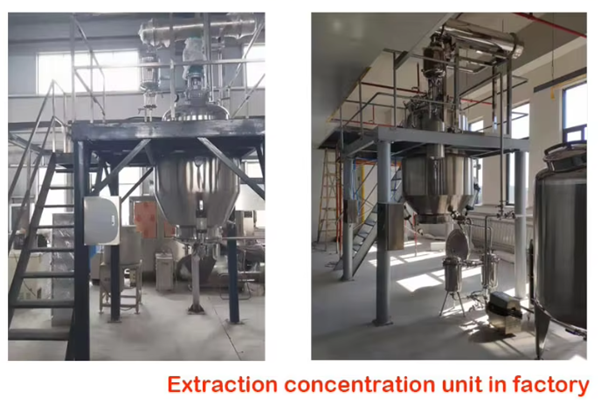
Comparison of Extraction Efficiency: Compared to traditional decoction methods, ultrasonic extraction can shorten the extraction time from 6-12 hours to 30-90 minutes, increase extraction efficiency by 3-5 times, and reduce solvent usage by more than 50%.
2、 Vacuum concentration stage: rapid dissolution at low temperature
The extracted liquid phase contains a large amount of solvents (such as water and ethanol), which need to be concentrated to reduce the solvent content and increase the concentration of active ingredients. The core of vacuum concentration is to utilize the characteristic of reducing the boiling point of solvents in a vacuum environment to achieve rapid dissolution at low temperatures. The specific process is as follows:
Vacuum depressurization (lowering boiling point)
In a vacuum state (pressure 0.01-0.08MPa), the boiling point of the solvent significantly decreases (for example, ethanol has a boiling point of 78 ℃ at atmospheric pressure and drops to 35 ℃ at 0.05MPa); The boiling point of water at atmospheric pressure is 100 ℃, and its boiling point drops to 45 ℃ at 0.05MPa. This allows the concentration process to be carried out at low temperatures (40-60 ℃), avoiding the degradation of heat sensitive components such as ginkgo flavonoids and tanshinone due to high temperatures.
Thin film evaporation (efficient mass transfer)
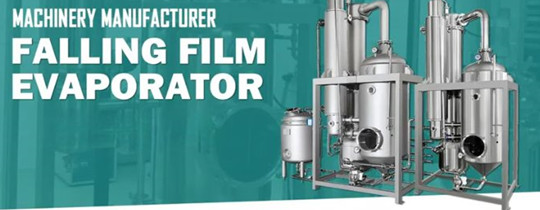
The extraction liquid enters the concentration tank through a scraper or falling film device, forming a thin layer (thickness 1-2mm) on the heating tube wall to increase the evaporation area; At the same time, vacuum suction rapidly vaporizes the solvent, which is recovered by the condenser (solvent recovery rate ≥ 95%), and the concentrated solution (effective ingredient concentration increased by 5-10 times) is discharged from the bottom.
Temperature control and anti coking (ensuring quality)
The equipment is equipped with a PID temperature control system, which accurately controls the heating temperature (± 1 ℃) to avoid local overheating; The scraper device can continuously stir the concentrated solution to prevent high viscosity materials (such as ass hide glue and honey) from adhering to the pipe wall and coking.
Comparison of Concentration Efficiency: Compared to single effect evaporators, vacuum concentration reduces energy consumption by 50% -70%, shortens concentration time to 1-2 hours, and increases product purity by 10% -20%.
Core advantages of ultrasonic herbal extraction equipment
1. Efficiency: Efficiency increased by 3-5 times, cost reduced by 40%
The ultrasonic cavitation effect destroys the structure of raw material cells, reducing the extraction time from traditional 6-12 hours to 30-90 minutes and increasing the extraction efficiency by 3-5 times;
Vacuum concentration technology reduces the boiling point of solvents, shortens the concentration time to 1-2 hours, reduces comprehensive energy consumption by 40%, and achieves a solvent recovery rate of ≥ 95%.
2. Low temperature: Retain the activity of thermosensitive ingredients
The extraction temperature can be controlled between -30 ℃~60 ℃, and the concentration temperature should be ≤ 60 ℃ to avoid the degradation of thermosensitive components such as volatile oils, vitamins, alkaloids, etc. The activity retention rate of the finished product should be ≥ 90%;
Suitable for scenarios with extremely high requirements for ingredient activity, such as traditional Chinese medicine injections and high-end health products.
3. Environmental friendliness: No solvent residue, meets green standards
Can be used with water-based solvents and supercritical CO ₂ solvents, with no residual organic solvents, in compliance with EU REACH regulations and US FDA standards;
The solvent recycling rate is ≥ 95%, reducing waste emissions and lowering environmental treatment costs.
4. Flexibility: Suitable for multiple varieties and scales of production
Power range 200W (laboratory) -100kW (industrial grade), capacity 0.5L-100L, can smoothly transition from small trial to mass production;
The frequency can be adjusted from 20-80kHz, suitable for different raw material characteristics such as rhizomes (such as ginseng and astragalus), fruits (such as wolfberry and hawthorn), flowers and leaves (such as mint and chrysanthemum), etc.
5. Intelligence: data-driven process optimization
Integrated PLC control system, supporting automatic parameter adjustment, fault warning, production data traceability, and adapting to intelligent manufacturing needs;
An AI parameter self-learning module can be optionally selected to automatically optimize the process based on seasonal differences in raw materials and changes in moisture content, improving the consistency of the finished product.
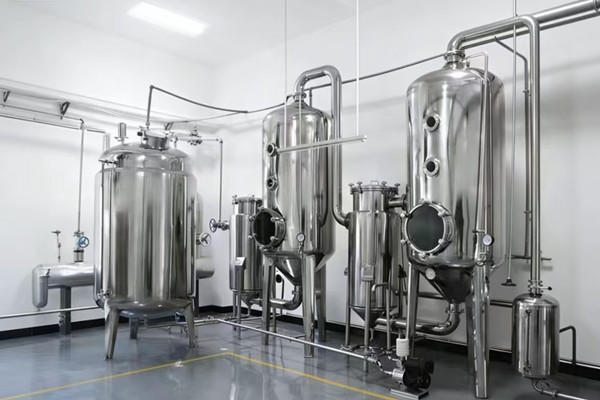
Unit collaboration: advantages of integrated extraction concentration
The ultrasonic herbal extraction equipment integrates "extraction" and "concentration" into the same system, achieving "direct concentration of extraction solution without transfer". The core advantages include:
Reduce pollution risk: avoid cross contamination during the transfer of extraction solution, especially suitable for the production of high-purity Chinese medicine injections and health products;
Improve production efficiency: seamless connection between extraction and concentration, reducing the overall production cycle by 40%;
Reduce energy consumption costs: Extracting waste heat can be partially used for concentration heating, reducing overall energy consumption by 30%;
Compatible with multiple varieties: By adjusting the ultrasonic frequency, power, vacuum degree, and temperature, it can adapt to different raw materials such as roots and stems (such as ginseng and astragalus), fruits (such as wolfberry and hawthorn), flowers and leaves (such as mint and chrysanthemum), etc.
Typical process flow (taking traditional Chinese medicine granules as an example)
Feeding: Chinese herbal medicine (crushed to 20-40 mesh) and solvent (water/ethanol) are added to the extraction tank in proportion;
Ultrasonic extraction: Start the ultrasonic generator (power 5-50kW, frequency 28-40kHz), maintain the temperature control system at 40-60 ℃, and extract for 30-90 minutes;
Solid liquid separation: The extract is separated from the drug residue by a plate and frame filter press or centrifuge to obtain a clear extract;
Vacuum concentration: The extract enters the concentration tank, the vacuum degree is adjusted to 0.05MPa, the temperature is controlled below 60 ℃, and concentrated to a relative density of 1.1-1.3 (60 ℃);
Total mixing/drying: the concentrated solution is added with auxiliary materials (such as dextrin and starch) for total mixing, and then enters the spray drying tower to make granules.
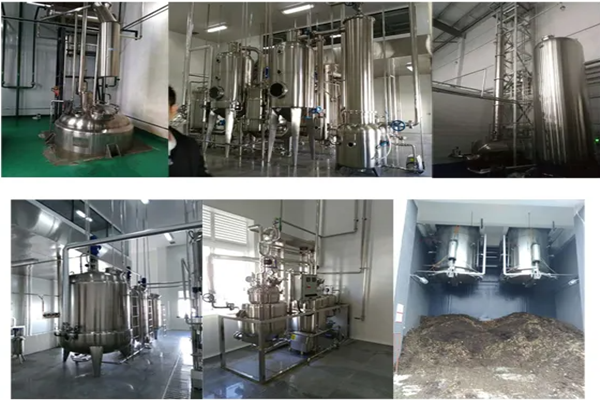
application areas of ultrasonic herbal extraction equipment
1. Traditional Chinese Medicine Pharmaceutical Industry
Scenario: Production of traditional Chinese medicine granules, oral liquids, injections, and health products;
Value: Efficient extraction of insoluble components such as ginsenosides, flavonoids, alkaloids, etc., low-temperature concentration to retain volatile oil and vitamin activity, and compliance with GMP production standards;
Typical products: Cold Clearing Granules, Banlangen Oral Liquid, Qingkailing Injection, Ginsenoside Capsules.
2. Food and beverage industry
Scenes: natural pigments, essence and fragrances, functional ingredients extraction, aroma reduction of fruit juice/tea;
Value: Low temperature extraction of lycopene, anthocyanins, and coffee aroma components, retaining nutrients and natural flavors, without chemical additives;
Typical products: Lycopene soft capsules, coffee concentrate, fruit and vegetable juice antioxidants.
3. Cosmetics industry
Scenario: Extraction of natural essential oils and plant active ingredients, development of high-end skincare ingredients;
Value: Low temperature extraction of aloe polysaccharides, centella asiatica glycosides, and hyaluronic acid, retaining biological activity and enhancing the "natural" properties of the product;
Typical products: aloe moisturizing essence, Centella asiatica repair cream, ginseng anti-aging facial mask.
4. Environmental Protection and Chemical Industry
Scenario: Industrial wastewater/exhaust gas treatment, organic solvent recovery, high value-added chemical separation;
Value: Efficient separation of organic pollutants from printing, dyeing, and electroplating wastewater (recovery rate ≥ 90%), recovery of catalysts and heavy metal ions from the petroleum and chemical industries;
Typical products: dye recovery agent, petroleum catalyst regeneration agent.
5. Agriculture and bioenergy industry
Scenario: Extraction of effective ingredients from crops, pretreatment of biofuel raw materials, research and development of natural pesticides;
Value: Improve the protein/oil extraction rate of soybeans and corn, separate cellulose from straw (for bioethanol production), extract natural pyrethroids and sophocarpine;
Typical products: biodiesel raw materials, natural pesticide formulations.
6. Research and Education Fields
Scenario: Sample pretreatment, new drug development, and component analysis in universities/research institutes;
Value: Quickly extract DNA, proteins, and metabolites, shorten research cycles, and reduce experimental costs;
Typical products: Plant extracts for scientific research, screening of active ingredients for new drugs.
Do you pay more attention to the ultrasonic extraction process parameters of a specific raw material (such as ginseng or ginkgo leaves), or do you need equipment selection recommendations for specific dosage forms? If you have any needs, please contact our technical department (info@bioland-china.com) in a timely manner. We are dedicated to serving you!!!
Related News
MORE >-

What are the characteristics of pilot plant glass reactor used in chemical and pharmaceutical industries?
chemical reactor,reactor in chemical plant,batch chemical reactor ,chemical reactor plant,glass reactor vessel ,jacketed reactor vessel
-

Common Troubleshooting Methods for chemical glass reactor
batch glass reactor,lab glass reactor ,jacketed glass reactor,100 liter glass reactor,jacketed reactor vessel
-

Chemical synthesis glass reactor selection guide
chemical synthesis reactor,chemical glass reactor, 50L Chemical Glass Reactor, Agitated Nutsche Filter Jacket Reactor
Consultation